

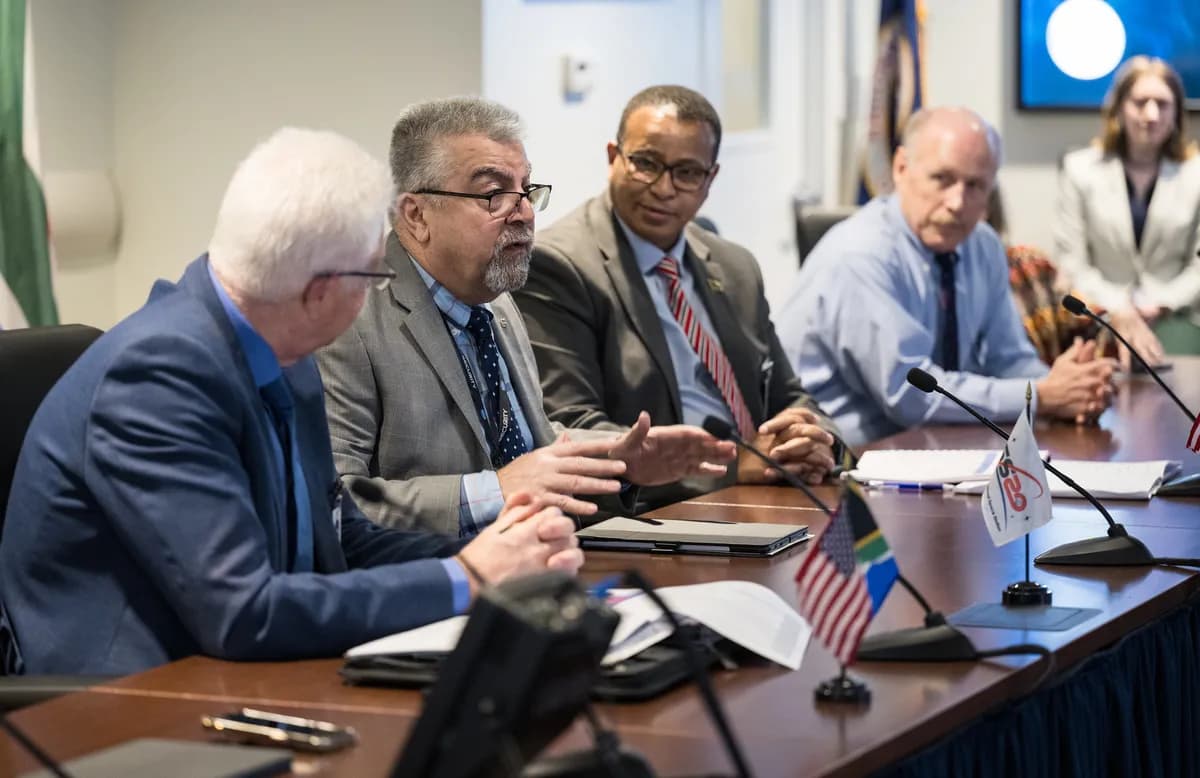
Prime Minister Petteri Orpo said the Finnish government is closely monitoring the Iran war situation and analyzing its effects on Finland. Orpo stated that the government is assessing whether it has tools to help households and businesses cope with the situation. He described the situation as very difficult because the war causes huge price pressures on energy, already visible at gas and diesel pumps. Orpo said rising fuel prices will with a small delay affect other prices, such as transport costs. The government takes the situation seriously and will have a thorough discussion on the topic, he added. Orpo did not want to comment on specific measures like fuel tax cuts or lowering the distribution obligation, saying investigation work is ongoing continuously. The government will meet for an evening school on Wednesday, with the agenda including the Iran situation's impact on Finland's economic development and Finns. Orpo said energy prices are an 'acute' issue and cannot wait for the framework session over a month away.
In Sweden, Prime Minister Ulf Kristersson said the war has a 'tangible impact' on the Swedish economy. Kristersson stated that Sweden faces a worse scenario than the government previously described because of the war in Iran. This means, among other things, the risk of higher inflation and lower GDP growth. Oil and gas prices have skyrocketed, although not to the most extreme levels, he said. The government will present an additional forecast for the Swedish economy at the beginning of May. Kristersson said the government can lower the threshold for when electricity subsidies are paid out, but will not do that automatically, only if the war's effects threaten the Swedish recovery. The government is looking at ways to soften the economic blow of higher fuel prices on households and increase energy supplies, Kristersson added.
State rationing cannot be ruled out, but we are not there yet.
Europe braces for higher prices and reduced supplies of diesel, gasoline and jet fuel. The Strait of Hormuz remains closed, affecting around 20% of global oil flows. Finance Minister Elisabeth Svantesson said the price of oil is above $100 per barrel on Thursday. The total loss due to the strait being closed is estimated to be 13 million barrels of oil per day, according to the IEA, as cited by Svantesson. In Sweden, gas and diesel prices have risen sharply since the February outbreak of the war. The government already cut the tax on vehicle fuel to reduce the impact on households.
Sweden may need to restrict how much energy its citizens can use if supplies from the Middle East remain disrupted by the war in Iran, Kristersson said. The government is examining potential limits on fuel use if necessary. So far, the government has not given any concrete calls to Swedes to reduce fuel use, but nothing is being ruled out, not even fuel rationing as a last resort. The government is discussing with a number of countries how free passage through the Strait of Hormuz can be ensured.
We have now moved from the main scenario of limited impact to the scenario of significant impact on the Swedish economy.
German airline Lufthansa said it would cancel 20,000 short-haul flights from its European summer schedule to save on fuel. Finland's Finnair cautioned over fuel availability if the conflict is prolonged. The government has invited various parties, such as SAS and the Swedish Farmers' Association, to seek their views on disruptions to raw material flows.
The spike in energy prices risks further eroding support for the Swedish government five months ahead of a general election. Kristersson's coalition is currently trailing the opposition in opinion polls by around six points. Economic growth is still expected to accelerate to 2.8% this year from 1.5% last year. Unemployment remains higher than most European peers at around 8.5%.
We are not planning any rationing at the moment, but we are prepared for it to happen. We will let you know in good time.
There are diverging views on the economic outlook. The Riksbank warns that the war and energy crisis risk leading to stagflation. However, the National Institute of Economic Research disagrees with Kristersson and maintains its forecast from a month ago, which indicated that the recovery for the Swedish economy continues despite the war.
Orpo hopes the conflict in Iran ends as soon as possible and that the US understands that prolonged conflict will severely affect the global economy, which is not in their interest.
Many uncertainties remain. It is unclear what specific measures the Finnish government will implement to help households and businesses. Whether Sweden will actually implement fuel rationing and under what conditions is not yet determined. The duration of the Strait of Hormuz closure and diplomatic efforts to reopen it are unknown. The exact economic forecast for Sweden is disputed between the government and the National Institute of Economic Research. How the energy crisis will affect the upcoming Swedish general election remains to be seen.