

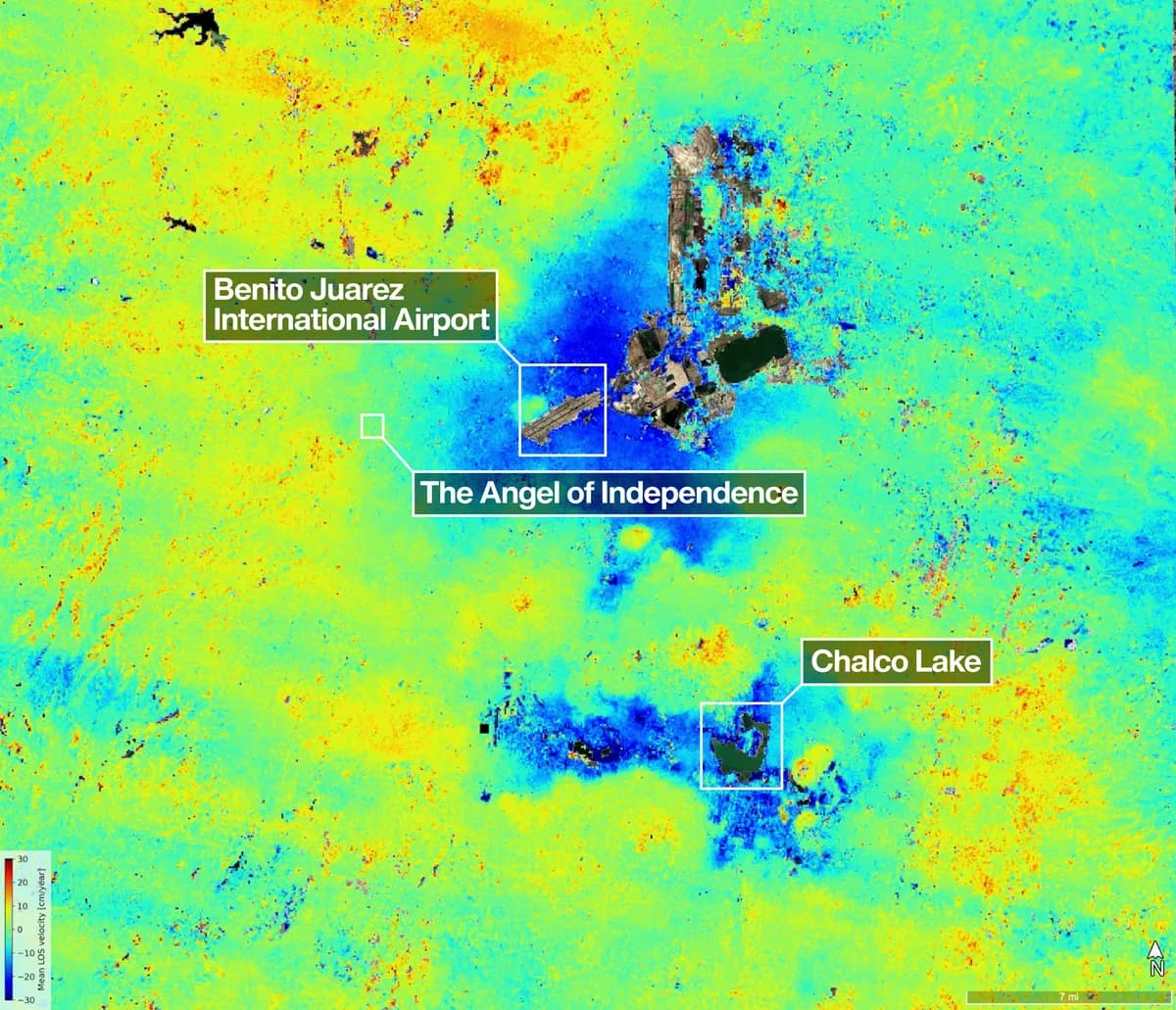
According to NASA officials, NISAR is one of the most powerful radar systems ever deployed in space. Its L-band synthetic aperture radar can track subtle land movements day and night, regardless of weather. The Mexico City area, built on an ancient lakebed, has experienced compaction from groundwater pumping and urban development for over a century.
Subsidence was first documented in 1925, and by the 1990s and 2000s, some areas were sinking by around 14 inches (35 cm) annually. The Angel of Independence monument, constructed in 1910, has had 14 steps added to its base to compensate for the sinking ground. NISAR’s measurements between October 2025 and January 2026 indicate parts of the metropolitan area are now subsiding by more than 2 cm per month.
David Bekaert, a project manager on the NISAR science team, called Mexico City a well-known subsidence hot spot. He said the satellite's data will enable new discoveries in places that previously could not be measured. While the current rates vary across the city, NISAR's ongoing observations will help identify the most affected areas and inform mitigation efforts.