

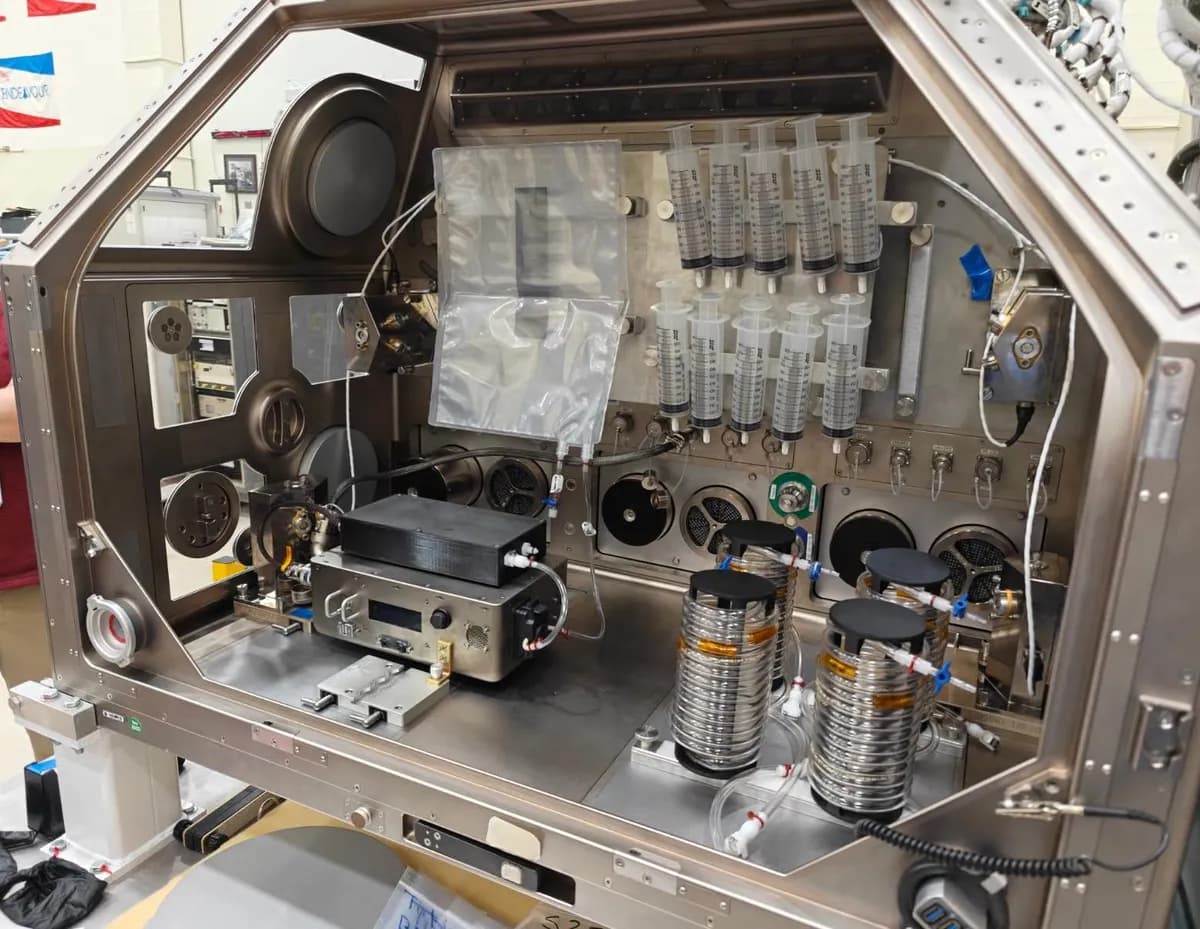
NASA packs IV fluid on every crewed mission to treat up to 30% of medical conditions in flight, but the current IV fluid shelf life is limited to 16 months. To overcome this, NASA has created a technology that can transform water into IV fluid on demand.
The IVGEN Mini system flew to the International Space Station on April 11 aboard NASA's Northrop Grumman Commercial Resupply Services 24 mission. It will produce IV fluid during demonstrations in spring and fall to verify the design works in space. The crew will operate IVGEN Mini over two days and generate 10 liters of fluid, which will be returned to Earth for analysis.
The system operates by adding space station drinking water to a large supply bag, filtering it, and combining it with premeasured sodium chloride to create sterile IV fluid. IVGEN Mini is the second iteration of the technology; the original IVGEN was demonstrated in 2010. The original was larger because it included additional sensing equipment. IVGEN Mini has reduced size and weight compared to the original, using miniaturized pumps instead of gaseous nitrogen. It also lightens cargo loads by allowing IV fluid to be produced as needed.