

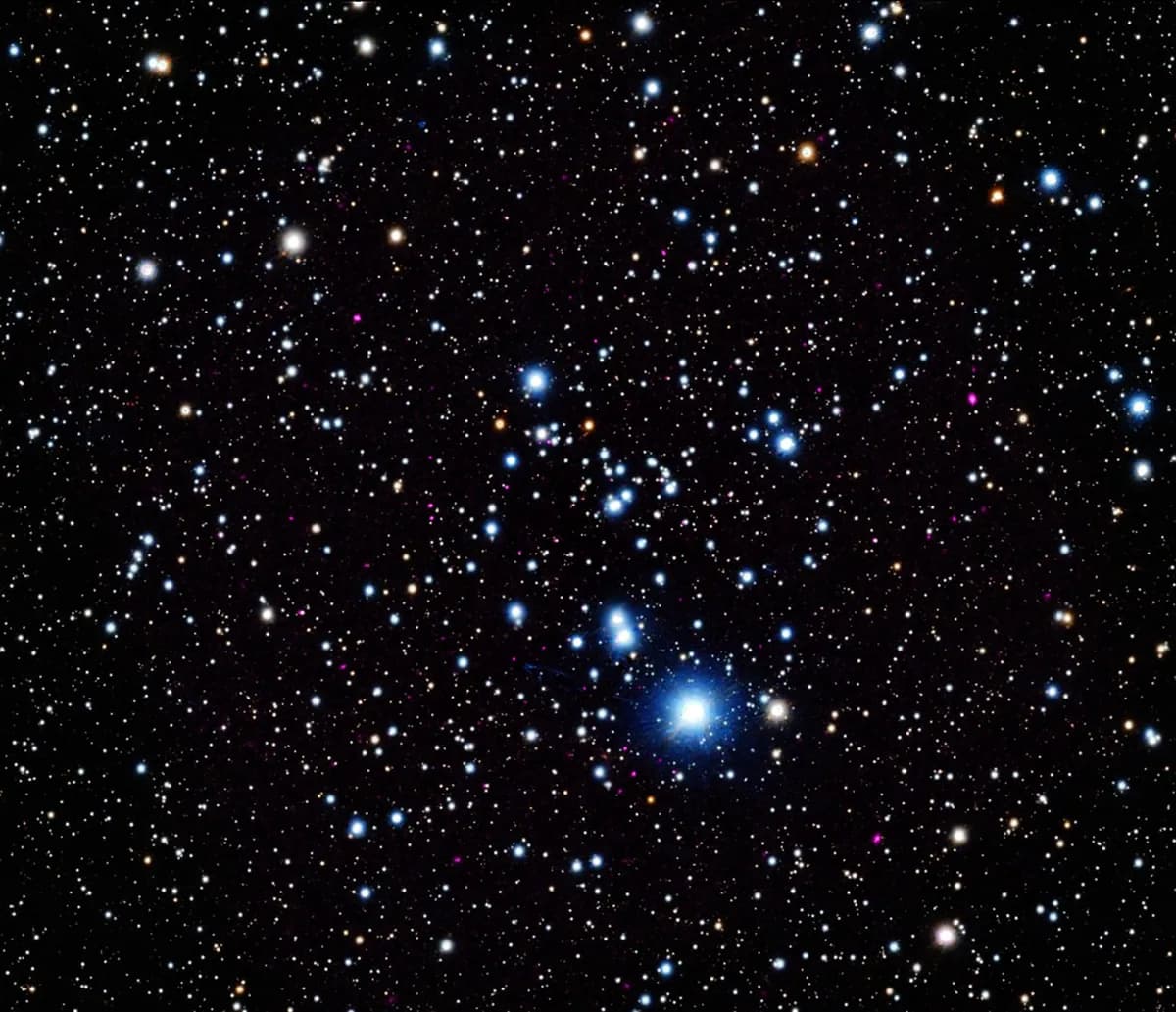
Scientists have found that young stellar cousins of our Sun are calming down and dimming more quickly in their X-ray output than previously thought, according to NASA. A new study using NASA's Chandra X-ray Observatory found that Sun-like stars in eight clusters between 45 million and 750 million years old unleashed only about a quarter to a third of the X-rays expected. Stars with about the same mass as the Sun quieted down relatively rapidly after a few hundred million years, while ones with less mass kept up their high levels of X-ray emission for longer.
This calming could benefit the formation of life on planets around younger versions of our Sun because large amounts of X-rays can erode a planet's atmosphere and prevent formation of molecules necessary for organic life, NASA said. On average, three-million-year-old stars with a mass equal to the Sun produce about a thousand times more X-rays than today's Sun, while 100-million-year-old solar-mass stars are about 40 times brighter in X-rays than the present Sun. Sun-sized stars are apparently better suited to host planets with robust atmospheres and possibly blossoming life than previously thought, due to decreased X-ray energy and disappearance of energetic particles.
The quieting of young Sun-like stars in X-rays is due to their internal generation of magnetic fields becoming less efficient, not because an outside force is consuming their light, NASA reported. A paper describing the results was published Monday in The Astrophysical Journal.