

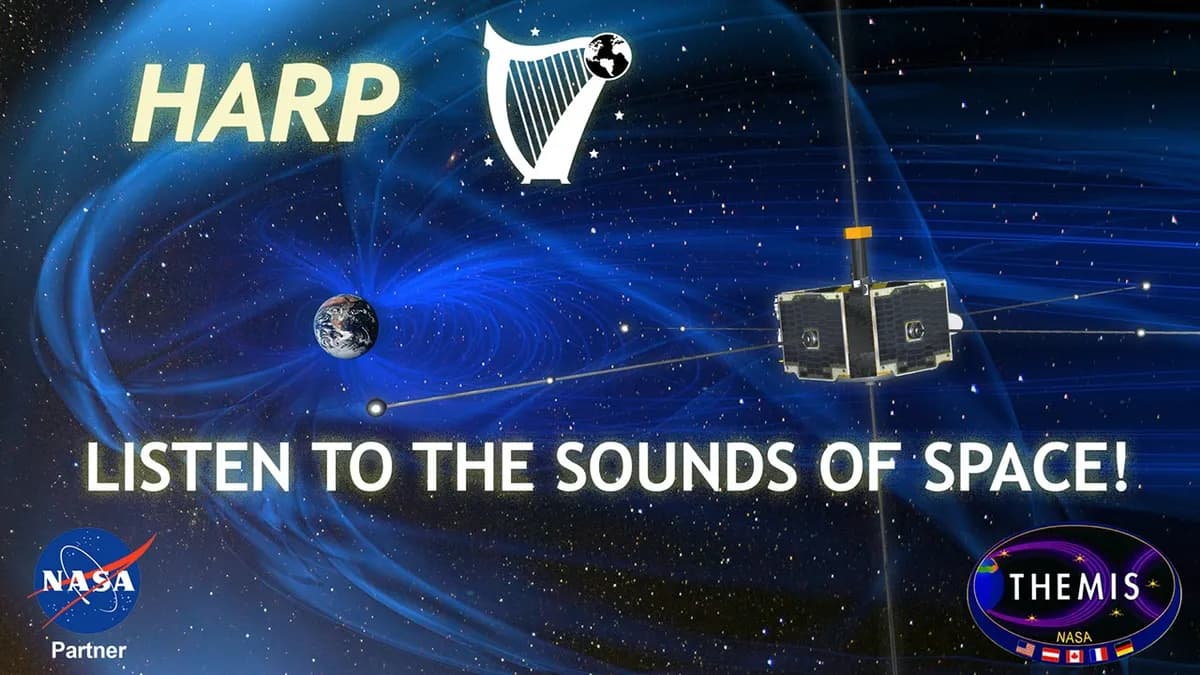
The team behind NASA's Heliophysics Audified: Resonances in Plasmas (HARP) citizen science project compares Earth's magnetic field to a giant harp in space, according to official sources. They translated magnetic field measurements into sound, allowing volunteers to use their ears to study a particular type of plasma wave that plays a role in space weather. Scientists expected lower pitches farther from Earth and higher pitches closer to it, but when they played back data from NASA's THEMIS mission, volunteers noticed something unexpected, according to official sources.
Some plasma waves revealed the opposite pattern – lower pitches close to Earth and higher pitches farther away. The HARP volunteers were thrilled to help discover this anomaly, which will help scientists better understand geomagnetic storms. Scientists are working to understand exactly how these waves behave, according to official sources.
These findings now appear in a new article in Frontiers in Astronomy and Space Sciences. The HARP project was sponsored by NASA and continues to be sponsored by the National Science Foundation. The HARP project is no longer actively seeking volunteers.