

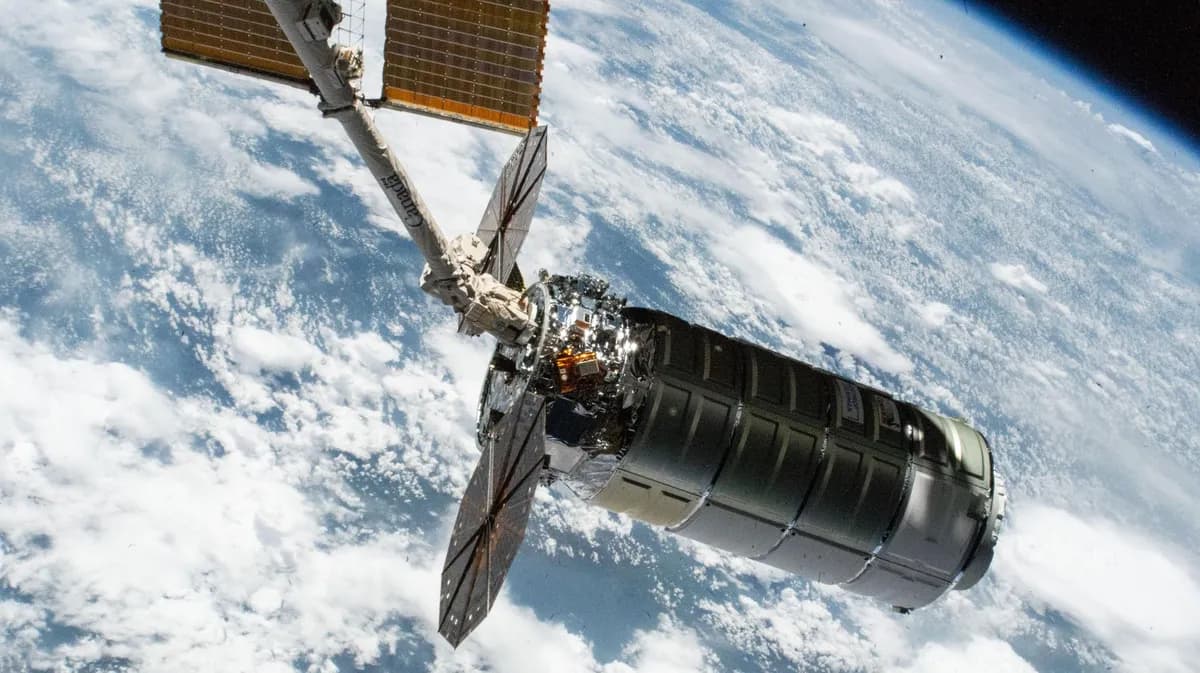
NASA, Northrop Grumman, and SpaceX are targeting no earlier than 8:49 a.m. EDT on Wednesday, April 8, for the next launch delivering science investigations, supplies, and equipment to the International Space Station. The Northrop Grumman Cygnus XL spacecraft, aboard a SpaceX Falcon 9 rocket, will launch from Space Launch Complex 40 at Cape Canaveral Space Force Station in Florida. This mission, known as NASA’s Northrop Grumman Commercial Resupply Services 24 or Northrop Grumman CRS-24, is the first flight of the larger, more cargo-capable version of the solar-powered spacecraft.
The spacecraft is filled with approximately 11,000 pounds of cargo. Following launch, astronauts aboard the space station will use the Canadarm2 robotic arm to capture the Cygnus XL on Friday, April 10, before ground controllers install it to the Unity module’s Earth-facing port for cargo unloading. The spacecraft is scheduled to remain at the orbiting laboratory until October before departing with several thousand pounds of trash and burning up harmlessly during re-entry.
Separately, NASA will provide live coverage of the launch and docking of a Roscosmos cargo spacecraft carrying about three tons of food, fuel, and supplies for the crew aboard the International Space Station. The unpiloted Roscosmos Progress 94 resupply spacecraft is scheduled to launch at 7:59 a.m. EDT (4:59 p.m. Baikonur time) Sunday, March 22, on a Soyuz rocket from the Baikonur Cosmodrome in Kazakhstan. After a two-day trip to the space station, the spacecraft will dock autonomously to the Poisk module’s space-facing port at about 9:34 a.m. Tuesday, March 24.
Meanwhile, after delivering more than 11,000 pounds of supplies, science investigations, hardware, and other cargo to the International Space Station for NASA and its international partners, the Cygnus XL spacecraft supporting Northrop Grumman’s 23rd Commercial Resupply Services mission is scheduled to depart the orbiting laboratory Thursday, March 12. Cygnus XL will be commanded to deorbit on Saturday, March 14, to dispose of several thousand pounds of trash during its reentry into Earth’s atmosphere, where it will harmlessly burn up.