

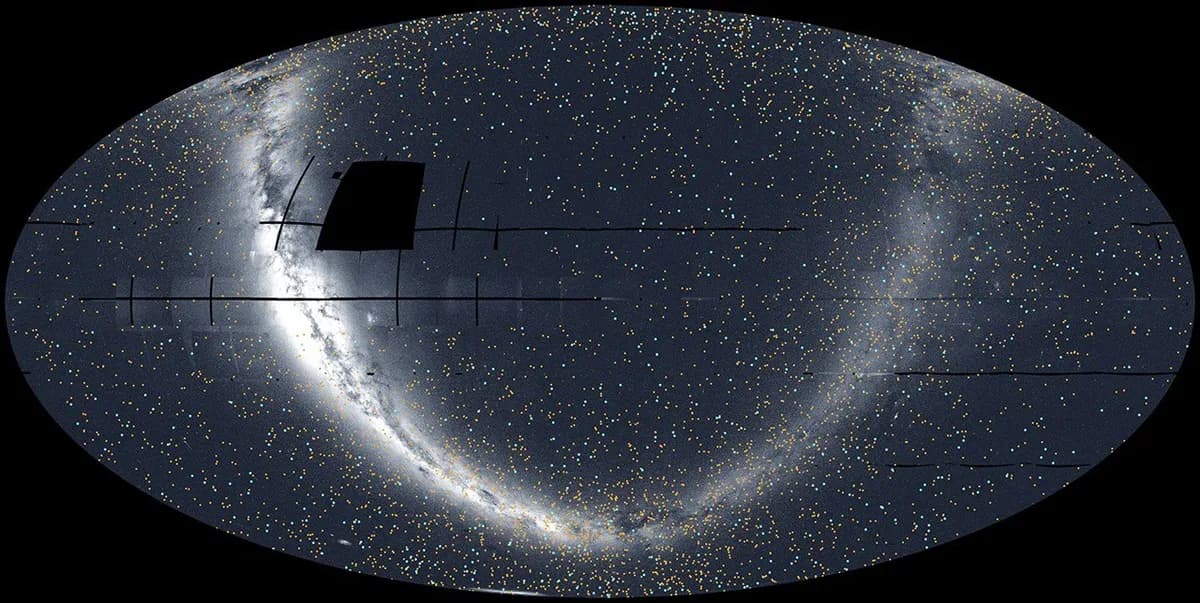
The mosaic, assembled from 96 sectors observed between April 2018 and September 2025, fills in gaps from previous observations, according to NASA. TESS scans a wide swath of the sky called a sector for about a month at a time using its four cameras, tracking brightness changes of tens of thousands of stars to detect variations that might come from orbiting planets. Rebekah Hounsell, TESS associate project scientist, said in a statement that over the last eight years, TESS has become a fire hose of exoplanet science, helping find planets of all sizes, from tiny Mercury-like ones to those larger than Jupiter, some even in the habitable zone.
How many of the nearly 6,000 candidates have been confirmed as actual planets remains unclear.