

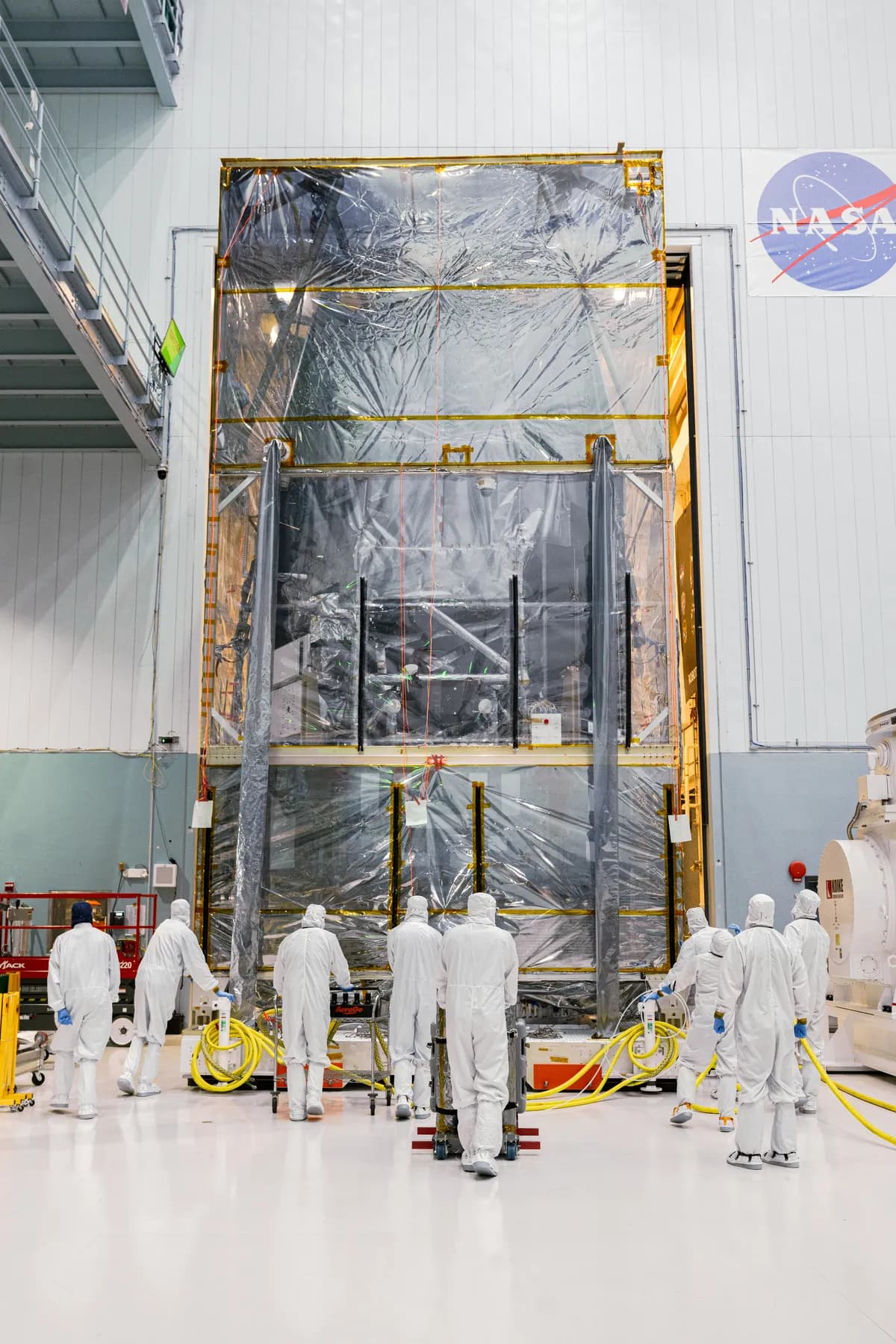
The telescope will launch from Launch Complex 39A at NASA's Kennedy Space Center in Florida, according to NASA. The Roman Space Telescope will provide deep, panoramic views of the cosmos and generate never-before-seen pictures, NASA said. The mission is expected to amass a 20,000-terabyte data archive by the end of its five-year primary mission and identify and study 100,000 exoplanets, hundreds of millions of galaxies, billions of stars, and rare objects and phenomena.
Before launch, the telescope will undergo final inspections, checkouts, and fueling at NASA Kennedy's Payload Hazardous Servicing Facility (PHSF), a 40-year-old facility that has undergone upgrades including a new air-shower system and HVAC system. The PHSF is certified to ISO class 8 clean room standards but can exceed that with augmentation; the team plans to use a HEPA filtration wall to achieve ISO class 7 standards for Roman. The telescope passed acoustic, vibration, and electromagnetic interference tests; the acoustic test reached 138 decibels, about as loud as a jet engine from 100 feet away.
Roman's accelerated development is a true success story of what we can achieve when public investment, institutional expertise, and private enterprise come together to take on the near-impossible missions that change the world.
NASA Administrator Jared Isaacman announced the launch update at a news conference on April 21 at NASA's Goddard Space Flight Center. The Roman Space Telescope is named after NASA's first chief astronomer, Nancy Grace Roman. According to GB News, the observatory cost $4 billion.