

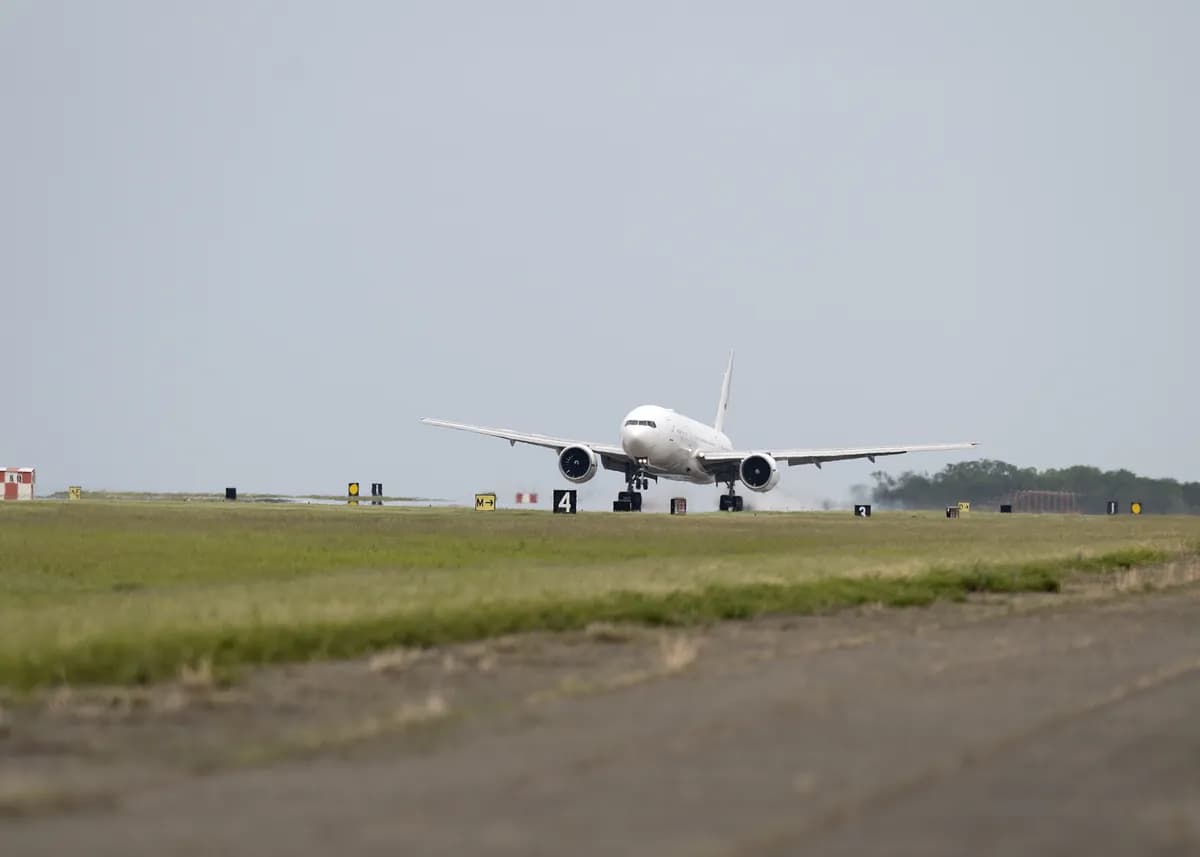
The aircraft returned to NASA's Langley Research Center in Hampton, Virginia, on April 22 after a check flight and three-hour transit from Waco, Texas. Since January 2025, it has been in Texas receiving hardware and structural upgrades to prepare for science operations. Modifications include installing dedicated research stations and extensive wiring, enlarging cabin windows, and installing open portals at the bottom of the fuselage to mount remote-sensing instruments. The major structural modification was performed by L3Harris Technologies in partnership with Yulista Holding, LLC, while research station and wiring upgrades are being performed by NASA and HII.
NASA acquired the 777 in 2022 to succeed the retired DC-8 aircraft. According to NASA, the 777 can accommodate 50 to 100 operators and carry 75,000 pounds of equipment for flights lasting up to 18 hours. The 777 will be the largest airborne research laboratory in NASA's fleet, collecting data to improve life on Earth and extend knowledge of the Earth system, as stated by Derek Rutovic, program manager for the Airborne Science Program at NASA Headquarters in Washington. Kirsten Boogaard, NASA 777 program manager at NASA Langley, added that the 777 will bring more partners, educational opportunities, and instruments, making a real difference in data collection.
Airborne missions at NASA use cutting-edge instruments to explore and understand our home planet. The 777 will be the largest airborne research laboratory in our fleet, collecting data to improve life on our home planet and extend our knowledge of the Earth system as a whole.
The aircraft's inaugural science mission, NURTURE, is slated to deploy in January 2027 and will investigate high-impact winter weather events across North America, Europe, Greenland, and the Arctic and North Atlantic Oceans. Specific details on the winter weather events to be studied and how the data will improve life on Earth remain to be fully outlined, as do the exact costs and budget for the modifications and missions.
We've been completing the engineering design and analysis to install the NURTURE payload into the aircraft in parallel with the portal modification. We're excited to get the airplane back home to NASA and on the road to its first mission.