

The photos, released by NASA, show Earth with auroras illuminating the thin atmosphere, city lights outlining continents, and brown deserts giving way to green vegetation. It is unclear whether the city lights are normally this bright or what kind of clouds are swirling over the Atlantic Ocean in the images. The hazy brown area visible in the photos could be dust, smoke, or another atmospheric phenomenon, but its exact nature has not been confirmed.
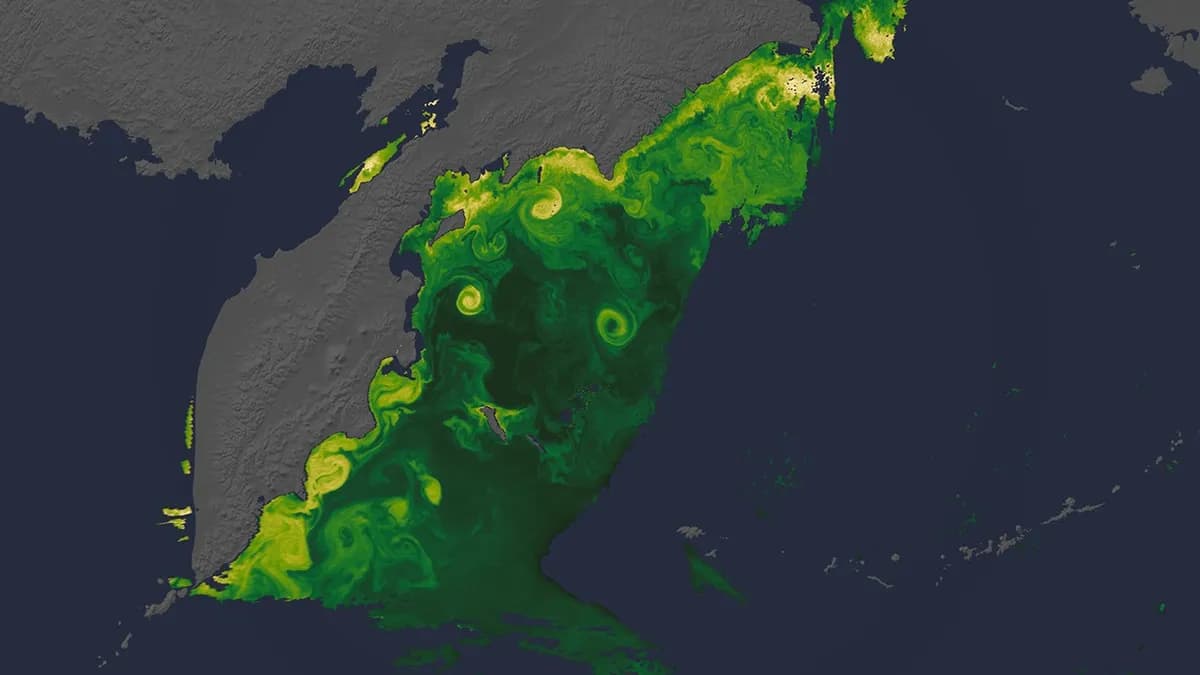
NASA's Plankton, Aerosol, Cloud, ocean Ecosystem satellite (PACE), which launched in February 2024, is part of the agency's fleet of satellites gathering data around the clock to study Earth. According to NASA, PACE's Ocean Color Instrument (OCI) sees Earth across a hyperspectral range of visible, ultraviolet, near infrared, and shortwave infrared light. In August 2025, PACE's ultraviolet measurements tracked a large dust plume blowing west from North Africa over the Atlantic Ocean, and data showed another plume to the north traced back to wildfire smoke in the United States and Canada.
PACE data also tracked the size and shape of particles from wildfires in the greater Los Angeles area in January 2025, distinguishing between small, sooty smoke particles and larger, brighter particles like dust and sea salt. NASA says PACE's instruments can capture the evolution and intensity of wildfires and resulting smoke. The satellite carries two polarimeters that measure how sunlight interacts with particles in the atmosphere, and combining specific wavelengths from OCI allows researchers to determine a fire's intensity, adding to other satellite observations that provide information to emergency responders.
Data from PACE and other satellites can help warn local managers of reservoirs, beaches, and recreation sites of potential water quality problems. Cyanobacteria (blue-green algae) are a normal part of some freshwater ecosystems like the Great Lakes but can explode into harmful blooms under certain conditions such as sunshine, nutrients, and warmer temperatures. PACE can detect specific shades of blues, greens, and reds that indicate a cyanobacterial bloom is in progress.