

NASA is preparing to launch the Artemis II mission, which will send four astronauts on a journey around the Moon, marking the first crewed lunar mission in over 50 years. Artemis II is NASA's first crewed mission under the Artemis program, planned to send NASA astronauts Reid Wiseman, Victor Glover, Christina Koch, and CSA astronaut Jeremy Hansen on an approximately 10-day journey around the Moon in 2026, according to multiple reports. The mission will see a crewed spacecraft return to the Moon for the first time since the Apollo era, with Artemis II being a crewed flight beyond the Moon which will take humans the farthest they've ever been in space.
The Artemis program is a Moon exploration program led by NASA, formally established in 2017 through Space Policy Directive 1. Under Artemis, NASA will send astronauts on increasingly difficult missions to explore more of the Moon for scientific discovery, economic benefits, and to build upon our foundation for the first crewed mission to Mars. By 2028, the program aims to return humans to the lunar surface for the first time since Apollo 17 in 1972, and it also intends to establish a permanent base on the Moon in the 2030s, as a stepping stone to human missions to Mars.
NASA marked significant progress toward the Artemis II test flight early next year, which is the first crewed mission around the Moon in more than 50 years. One Artemis mission has already been completed: in late 2022 Artemis 1, an uncrewed test flight, orbited and flew beyond the Moon. While no astronauts will be setting foot on the Moon this time, the mission marks a pivotal moment in the programme and future plans to put a permanent human settlement on the lunar surface. Their 10-day journey will ferry them up to 252,799 miles (406,840km) from Earth, exceeding the previous record set by Apollo 13 – 248,655 miles – in 1970.
Artemis will make Christina Koch the first woman to reach Earth's satellite, while Hansen is the first Canadian to go to the Moon. Reid Wiseman will serve as commander of the Artemis II voyage. Artemis II will launch on NASA's SLS (Space Launch System) rocket and will test the Orion spacecraft's life support systems for the first time with humans aboard. NASA completed stacking of its Space Launch System rocket and Orion spacecraft for Artemis II. The core infrastructure of Artemis consists of SLS, Orion, and the HLS (Human Landing System).
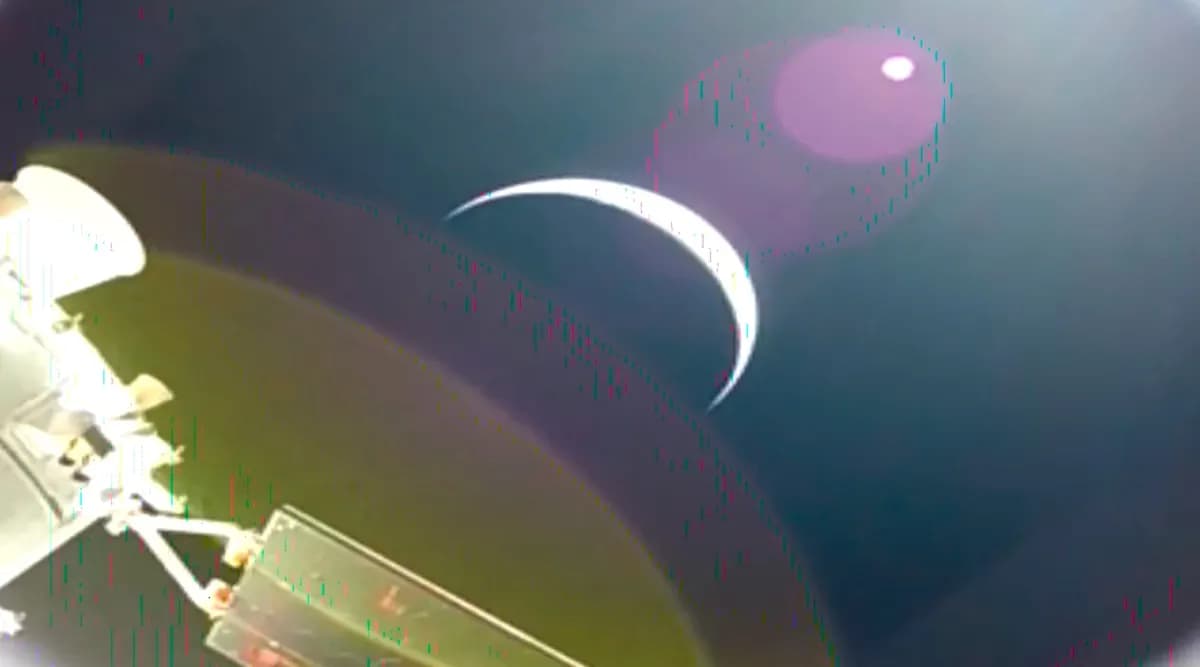
Commander Reid Wiseman recalled the 'spectacular view of Earth from space'.
The space agency said its March 2026 launch window was scrubbed after engineers found a problem with the flow of helium to the rocket’s upper stage, late in February. The move follows the scrubbing of an earlier launch date of 8 February 2026, which was cancelled after issues arose during the first Artemis II wet dress rehearsal, completed on 2 February. Even earlier launch dates of 6 and 7 February were moved after cold weather and winds at NASA's Kennedy Space Center pushed the mission's wet dress rehearsal back. In late February, NASA announced it would roll the Artemis II rocket back into the Vehicle Assembly Building, in order to preserve an April 2026 launch date.
Rollout of the fully stacked vehicle to Launch Pad 39B at Kennedy Space Center in Florida was completed on Saturday 17 January 2026, according to multiple reports. This rollout from the Vehicle Assembly Building marked the start of final integration, testing and launch rehearsals for Artemis II. When the Space Launch System reaches the launch pad, NASA then undertakes further mission preparations including connecting electrical power, environmental control systems and cryogenic propellant lines.
Before NASA sends its astronauts on Artemis II, the launch team will begin counting down about two days before liftoff. NASA conducted a wet dress rehearsal for Artemis II on 2 February, which included a full launch countdown practice and demonstrating the ability to load over 700,000 gallons of liquid hydrogen and liquid oxygen into the rocket.
NASA has reported that with the approximately six-minute firing of the spacecraft’s service module engine, known as the translunar injection burn, Orion and its crew would accelerate to break free of Earth’s orbit and begin the outbound trajectory toward Earth’s nearest neighbor. After reaching space, Orion would deploy its four solar array wings, enabling the spacecraft to receive energy from the Sun. However, these events are part of planned mission operations and have not yet occurred, as Artemis II remains in pre-launch preparations.
Wiseman said the team realised the 'gravity' of the historic mission, which will take them further from Earth than any other human has ever gone.
Similarly, reports indicate that the Artemis II astronauts might speak to Earth on day two of their journey around the Moon on a range of issues from faulty toilets to sleeping in space, but this is based on anticipated scenarios rather than actual events. The space agency plans to send four more Artemis missions, at least, over roughly a decade, with Artemis II planned to send four astronauts on a lunar flyby in 2026. Afterward, NASA intends yearly lunar landings to develop a permanent lunar base. Artemis 4 will be the first crewed Moon landing mission since Apollo 17 in 1972, while Artemis 5 will land another two astronauts on the Moon's surface and begin building a Moon base.
Missions after Artemis II will also rely on support missions by other organizations and spacecraft. NASA garnered more signatories for the Artemis Accords with 59 nations now agreeing to safe, transparent, and responsible lunar exploration.
Sean Duffy is serving as the acting administrator while NASA awaits confirmation of Jared Isaacman to lead the agency. NASA introduced 10 new astronaut candidates in September, selected from more than 8,000 applicants.
NASA and its partners landed two robotic science missions on the Moon. NASA achieved 25 continuous years of human presence aboard the International Space Station.
NASA will provide live coverage of prelaunch, launch, and mission events for Artemis II. Watch agency launch, lunar flyby, and splashdown coverage on NASA+ and Amazon Prime.
The Financial Times offers an annual subscription plan called FT Edit for €54, according to Aftonbladet. The FT Edit subscription includes access to eight hand-picked articles a day.