

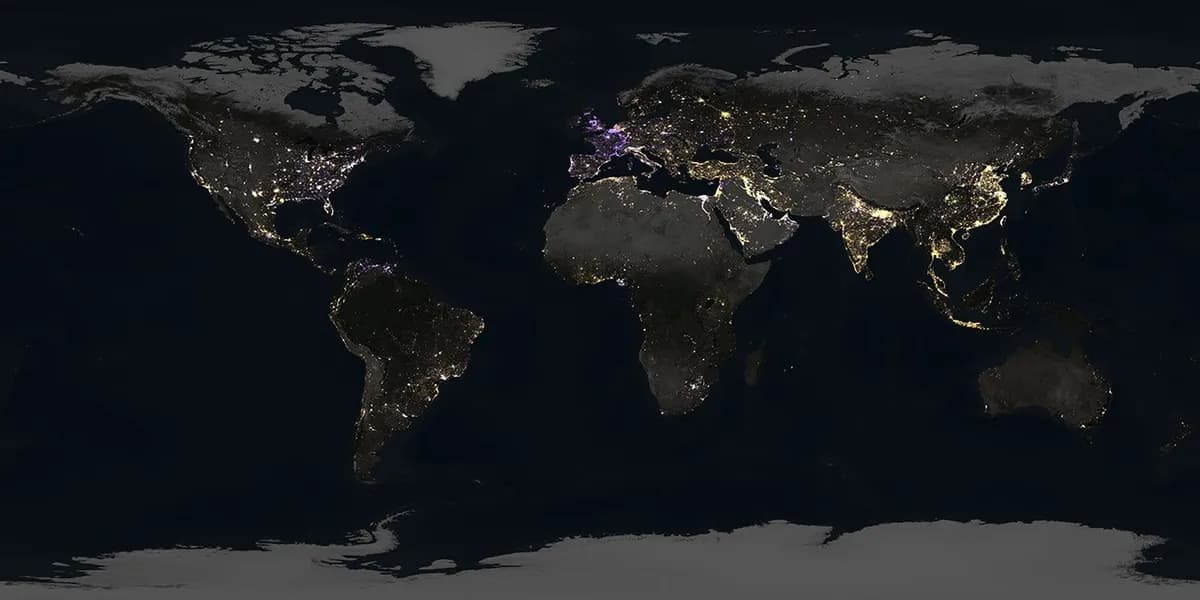
The latest nighttime maps challenge some long-held assumptions, such as the view that the planet simply glows brighter over time due to development. S. regions, particularly the Permian Basin in Texas and North Dakota's Bakken Formation.
Flaring occurs at oil wellheads when excess gas—mostly methane—is burned off, releasing carbon dioxide and soot, among other byproducts. m. local time every day for nine years by the Visible Infrared Imaging Radiometer Suite (VIIRS).
The analysis covered most of the inhabited world, from latitudes between 60 degrees south and 70 degrees north, during 2014 to 2022. During that period, domestic production of oil and natural gas reached record levels, driven by technological developments and horizontal drilling. Factors such as rural electrification and energy conservation are changing how billions around the world experience the night.
Scientists and analysts across industries use NASA night-light data to understand how energy moves through grids, pipelines, and supply chains in near real time. The data is free to access via NASA's Black Marble product suite. According to NASA, Deborah Gordon noted that making flaring data public is valuable for energy, economic, and environmental security.
Miguel Román emphasized that NASA data advances national security by unlocking energy sector insights. S. remain unclear, as do how rural electrification and energy conservation specifically affect global nighttime light patterns.