

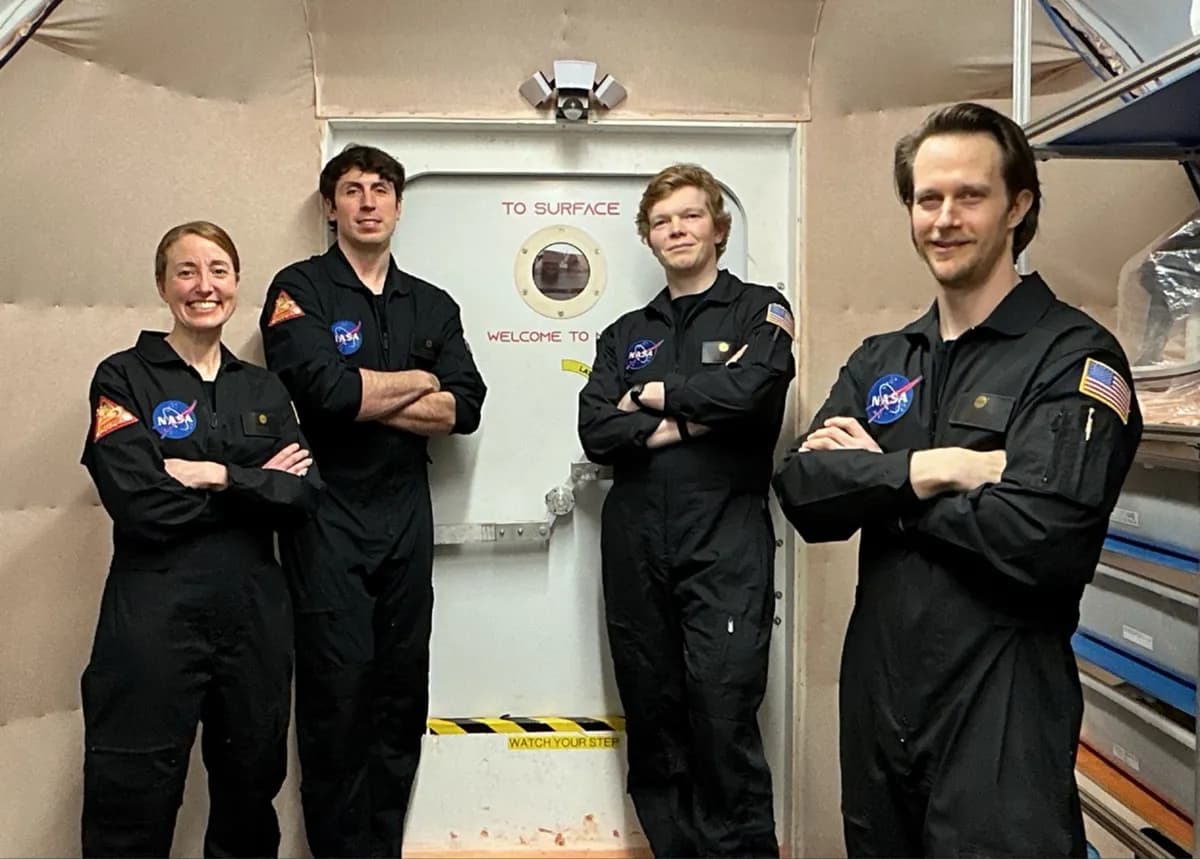
The CHAPEA mission 2 crew entered the 3D-printed habitat on Oct. 19 and will exit on Oct. 31.
The crew is commanded by Ross Elder, with medical officer Ellen Ellis, science officer Matthew Montgomery, and flight engineer James Spicer. They have completed robotic operations, performed habitat maintenance, and grown crops inside the 1,700-square-foot habitat. The crew experiences mission constraints such as delayed communications, limited supplies, and simulated equipment malfunctions.
A key objective of NASA’s CHAPEA missions is to gather data on cognitive and physical performance during extended isolation. Medical officer Ellen Ellis said she is proud of the crew’s accomplishments over the past 200 days, facing each challenge with fortitude and finding new ways to improve performance and efficiency daily. Flight engineer James Spicer noted that the crew approaches every day committed to doing their best work, whether simulated spacewalks, geology, exercise, or medical activities.
He added that what keeps them motivated is knowing they are contributing directly to NASA’s deep space exploration objectives. Science officer Matthew Montgomery said having limited resources really bounds what you have to solve problems, and finding creative and clever solutions has been both challenging and rewarding. Project scientist Sara Whiting said extended-duration missions are relatively rare in NASA’s history, and the operational lessons learned and health and performance data come at the perfect time to inform sustainable lunar presence and crewed Mars missions.