

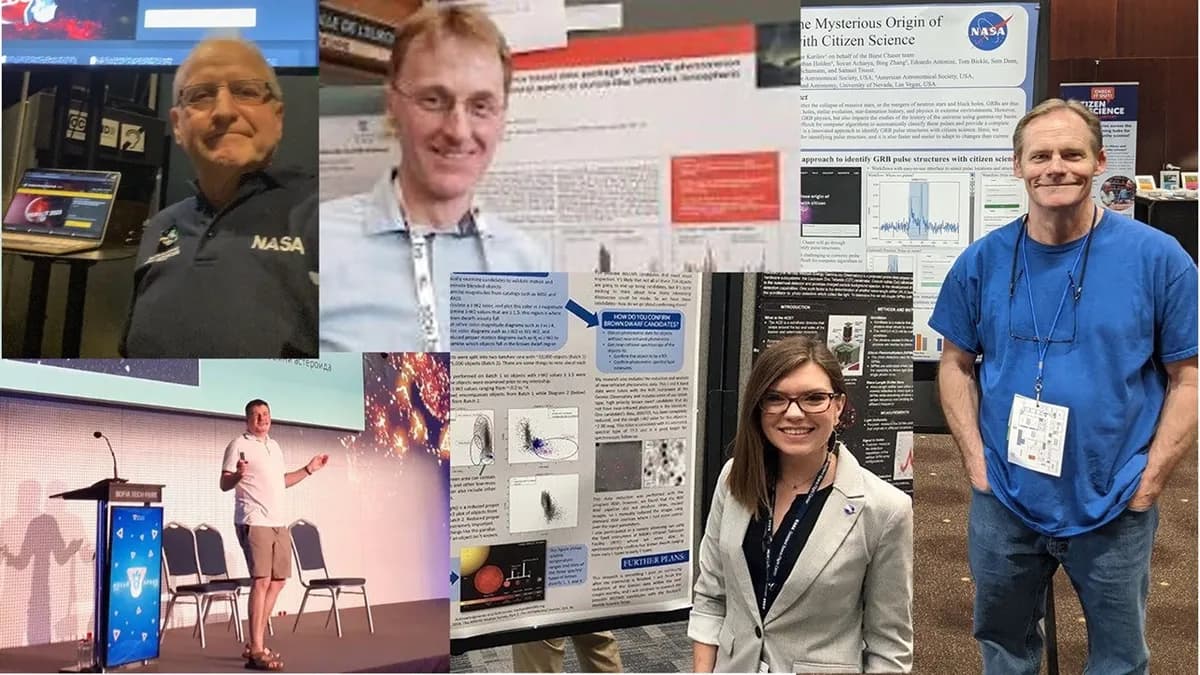
Volunteers have contributed by spotting comets, gamma-ray bursts, and brown dwarfs in space telescope data, as well as observing auroras, sprites, and noctilucent clouds from Earth. Others used backyard telescopes to gather data on exoplanets or cell phones to report mosquito breeding habitat, and some used ham radios to study Earth’s ionosphere, NASA said.
Peer-reviewed research papers are the primary way scientists document and share discoveries, and contributing to published scientific literature is important for both PhD scientists and citizen scientists, according to NASA. A list of published papers is the core of any scientist’s resume. Volunteers can become published authors by choosing a project carefully and taking initiative, NASA said. Citizen scientist Michael Primm advised: "Pick one or more [projects that] appeal to you, and try them out for size. If you don’t like them, try other ones."
Pick one or more [projects that] appeal to you, and try them out for size. If you don’t like them, try other ones.