

The launch schedule for Artemis II remains uncertain following recent technical delays. NASA said its March 6 launch day for Artemis II is now 'out of consideration' due to last-minute issues, with the helium issue pushing the launch to April. NASA is three days away from the launch of Artemis II on April 1, scheduled for 6:24 p.m. EDT (2224 GMT) from Kennedy Space Center, but contradictions exist in the reported timeline. Some sources suggest an imminent launch in 2024, while others point to a much later date in 2026 or unspecified delays due to technical problems, leaving the mission's current status unclear. Major media reports indicate the departure has been moved forward several times, adding to the confusion over the exact current launch date for Artemis II.
Engineers observed an interruption in the flow of helium required for launch operations, a serious technical issue that forced the Artemis II rocket back to the Vehicle Assembly Building. The test on Thursday revealed no faults initially, but the helium issue was discovered overnight on Friday. NASA has repaired the helium flow issue, with technicians finding a faulty seal in the quick disconnect section blocking helium flow, but it is unknown if this has been fully resolved and certified for flight. This repair process has contributed to delays, with the specific year for the April launch mentioned in some sources remaining ambiguous amid ongoing assessments.
NASA sees Artemis II as a critical stepping stone toward landing astronauts on the lunar surface again, establishing a sustained presence, and using the moon as a gateway to future Mars missions. Under the Artemis campaign, NASA is returning humans to the Moon for economic benefits, scientific discovery, and to prepare for crewed missions to Mars. NASA is weeks away from sending astronauts farther than any crew has traveled before with Artemis II, and Artemis II will send humans farther from Earth than ever before. These goals align with long-term ambitions to extend human exploration beyond low Earth orbit.
The Artemis II crew includes commander Reid Wiseman, pilot Victor Glover, and mission specialists Christina Koch and Jeremy Hansen. Jeremy Hansen is a Canadian Space Agency astronaut and the first non-US citizen to travel beyond low Earth orbit and to the moon's vicinity. Christina Koch will be the first woman to travel beyond low Earth orbit and to the moon's vicinity, while Victor Glover will become the first person of color to travel beyond low Earth orbit and to the moon's vicinity. This diverse composition highlights international collaboration and milestones in space exploration.
The mission will follow a free-return trajectory around the moon, reaching a distance of roughly 4,700 miles beyond the moon and reentering Earth's atmosphere at approximately 25,000 mph. Artemis II will thus make it the furthest and fastest crewed space mission. This trajectory ensures a safe return without propulsion maneuvers, leveraging gravitational forces to loop around the moon and head back to Earth. The record-breaking aspects underscore the mission's technical complexity and historic significance in pushing human spaceflight boundaries.
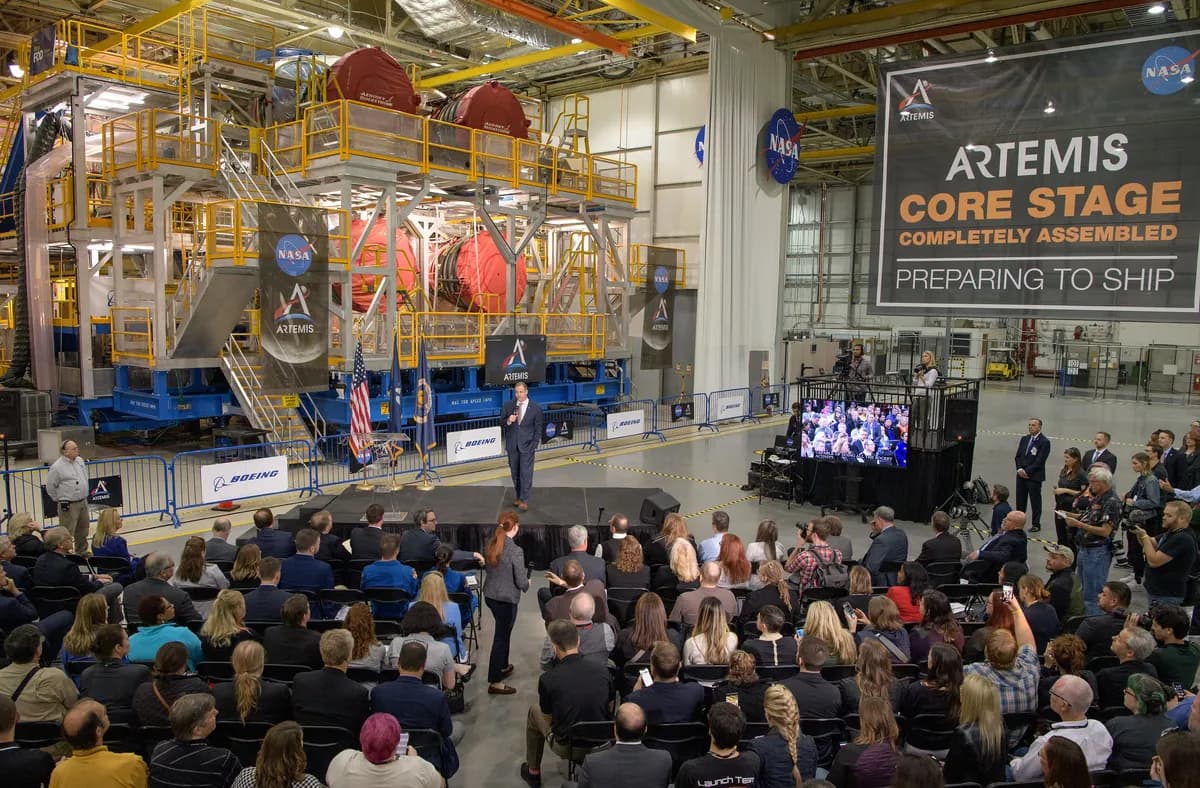
The SLS rocket is 3.5 million pounds and 32 stories tall, and it was rolled out atop an Apollo-era crawler from the assembly building to the launch pad at Kennedy Space Center in Florida about two weeks ago. The rollout covered four miles at a top speed of less than one mile per hour, a slow process designed to ensure stability and safety for the massive vehicle. This meticulous transport highlights the engineering challenges involved in preparing for launch, with the rocket now positioned for final checks and countdown procedures.
The astronauts are in quarantine at Kennedy Space Center and will hold a virtual press conference, having arrived there on March 27. The crew has been in quarantine since March 20 when the SLS was rolled to the launch pad, adhering to health protocols to prevent illness before the mission. These pre-launch preparations include medical monitoring, training reviews, and briefings to ensure readiness for the demanding journey. Quarantine periods are standard practice to minimize risks to crew health and mission success.
Artemis II was originally designated Exploration Mission-2 (EM-2) and intended to support the now-canceled Asteroid Redirect Mission, reflecting shifts in NASA's strategic priorities over time. Artemis II will be followed by Artemis III, a docking test of Orion in Earth orbit planned for 2027, and Artemis IV, a crewed lunar landing planned for 2028. President Trump set a goal of returning Americans to the moon by 2028, aligning with these planned missions under the Artemis program. This context shows how Artemis II fits into a broader framework of lunar exploration and future deep-space endeavors.
Conflicting information surrounds the launch date and readiness of Artemis II, with some sources reporting an imminent launch in 2024 and others indicating delays to 2026 or later due to technical issues. Major media reports state that four astronauts are ready, and Artemis 2 is expected to fly humans to the moon during the Easter weekend, but these claims are of low confidence and contrast with the reported helium-related delays. The discrepancies leave the mission's current status unclear, with NASA yet to provide an official update on mission readiness as of the latest reports. It is unknown what other technical challenges may currently be affecting the mission, adding to the uncertainty.
Current unknowns include whether the helium flow issue has been fully resolved and certified for flight, the specific year for the April launch, and any other technical challenges currently affecting the mission. The exact current launch date for Artemis II remains undetermined, and the official NASA status update on mission readiness as of the latest reports has not been confirmed. These gaps in information highlight the dynamic nature of space mission planning, where last-minute adjustments are common but can impact public and stakeholder expectations. As preparations continue, NASA is likely to release further details to clarify the timeline and technical readiness.