

Eagle-eyed social media users spotted what appeared to be a large patch of damaged or missing material on the Orion crew capsule's heat shield after re-entry. NASA has responded, reassuring that there's no cause for concern about the heat shield. According to NASA, the discolored patch is really nothing more than a smudge of burned material. NASA administrator Jared Isaacman confirmed on X that engineers inspected the heat shield and no unexpected conditions were observed. Isaacman stated that the discoloration was not liberated material. Isaacman added that the white color observed corresponds to the compression pad area and is consistent with the local geometry, AVCOAT byproducts, and transitional heating environments. Isaacman noted that they observed this behavior in arc jet testing and expected it in this compression pad area. As speculation gathered online, Isaacman stepped in to lay the rumors to rest.
The Orion crew capsule used for Artemis II has an 'ablative' heat shield made of a material called Avcoat. The heat shield is designed to burn and crumble away as it is exposed to the heat of re-entry, redistributing the energy like the crumple zone of a car. Artemis II's heat shield is almost exactly the same as the one used for Artemis I. The heat shield is essential to protect the capsule from scorching heat; without it, the capsule would melt and burn up. The heat shield is made of a material called Avcoat, which is supposed to erode gradually upon reentry. During the uncrewed Artemis I mission in 2022, Orion's heat shield lost chunks of material, suffering much more than predicted. During Artemis I, the heat shield material cracked far faster than NASA had expected, with large chunks breaking off during re-entry.
In response to Artemis I issues, NASA adjusted the re-entry trajectory for Artemis II, making a single steep dive rather than skipping like a stone along the edge of the atmosphere. NASA concluded it could ensure crew safety by tweaking the flight path instead of replacing the heat shield. For Artemis II, Orion will make a 'loft' movement, coming in at a steeper angle and spending less time in the problematic part of the atmosphere. NASA is confident this modification is sufficient to keep the astronauts safe.
The Artemis II astronauts are about to return from a record-setting trip around the moon. The Artemis II mission launched April 1 and is set to end with a splashdown in the Pacific Ocean late Friday (April 10). The reentry will occur at over 25,000 mph (40,000 km/h), making the crew the fastest humans in history. The reentry will be the most dangerous hurdle yet for Artemis II.
NASA and the astronauts say the Orion spacecraft's heat shield is safe to bring them home, but not everyone agrees. Experts raised concerns that the three-inch-thick layer of insulating material could fall apart during re-entry. There were major concerns that NASA's testing was insufficient, and that the crew could be exposed to dangerously high temperatures if the heat shield failed.
Artemis I's heat shield didn't fail: there was plenty of Avcoat left, and internal temperatures remained normal; astronauts would have been fine.
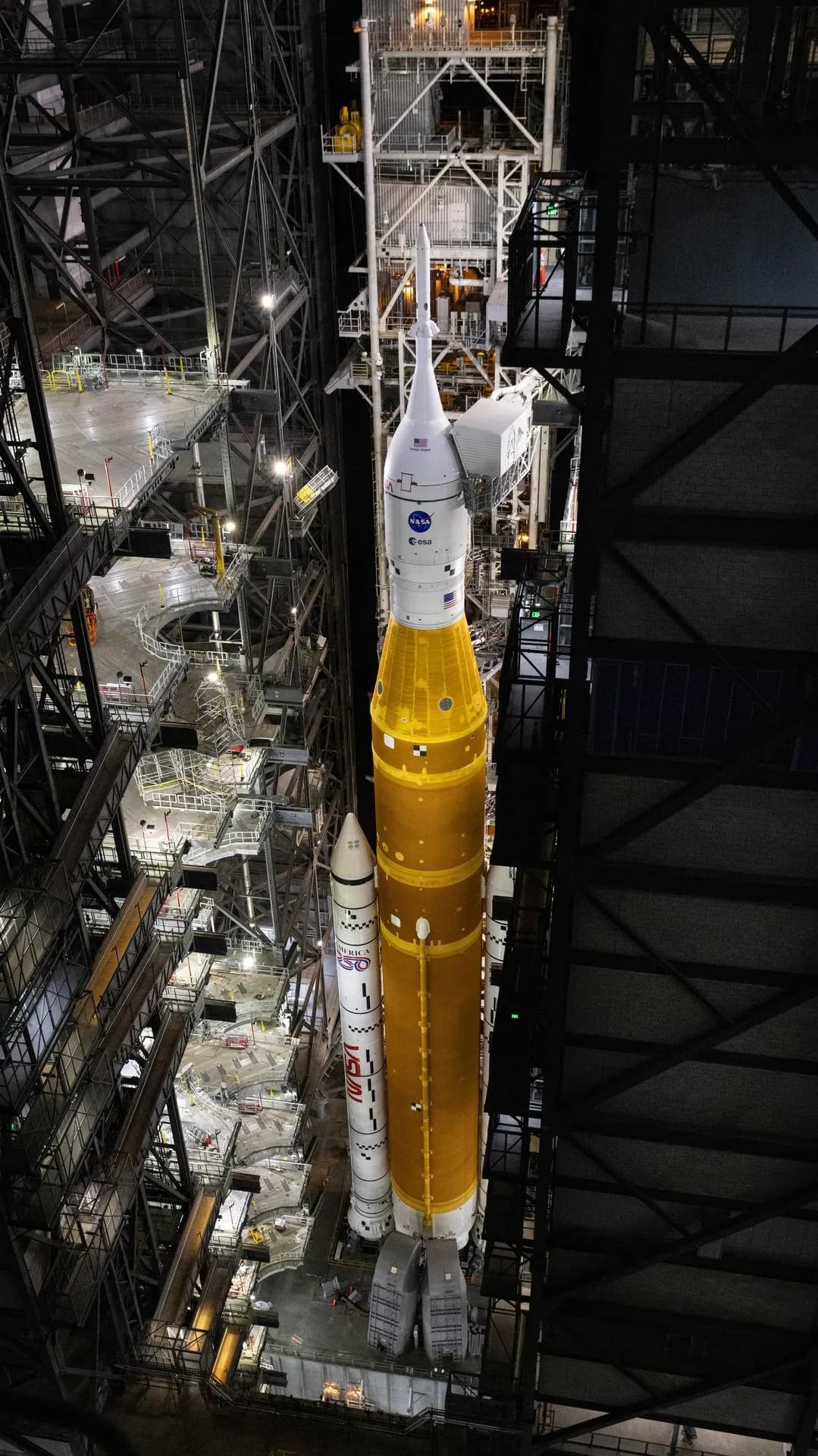
Throughout February 2026, people at Kennedy Space Center witnessed NASA's SLS rocket standing on the launch pad, aimed toward the sky. NASA initially planned to launch Artemis II, with a crew of four around the Moon, in February 2026. As anticipation built, an issue with liquid propellant arose, and a few days later, the SLS faced another problem with the rocket’s upper stage, causing it to roll back from the pad. Artemis II faced a number of delays, and NASA officials announced a shake-up of the larger program’s timeline. Artemis I launched nearly six years after NASA’s original target date, accumulating 25 scrubbed or delayed launch attempts.
On Feb. 2, during Artemis II’s first wet dress rehearsal, engineers detected a hydrogen leak at the interface of a 33-foot-high service mast. The wet dress rehearsal involves filling SLS tanks with 700,000 gallons of super-cold liquid hydrogen and liquid oxygen as propellant. The cause of the hydrogen leak was attributed to moisture accumulated in the Teflon seal of two interfaces between the mast and the vehicle’s tank. NASA decided to postpone the launch until March 6 and scheduled a new wet dress rehearsal for Feb. 19.
A couple of days later, engineers found the interim cryogenic propulsion stage was leaking helium. Helium is essential for pressurizing cryogenic tanks and purging pipelines carrying liquid oxygen, so the leak raised concerns. These issues echoed challenges SLS encountered ahead of Artemis I in 2022, including recurring hydrogen leaks in the tail service mast umbilical.
During the second wet dress rehearsal, hydrogen operations proceeded smoothly, seemingly confirming plans for a March launch. However, contradictions exist in the timeline: while the Artemis II mission launched April 1 and is set to end with a splashdown in the Pacific Ocean late Friday (April 10), NASA initially planned to launch Artemis II in February 2026.
NASA's first crewed flight to the moon since 1972 has led to some stunning images and poignant human moments.
While the heat shield looks solid, it actually has several holes that contain Avcoat material, designed to ablate during reentry.
The current status of the Artemis II mission remains unclear due to conflicting reports about its launch date. Specific evidence supporting NASA's claim that the heat shield discoloration is expected burned material and not damage has not been publicly detailed. The severity of the hydrogen and helium leaks on the SLS rocket, and whether they have been fully resolved, is unknown. Safety margins for the modified reentry profile and how they compare to original predictions have not been disclosed. Contingency plans if the heat shield or other systems fail during the mission are not publicly available.