

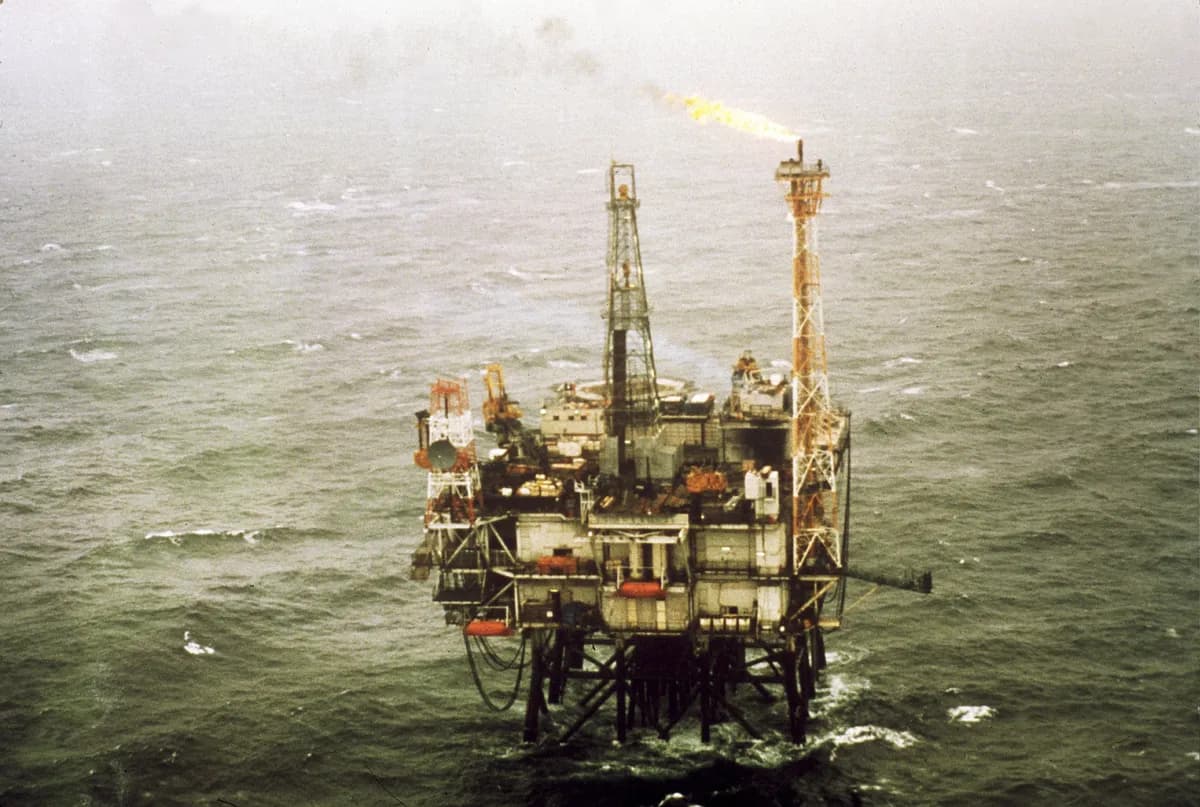
US-Israeli strikes on Iran began on February 28, 2026, according to multiple reports. Iran has since launched ballistic missiles targeting Israel, US military bases, oil depots, and other infrastructure across the Gulf region. Iranian attacks on vessels in the Strait of Hormuz have dramatically reduced traffic in the channel, with some reports indicating a full closure on March 4, 2026, that stranded oil and LNG exports. These attacks upended key supply chains, driving oil prices above $100 a barrel.
Oil prices have soared, with Brent crude at $106 per barrel as of Monday morning, up more than 40% from $72 per barrel on February 27. Following the reported closure of the Strait of Hormuz, Brent crude surged past $120 per barrel. The spike in oil prices followed Iran's closure of the Strait of Hormuz in response to the US and Israeli action, according to research. The International Energy Agency characterized the disruption as the 'largest supply disruption in the history of the global oil market.'
Jonathan Lawson, chief executive of Butcombe Group, blasted Labour’s handling of the economy and accused ministers of ignoring business.
The energy market chaos extends beyond crude oil. LNG prices have risen by almost 60% since the start of the war, according to analyst Muyu Xu. QatarEnergy suspended its LNG production after an Iranian drone attack on March 2, straining the global LNG market, and later declared force majeure on all exports. Prices of refined products like petrol, gas oil, jet kerosene, and fuel oil have seen significant increases and are expected to continue rising if energy flows through the Strait of Hormuz remain shut, Xu noted.
The war has caused a systemic collapse of the Gulf Cooperation Council economic model, research indicates. Arab states of the Persian Gulf and Iran rely heavily on the Strait of Hormuz for energy exports and grocery imports, with only Saudi Arabia and the UAE having alternative, albeit limited, routes. Oil production of Kuwait, Iraq, Saudi Arabia, and the UAE collectively dropped by a reported 6.7 million barrels per day by March 10, and by at least 10 million barrels per day as of March 12. Analysts have noted a profound shift in the region's long-term economic narrative, with Gulf states unlikely to sustain high levels of investment spending during or after the war.
This year was quite difficult for us to plan already due to tax hikes and other costs even before the outbreak of war in the Middle East.
A severe humanitarian crisis is emerging in the Gulf. The maritime blockade triggered a 'grocery supply emergency' across Gulf Cooperation Council states, which rely on the Strait for over 80% of their caloric intake. By mid-March, 70% of the region's food imports were disrupted, forcing retailers to airlift staples and resulting in a 40–120% spike in consumer prices. The crisis has shifted toward fears about a humanitarian crisis following Iranian strikes on desalination plants, the source of 99% of drinking water in Kuwait and Qatar.
Global ripple effects are intensifying. The impact of the conflict echoes the 1970s energy crisis through acute supply shortages, currency volatility, inflation, and heightened risks of stagflation and recession. Stock markets experienced declines globally, and there was a global bonds market sell-off. Interest rate reductions were expected to be postponed or increased due to higher inflation from supply shortages and speculation. The regional aviation sector, including Emirates and Qatar Airways, faced a near-total cessation of operations due to multi-national airspace closures, causing widespread disruption to global air travel.
The government is not listening to the concerns of business over issues such as business rates.
Asia is particularly vulnerable due to its dependence on Strait of Hormuz energy flows. About 84% of crude oil and 83% of LNG that passed through the Strait of Hormuz in 2024 was bound for Asia, according to the US Energy Information Administration. China, India, Japan, and South Korea accounted for nearly 70% of oil shipments through the Strait of Hormuz, with about 15% bound for the rest of Asia.
Price projections for oil are conflicting and hinge on the war's duration. According to a Capital Economics report, if the conflict is short-lived and Iranian attacks cease, oil and LNG prices would fall sharply, with Brent crude reaching $65 per barrel by year-end. In case of a longer war, the same report projects oil prices would rise further to around $130 per barrel in the second quarter.
Lawson would challenge claims Labour is doing a good job on the economy after official figures showed output rose by 0.5 per cent in February.
The impact of the war is being felt by countries across the globe, including in Africa. Scholars from Nigeria, South Africa, Senegal, Kenya, and Ethiopia uniformly said the spike in oil prices is hurting their countries' economies. The universal fear is the effect of rising oil prices on fuel, a staple commodity in these countries.
National responses in Africa to the fuel price crisis vary. In Ethiopia, the government has introduced fuel subsidies to shield people from higher fuel prices. There is fear that higher prices and scarcity could have damaging effects on food production. Kenya and Senegal are in early phases of oil production but are some way off reaping benefits from higher prices. In Nigeria, any windfall from higher oil prices won't ease the economic burden faced by ordinary people.
Increases in national insurance contributions, the minimum wage and business rates impacted business before the Iran war sent energy prices soaring.
Amid the global turmoil, UK businesses are grappling with domestic policy pressures. Jonathan Lawson, CEO of Butcombe Group, criticized successive UK Governments for failing businesses with their 'lack of understanding.' According to Daily Mail - Money, Lawson described how consecutive Governments have disappointed all UK businesses, with an absolute lack of understanding of what business needs. He warned that rising costs and tax changes are placing increasing pressure on businesses.
Specific cost pressures on Butcombe Group are significant. According to Daily Mail - Money, Lawson described how the latest increases in the national minimum wage have added to difficulties. He stated that Rachel Reeves’ national insurance tax raid and inflation-busting rise in the minimum wage cost Butcombe Group over £2 million last year. This month’s 8.5 per cent rise in the minimum wage for 18 to 20-year-olds to £10.85 per hour is alarming, Lawson noted, adding that the hourly rate for that age group has gone up 26 per cent since Labour came to power.
Butcombe Group had a very good year last year and invested significantly into its business.
Broader business challenges for Butcombe include eroded consumer confidence and planning uncertainty. The biggest single challenge for Butcombe Group is consumer confidence, with negative consumer sentiment data from Barclaycard, according to Lawson. Government handling of the economy since last year's Autumn Budget has continued to erode consumer confidence, he said. The second biggest issue is the lack of ability to plan with certainty, with businesses focusing on Christmas and next year's plans, as stability and continuity are key for Butcombe as a business to plan forward.
These difficulties predate the Middle East conflict. According to Daily Mail - Money, Lawson described how this year was quite difficult to plan already due to tax hikes and other costs even before the outbreak of war. Increases in national insurance contributions, the minimum wage and business rates impacted business before the Iran war sent energy prices soaring, he said. Rising costs and tax base inflicted by this and previous governments make it difficult to have confidence around investment and employment growth, Lawson added.
Rising costs and tax base inflicted by this and previous governments make it difficult to have confidence around investment and employment growth.
The business rates controversy illustrates the tension between government and industry. Butcombe Group was handed a £150,000 saving when the Chancellor watered down her botched business rates reforms, according to Daily Mail - Money. The Chancellor watered down business rates reforms following a fierce backlash from the industry that saw Labour MPs banned from many pubs. According to Daily Mail - Money, Lawson dismissed the help on business rates, saying they have made a big deal out of what in context is a small amount of money for our business. He also stated that the Government and Chancellor promised to reform business rates for the pub sector and retail but have still yet to deliver on their promise.
Despite the challenges, Butcombe Group has shown resilience. According to Daily Mail - Money, Lawson described how Butcombe Group had a very good year last year and invested significantly into its business. The hospitality sector provided GDP growth immediately after the pandemic, indicating its potential for growth, he noted. Butcombe Group has grown substantially over the past five or six years and has exciting plans for next year with investments kicking in after Christmas, Lawson said.
Latest increases in the national minimum wage have added to difficulties.
The political context adds another layer. According to Daily Mail - Money, Lawson described how the government is not listening to the concerns of business over issues such as business rates. He would challenge claims Labour is doing a good job on the economy after official figures showed output rose by 0.5 per cent in February. The Labour Government pledged to provide stability for businesses but has provided uncertainty and instability since its election win, Lawson asserted, adding that the Government needs to move quickly to transform the attitude and mood within the hospitality sector.
Butcombe Group operates at a significant scale, with over 130 pubs, bars and inns, mainly in the South of England, according to Daily Mail - Money.
Rachel Reeves’ national insurance tax raid and inflation-busting rise in the minimum wage cost Butcombe Group over £2million last year.
Critical unknowns persist regarding the conflict and its aftermath. The exact current status of the Strait of Hormuz—whether fully closed, partially open, or under military control—and how long disruptions are expected to last remain unclear. It is also unknown what specific measures, if any, the UK government is planning to address business concerns over tax and regulatory issues raised by Butcombe Group and the broader hospitality sector.
The war has 'irreversibly shaken' the region's image, exposing fragility beneath the facade of rapid economic transformation, according to the Middle East Council on Global Affairs. As the crisis unfolds, the global economy faces a precarious period with interconnected challenges spanning energy security, regional stability, and business viability.
This month’s 8.5 per cent rise in the minimum wage for 18 to 20-year-olds to £10.85 per hour is alarming.
Lawson dismissed the help on business rates, saying they have made a big deal out of what in context is a small amount of money for our business.
The Government and Chancellor promised to reform business rates for the pub sector and retail but have still yet to deliver on their promise.
The 2026 Iran war, including the closure of the Strait of Hormuz, has led to what the International Energy Agency characterized as the 'largest supply disruption in the history of the global oil market.'
Jonathan Lawson, CEO of Butcombe Group, criticized successive UK Governments for failing businesses with their 'lack of understanding'.
Businesses are 'living off scraps and crumbs' from poorly handled briefing from Rachel Reeves and Keir Starmer.