

Oil prices surged by more than 4% to about $75 a barrel on Tuesday amid Israeli troops moving into Lebanon and Iran launching a missile attack on Israel. However, the price of Brent crude has hit 100 US dollars a barrel once again this week, as the conflict continues. Prices for West Texas Intermediate crude have risen above $90 a barrel in recent days, while Brent crude has been just above $100 a barrel.
Those prices were between $60 and $70 a barrel a month ago before the conflict began. Despite these recent spikes, oil prices have fallen more than 10% in the past three months. Iran is a major oil producer, supplying about 3 million barrels a day, or about 3% of world output, despite western sanctions.
Tehran has significant influence over the Strait of Hormuz, a key chokepoint handling as many as 20 million barrels a day, almost 30% of the world oil trade. Iran exerts control over the Red Sea through its backing of Houthi rebels in Yemen, who have been targeting shipping. Analysts at Capital Economics said Iran closing the Strait of Hormuz could drive oil close to $100 a barrel, but they doubt Iran would be able to close it for long due to likely US military response.
Global commodity prices are set to tumble to a five-year low in 2025 amid an oil glut. Overall commodity prices will remain 30% higher than they were in the five years before the COVID-19 pandemic. 2 million barrels per day, a glut exceeded only twice before in 2020 and 1998.
China's oil demand has essentially flatlined since 2023 amid a slowdown in industrial production and an increase in sales of electric vehicles and LNG trucks. OPEC+ maintains significant spare capacity, amounting to 7 million barrels per day, almost double the amount on the eve of the pandemic in 2019. Global food prices are set to fall 9% this year and an additional 4% in 2025 before leveling off, leaving food prices nearly 25% above the 2015-2019 average.
Energy prices are expected to drop by 6% in 2025 and an additional 2% in 2026. Falling food and energy prices should make it easier for central banks to control inflation, but an escalation in armed conflicts could complicate that effort. More than 725 million people were food insecure in 2024 due to high prices, conflict, extreme weather, and other shocks.
Carnival told Reuters it doesn't see a long-term net benefit in hedging and focuses on using less fuel, having cut fuel use by 18% since 2011 despite increasing capacity by nearly 38%.
Viking Line is reducing the speed of its Finland ferry due to the Iran conflict and increased fuel prices. The speed reduction will affect passengers. Ferry firm Tallink and Finnair have both announced increases in ticket prices as a result of the rise in oil prices caused by the war in Iran.
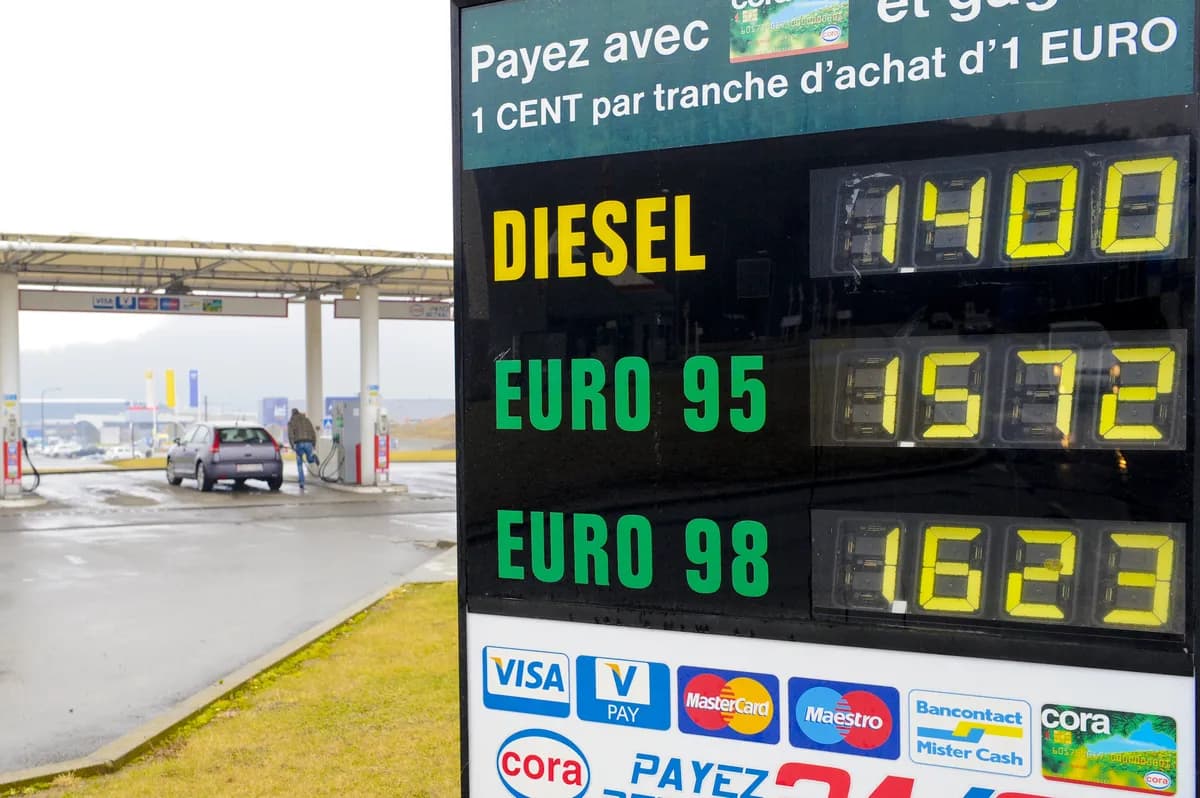
Fuel accounts for about 13 percent of Tallink's passenger sailing costs, or about one hundred million euros. Scandinavian Airlines (SAS) is temporarily bringing in a fuel surcharge which will lead to a hike in ticket prices for passengers. There is a constant stream of cars with Finnish registration plates arriving at petrol stations in Haparanda, Sweden, due to lower fuel prices compared to Finland.
90 euros per litre. 76 euros in Finland based on Wednesday's prices. Cruise lines are facing headwinds as rising oil prices push their fuel costs higher amid the Iran war.
A 10% change in fuel cost per metric ton would reduce Carnival's 2026 net income by $156 million, compared with $57 million for Royal Caribbean and roughly $90 million for Norwegian Cruise Line. 2% for Norwegian. The world's first electric passenger vessel is coming to the Gulf of Finland, courtesy of Viking Line.
Viking Line has cut its pollution by nearly a third in the last 15 years and began its green transition in the early 1990s by switching to low-sulphur fuel. The battery electric ferry should be ready to sail the open waters of the Baltic by the early 2030s. 2 million in the first half of 2014, partly due to lower bunker prices.
To offset the risk of higher bunker prices, Viking Line has entered into fixed-price agreements for part of its estimated bunker consumption from 1 April to 31 December 2015. Passengers using a Viking Line ferry on the Turku-Aland-Stockholm route can pay more for their ticket to reduce emissions by purchasing renewable biofuel, cutting greenhouse gas emissions by up to 90%. Assuming the Middle East conflict does not intensify, the annual average price of Brent crude is expected to fall to a four-year low of $73 in 2025, down from $80 a barrel this year.