

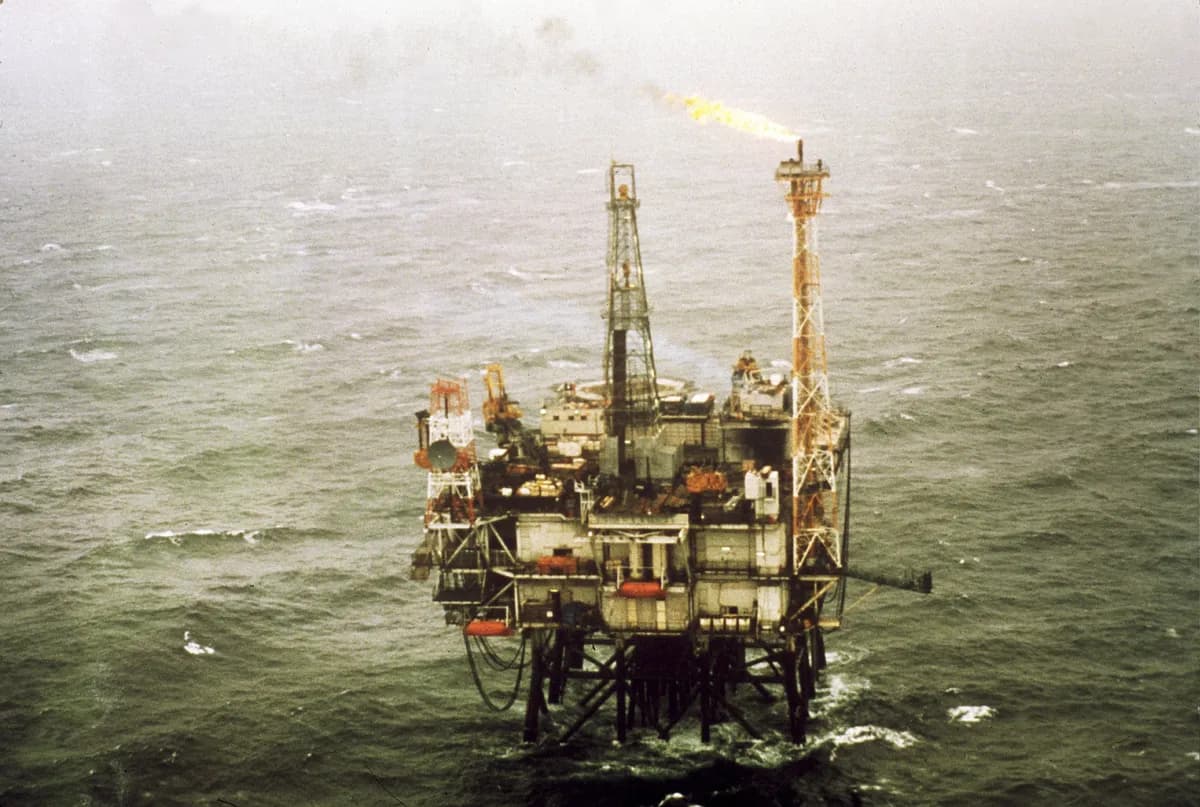
The US-Israeli strikes on Iran that began on February 28 and Tehran's subsequent ballistic missile launches targeting Israel, US military bases, oil depots, and Gulf infrastructure have triggered severe disruptions. According to research from six sources, these events have upended global financial and energy markets, raising concerns of a global economic crisis or recession. As of Monday morning, Brent crude was priced at $106 per barrel, up more than 40% from $72 per barrel on February 27, illustrating the immediate shock.
Global energy flows are facing acute supply disruptions, particularly through the Strait of Hormuz. Iranian attacks on vessels have dramatically reduced traffic through this chokepoint, which handles about 20% of global oil and gas supplies. About 84% of crude oil and 83% of LNG that passed through the strait in 2024 was bound for Asia, indicating widespread regional impact. On March 2, QatarEnergy suspended its LNG production after an Iranian drone attack, further straining the global LNG market.
Political shifts in major economies are shaping the energy policy environment amid this turmoil. Research from six sources indicates that in 2024, politics had a bigger impact on energy markets than before, with geopolitical conflicts, political shifts in the UK, Europe, and the US, and economic pressures creating a challenging environment. In the UK, Labour is pushing for accelerated net zero policies while its recent Budget has squeezed financial headroom and pushed the country into recession. In the US, the incoming Trump Administration is set to focus on economic growth driven by cheap domestic production of oil and gas. In Europe, high energy costs are driving de-industrialisation, and concerns over affordability and climate policies led voters in many countries to reject the status quo on energy.
Recent election outcomes in the US and UK are adding to market implications. Donald Trump won the US election with an unexpected margin of victory, according to research from six sources, and his re-election sparked optimism in global financial markets. In the UK, Labour won the election with a huge Parliamentary majority but the lowest share of the popular vote in any post-war government. Over 3 million people signed a petition asking for a new General Election in the UK, to be debated in Parliament on January 6.
This political uncertainty in the UK is fueling public discontent, as evidenced by the petition for a new election.
Meanwhile, Federal Reserve policy moves have influenced market reactions. The Fed reduced interest rates by 25 basis points in both November and December 2024. In December, it sparked a stock market sell-off by lowering its projections for interest rate cuts expected in 2025. US annual inflation increased to 2.7% in November 2024, adding complexity to the economic landscape.
The technology sector outlook is mixed amid this economic uncertainty. According to a consensus thesis from research with six sources, technology is a high-quality sector with strong earnings growth and a defensive tilt that makes it appealing in an uncertain economy. Technology tends to outperform when interest rates are lower, as expected in 2024. Societe Generale expects tech to help drive earnings growth in 2024.
Divergent views exist on technology investment prospects. UBS is bullish about software stocks but not the rest of the tech sector. Conversely, Bank of America is concerned about the tech sector, arguing it's overcrowded and expensive with risks like de-globalization and government regulation.
The energy sector presents a strong valuation and investment case. According to a consensus thesis, energy is remarkably cheap and will benefit from a rebound in oil prices. Goldman Sachs found that the energy sector's relative valuation was in the fifth percentile since 1990 in late fall. The Energy Select Sector SPDR ETF is up 8.0% year-to-date in 2025, while the broad market is down 3.5%.
Commodity market performance has shown varied price movements. Crude oil prices increased to $72 per barrel by the end of December 2024 and reached $74 per barrel in the first week of January. The price of gold fell to $2,624 at the end of December 2024, down from $2,640 in November. Bitcoin's market capitalization increased by 55% and its realized cap rose by 28.9% during Q4 2024.
Long-term commodity price projections and supply dynamics suggest a potential shift. Global commodity prices are set to tumble to a five-year low in 2025 amid an oil glut, according to research from six sources. Overall commodity prices will remain 30% higher than in the five years before the COVID-19 pandemic. Next year, global oil supply is expected to exceed demand by an average of 1.2 million barrels per day.
China's demand slowdown and OPEC+ capacity are key factors. China's oil demand has essentially flatlined since 2023 amid a slowdown in industrial production and increased sales of electric vehicles and LNG-powered trucks. OPEC+ maintains significant spare capacity of 7 million barrels per day, almost double the amount in 2019.
Food and energy price forecasts for coming years indicate declines. Global food prices are set to fall 9% in 2024 and an additional 4% in 2025. Energy prices are expected to drop by 6% in 2025 and an additional 2% in 2026.
Contradictory oil price scenarios depend on conflict resolution. Assuming the Middle East conflict does not intensify, the annual average price of Brent crude is expected to fall to a four-year low of $73 in 2025, down from $80 a barrel in 2024.
Sector performance divergences have emerged in early 2025. Technology and consumer discretionary stocks are down 8.0% and 12.0% year-to-date in 2025, respectively. Biopharma firms had very strong fourth-quarter results and a strong outlook for 2025.
Key unknowns include the risks of conflict escalation and political implementation challenges.