

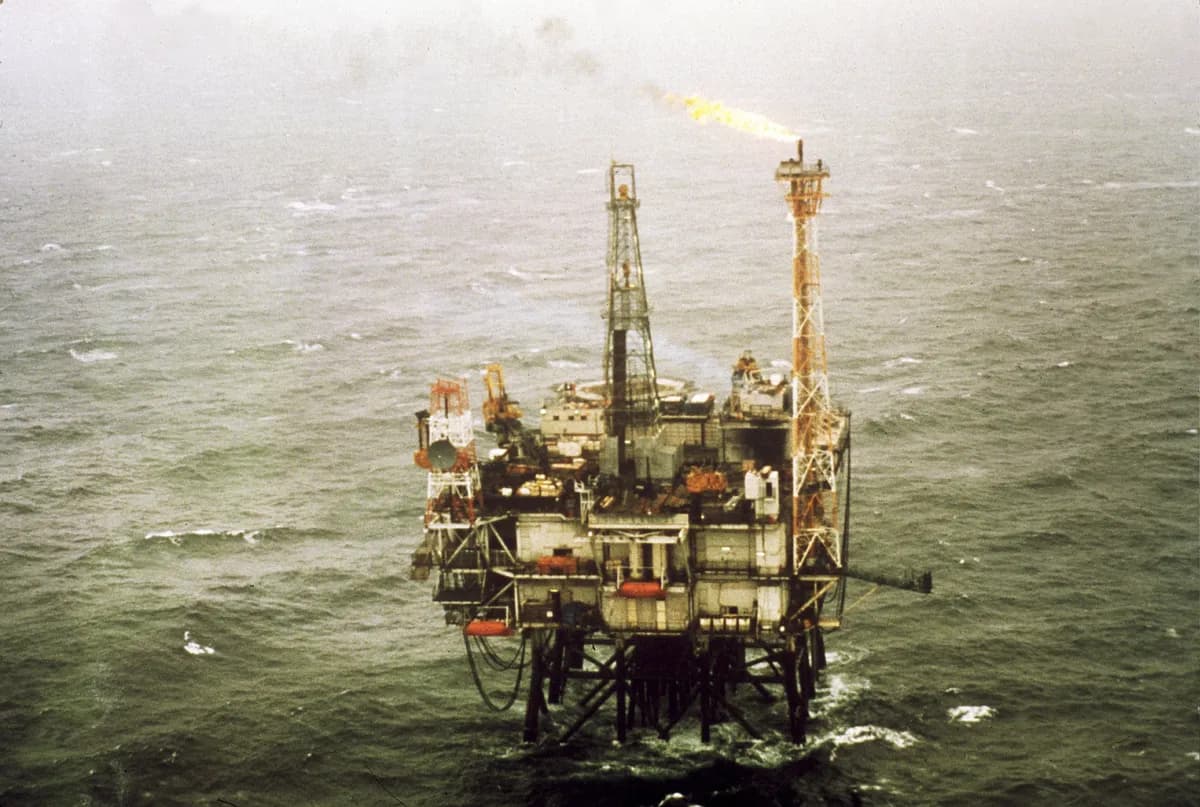
The risk of a jump in oil prices that could trigger another global inflation shock appeared to be materialising as Israeli troops moved into Lebanon and Iran launched a missile attack on Israel. There is a bias towards higher energy prices and slightly weaker stocks this morning, as the Brent crude oil price is higher by 3% and is back above $103.50 per barrel. Oil prices rose by more than 4% to about $75 a barrel on Tuesday. Brent crude oil continued its upward trajectory, trading at $102 per barrel at Friday's open, up significantly from $60 at the start of the year and $73 per barrel before the US and Israeli attacks on Iran on February 28.
This escalation follows a series of recent attacks and retaliations. On October 26, Israel launched a targeted attack on an Iranian missile production site that killed one civilian and four IRGC soldiers. Earlier, on October 1, Iran launched approximately 180 ballistic missiles at Israel. Israel and a defensive coalition led by the US intercepted many of these missiles, although a few struck central and southern parts of Israel, causing damage to Israeli air bases. Israel reprimanded Iran of a severe retaliation, evoking the possibility of direct attack on Iranian oil facilities. This confrontation builds on earlier incidents; on April 1, Israel allegedly attacked the Iranian consulate building in Syria’s capital, Damascus, killing 13 people, including seven members of Iran’s IRGC. In April, Iran launched Operation True Promise, a massive aerial attack on Israel, involving more than 120 ballistic missiles, 30 cruise missiles and over 170 drones. The US intercepted dozens of missiles and drones aimed at Israel from its bases in Syria, Iraq, Jordan and Yemen. Later that month, the Israeli Air Force launched airstrikes targeting an S-300 long range air defense facility in Isfahan, central Iran.
The conflict has expanded beyond direct engagements. Since October 7 last year, an armed conflict between Israel and Hamas-led Palestinian militant groups has been taking place in the Gaza strip and Israel. Iran’s regional proxies, including the Yemeni Houthis and the Lebanese Hezbollah, have been exchanging missile attacks with Israel. In July, Israel assassinated Ismail Haniyeh, Hamas’s political leader in Tehran. In September, Israel initiated a ground invasion into Lebanon, named Operation Northern Arrows. On September 27, Israeli aircraft attacked residential buildings in the Haret Hreik area of southern Beirut, using bunker buster bombs to kill Hassan Nasrallah.
Energy infrastructure across the Gulf region is now emerging as a potential target. The oil supply crisis of recent weeks could be shifting from a shipping crisis caused by the closure of the Strait of Hormuz to an oil supply crisis, where energy infrastructure across the Gulf is a target of Iranian attacks. In the last few hours the US embassy in Baghdad has been hit by Iraqi Shia militias, who are aligned with Tehran, the Shah gas field in the UAE was hit, and a tanker was also hit in the Gulf of Oman.
Iran’s strategic position gives it significant influence over global oil markets. Iran is a major oil producer, supplying about 3 million barrels a day – or about 3% of world output – despite western sanctions. Tehran has significant influence over the Strait of Hormuz, a key chokepoint for oil and gas tanker shipments handling as many as 20 million barrels a day, almost 30% of the world oil trade. Iran also exerts control over the Red Sea through its backing of Houthi rebels in Yemen, who have been targeting shipping.
Market movements on the Oslo Børs have been closely tied to these oil price fluctuations. Oslo Børs opened on Thursday with a rise of 1.2 percent. Wednesday's fall on Oslo Børs was 2.8 percent. The rise on Thursday is due to increases in oil prices and oil stocks, while Wednesday's fall came in the wake of news of a two-week ceasefire between the US and Iran. On Wednesday, the oil price fell from $110 per barrel to $93.8 per barrel. The main index fluctuated between small losses and gains early in the trading day, following a record closing at 1,937 points on Thursday, which marked a 1.22 percent increase. Oil stocks on the Oslo Børs opened higher on Friday, reflecting ongoing gains in global oil prices.
Major oil companies on the Oslo Børs showed mixed but predominantly positive movements shortly after the market opened. Equinor, Aker BP, and Vår Energi all posted gains, with Vår Energi rising by 2.51 percent and Equinor up 0.66 percent. Bluenor fell 1.92 percent following significant share sales by several owners on Thursday. Arribatec dropped sharply by 23.8 percent after a sale linked to investor Spetalen. Yara also saw a modest increase of 0.5 percent.
European markets have reacted with sector-specific shifts. The Eurostoxx 50 index is under pressure on Monday, with losses for luxury names, defense stocks and tech giant ASML. Rheinmetall is lower by 20% since its September peak, and Safran is down 5% in the past week. Rheinmetall reported an earnings forecast that was below expectations for this year, which has cast doubt on the effectiveness of the defense spending pledges by the German government and other European nations. The best performers in Europe since the onset of this crisis are ENI, TotalEnergies, Danone and BASF.
Broader market indicators show a mixed picture. European equities are clawing back earlier losses while US equity futures are pointing to a weaker open later today. The FTSE 100 is bucking the trend and posting a small gain so far on Tuesday.
Amid the turmoil, Euronext Oslo Børs has proposed a regulatory change. Euronext Oslo Børs proposes to establish a new segment on Euronext ABM, named Euronext ABM Fast Entry. The purpose of the new segment is to facilitate the listing of bonds at an earlier stage than under current admission rules, with a fixed deadline for when the bonds must be transferred to the regular Euronext ABM segment or Euronext Oslo Børs. Euronext Oslo Børs believes the measure will enhance transparency in the Norwegian bond market by registering bond issues in the new segment earlier. Investors will gain earlier access to ongoing information from the issuer as well as trading information for the bonds.
The consultation for this new segment follows a defined timeline. The consultation is open from 1 December to 15 December 2025, and market participants are invited to submit their comments to consultation@oslobors.no by the stated deadline. The final rules are expected to be published on 19 December 2025, with entry into force on 2 January 2026.
US military and political developments add another layer to the regional instability. Donald Trump won 300 electoral votes, becoming the only second leader to serve non-consecutive tenures. The US stationed B-52 Stratofortress bombers and F-15 fighter jets in the region.
Additional energy market movements and monetary policy shifts are also occurring. European gas prices also rose, with the Dutch TTF benchmark climbing 2.3 percent to 52 euros per megawatt-hour. The RBA, Australia’s central bank, hiked rates this morning to 4.1% from 3.85%.
The implications of the sustained conflict are significant for global economics. This is likely to keep the oil price above $100 per barrel for some time.
Several critical unknowns remain. The exact current status and terms of the reported two-week ceasefire between the US and Iran have not been confirmed. As per Israeli intelligence, Tehran is expected to launch a counter-attack from Iraq in early November, but the specific timing and scale are unclear. The full extent of damage and casualties from recent attacks on energy infrastructure in the Gulf region is also not yet known.
Further uncertainties linger regarding market developments. The immediate impact of the proposed Euronext ABM Fast Entry segment on bond market liquidity and investor behavior is yet to be seen. The duration and stability of the current oil price surge above $100 per barrel remain uncertain, influenced by ongoing geopolitical events.