

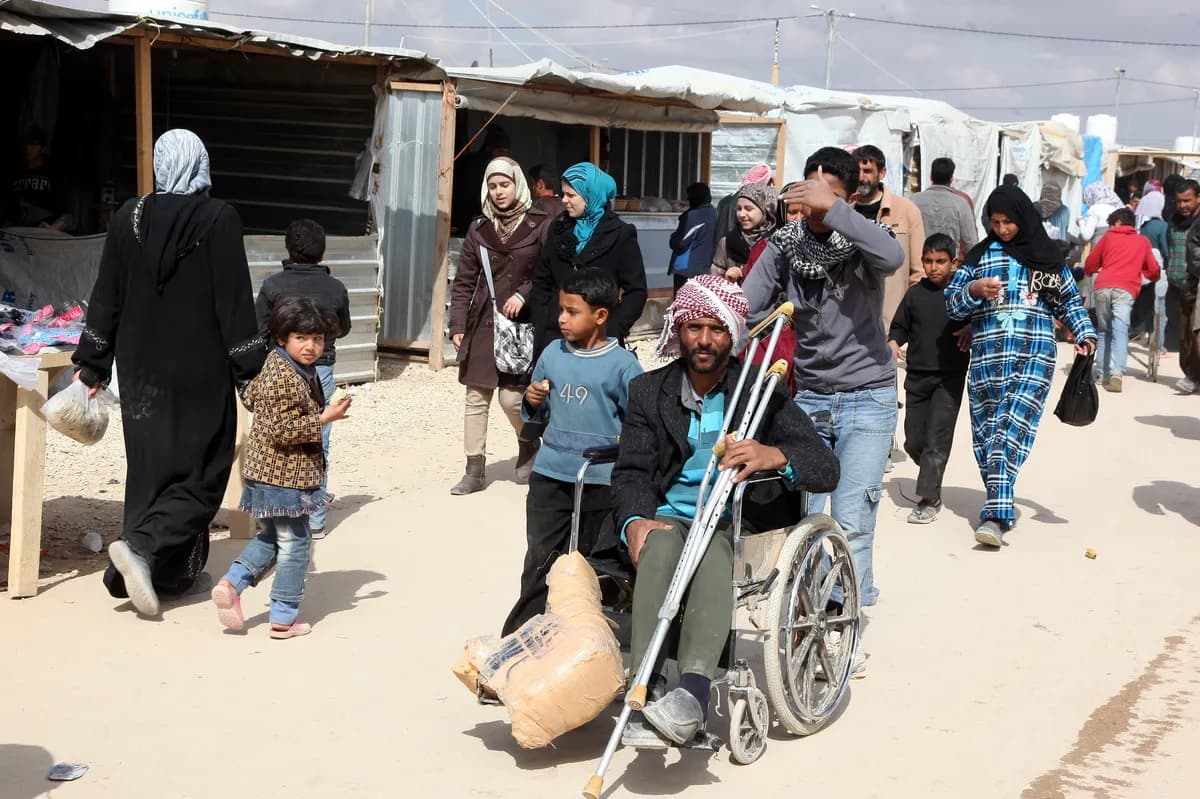
German Chancellor Friedrich Merz said that he and Syrian President Ahmed al-Sharaa want 80% of Syrians in Germany to return to their homeland. Merz made the remarks during a visit to Berlin on Monday by the interim Syrian president Ahmed al-Sharaa. Merz said he and al-Sharaa would in the longer-term work toward broad-scale returns from Germany.
Merz said the two leaders were working jointly towards more Syrians being able to return. Merz said he and al-Sharaa had agreed that eight out of 10 Syrians in Germany should go back over the next three years. Europe's top economy is home to the largest Syrian diaspora in the European Union at more than a million, many of whom arrived during the peak of the migrant influx in 2015-2016.
Al-Sharaa did not confirm the goal of returning 80% of the more than 900,000 Syrian citizens registered in Germany by 2029. The figure seemed to take political officials in Berlin by surprise. Anke Rehlinger, deputy leader of the co-ruling Social Democrats (SPD), tacitly accused Merz of playing into the hands of the anti-migration, anti-Islam Alternative für Deutschland (AfD) by setting a target for repatriations for 2029.
Rehlinger said it was not a wise move on the part of the chancellor to put forward specific figures within specific timeframes, because that raises expectations he may not be able to meet. Rehlinger voiced understanding for al-Sharaa’s call for Syrians to help their country’s reconstruction. Rehlinger said many Syrians are now fellow citizens because they have integrated here, work in occupations in which there are shortages, care for elderly people or drive buses, and have often even become German citizens.
About 244,000 Syrian citizens received a German passport between 2016 and 2024, the largest group among those newly naturalised. Criticism also came from within Merz’s conservative CDU party, with its foreign policy spokesperson Roderich Kiesewetter calling the figures the chancellor cited problematic in several respects. Kiesewetter stressed that the AfD could capitalise on any unkept promises and also noted the role played by skilled Syrian workers in the German economy.
Kiesewetter said if they return, Germany faces a challenge. The German Hospital Society underlined the considerable importance of Syrian doctors, with 5,745 working in German clinics – the largest group of foreign physicians. Another 2,000 Syrians work as carers.
Henriette Neumeyer said if these skilled workers were to leave the country again, it would have a significant impact on healthcare. On his first trip to Germany since ousting his country's longtime strongman Bashar al-Assad in late 2024, al-Sharaa also pledged to work with Germany to enable more Syrians to return. Al-Sharaa said Syria is working with our friends in the German government to establish a circular migration model.
Al-Sharaa said this would enable Syrians to contribute to the reconstruction of their homeland without giving up the stability and lives they have built here, for those who wish to stay. Al-Sharaa told a foreign ministry forum in Berlin that Syria had experienced a huge amount of destruction during its long civil war, saying that Syrians want to catch up with the rest of the world as Germany did after World War II. He pointed to investment opportunities in Syria's energy, transport and tourism sectors, describing his homeland as very diverse and with a great wealth of human resources.
Merz said Germany wanted to support reconstruction in Syria as it struggles to rebuild, adding that a German government delegation would travel to the country in the next few days. Merz also said that he had stressed to al-Sharaa in their meeting that many joint projects in the future will depend on our finding a state governed by the rule of law. Rights campaigners have criticised al-Sharaa's Germany visit, pointing to his Islamist past and ongoing violence and instability in Syria.
Protesters gathered in front of the foreign ministry on Monday waving Kurdish flags and placards, highlighting al-Sharaa's time as an Islamist militant. Near the chancellery, dozens of Syrians also turned out to welcome al-Sharaa, waving Syria's new revolutionary flag and a banner showing the president surrounded by hearts. The German Green party's foreign affairs spokesperson Luise Amtsberg told the AFP news agency that Germany should not engage in a premature normalisation of al-Sharaa's government.
The feasibility of returning 80% of Syrians from Germany within three years remains uncertain, with no specific measures or policies yet detailed to facilitate such a massive population movement. How many Syrians in Germany are willing or able to return to Syria given the ongoing instability and reconstruction needs represents a major unknown that could significantly impact the plan's implementation. The reaction of the broader Syrian diaspora in Germany to Merz's and al-Sharaa's statements has yet to fully emerge, with community organizations likely to develop positions as more details become available.
The details of the circular migration model proposed by al-Sharaa and how it would work in practice remain unspecified, including whether it would involve temporary work permits, dual residency arrangements, or other innovative migration frameworks.