

Two people died in a meningitis B outbreak in Kent earlier in April 2026. One victim was a student at the University of Kent, and the other was an 18-year-old sixth form pupil at Queen Elizabeth's Grammar School in Faversham named Juliette. The UK Health Security Agency declared a national incident on Sunday to help ensure supplies of antibiotics. According to the UK Health Security Agency, the national incident is not a sign that the outbreak is spreading beyond Kent, but an operational tool to allow the authorities to flex national resources.
Meningococcal infection is a bacterial infection spread via saliva through close contact, such as coughing or kissing. It can cause serious illness, including meningitis and sepsis. The disease can develop quickly, and it is important to seek care early for symptoms like high fever, severe headache, neck stiffness, or suspected skin rashes.
In the UK, parents have been urged to be attentive to skin rashes in connection with suspected meningococcal disease, and the public has been informed about the 'glass test'. The 'glass test' involves pressing a transparent glass against a skin rash to see if it pales or disappears; if it does not, it may be a sign of meningococcal disease. If a rash does not pale with the glass test, one should immediately seek medical care. A rash with meningococcal infection is an acute, life-threatening sign that requires immediate medical care; it often starts as small red/purple dots or bruises that do not pale when pressed.
Early symptoms of meningitis include flu-like illnesses, headache, fever, muscle aches, and lethargy. Later symptoms include confusion and a rash that does not blanch under pressure. Sensitivity to light is also a symptom. The rash from meningitis can appear red, purple, dark brown, or black, and on darker skin, it may be visible on palms, soles, mouth, or lips.
The meningitis B vaccine was introduced on the NHS for babies in 2015, leaving many young people born before then unprotected. The UK Health Security Agency states that neither the MenB vaccine for infants nor the MenACWY vaccine for teenagers protects against all meningococcal strains.
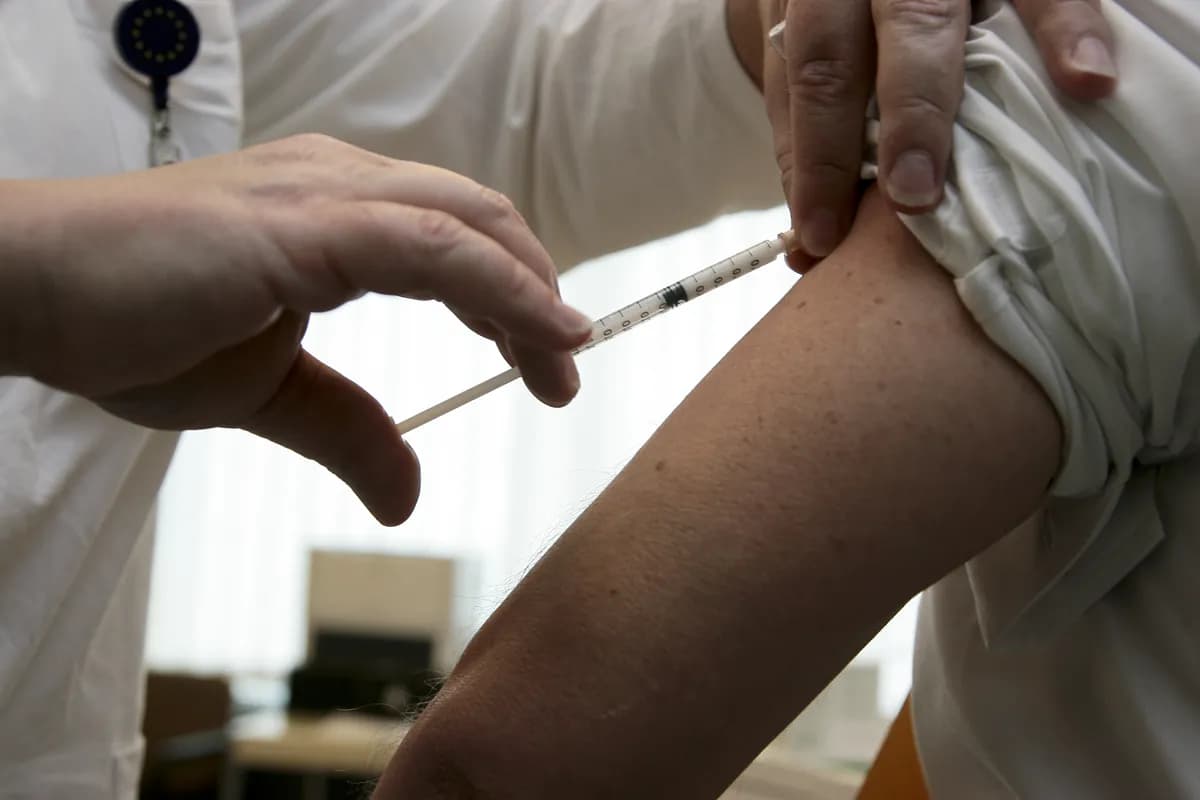
Over 10,600 people have been vaccinated in Kent since the outbreak. Meningitis B vaccinations are being extended to pupils across Kent, including 15 and 16-year-olds at four schools. A targeted vaccination programme has been announced at the University of Kent. About 5,000 students in university halls in Kent are to be offered the meningitis B vaccine, with vaccinations starting on Wednesday.
The UK government asked the Joint Committee on Vaccination and Immunisation to reexamine eligibility for meningitis vaccines for teenagers and young adults. This review comes amid the national incident declaration aimed at securing antibiotic supplies.
Keeleigh Goodwin is recovering in hospital from meningitis after collapsing in her flat. It is believed Keeleigh Goodwin caught the illness at Club Chemistry, the Canterbury nightclub where the outbreak is thought to have originated.
Jonas F Ludvigsson organized a webinar in collaboration with the Swedish Medical Association in response to a meningococcal disease outbreak in England. The recommendation for children traveling to England is that it may be wise to get a travel vaccine if going to affected areas, especially for longer stays.
Information about meningococcal infections comes from 1177, the Swedish healthcare advice service. Public health guidance emphasizes early symptom recognition and immediate medical care for suspected cases.
Conflicting reports exist on the number of confirmed cases in the Kent meningitis B outbreak. Some sources report 21 confirmed cases as of 1 April 2026, while others cite 20 confirmed cases with three under investigation. Additional discrepancies include reports of 15 confirmed cases with 12 additional suspected cases versus 20 potential cases under investigation. There is also disagreement over whether the outbreak is unprecedented. Health officials have described it as unprecedented, but some sources dispute that characterization, citing past targeted vaccination programs.
Five schools in the county have confirmed or suspected cases and hundreds of people are being offered antibiotics as an immediate treatment. Across the country, worried parents and students have been trying to get the jab privately, but pharmacists have either run out of stock or are down to their last supplies.
The exact number of confirmed and suspected cases in the Kent meningitis B outbreak remains unclear, as reports vary significantly. The origin of the initial infection is also uncertain, with only suspected locations like Club Chemistry mentioned. Whether the outbreak is spreading beyond Kent is unknown, despite the national incident declaration being described as an operational tool. The availability and timeline for private meningitis B vaccinations across the UK are uncertain, given reported stock shortages. The specific criteria and timeline for extending meningitis B vaccinations to teenagers and young adults beyond current programs are also undetermined.