

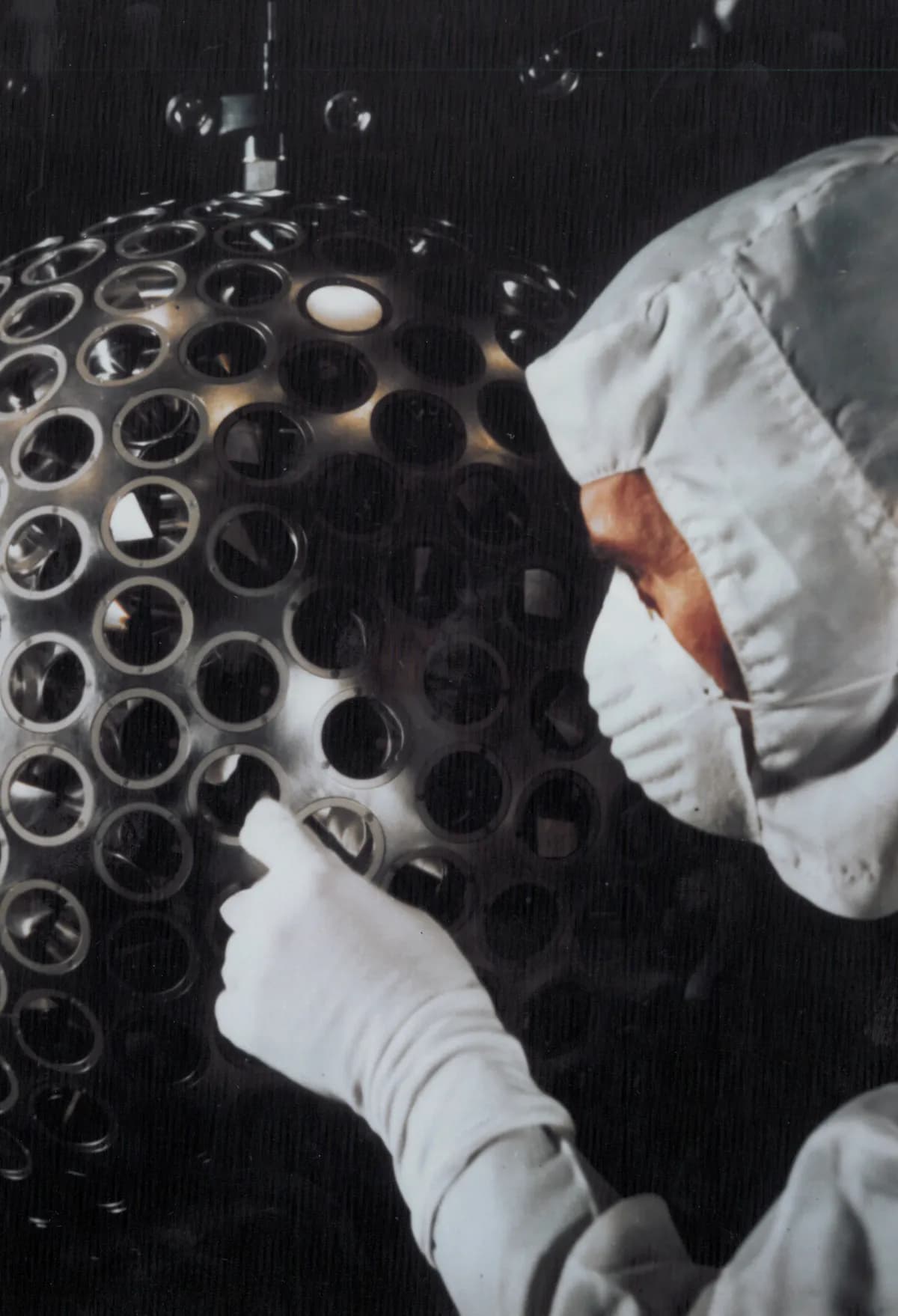
LAGEOS orbits at an altitude of nearly 3,700 miles (6,000 kilometers) above Earth. The satellite is a shiny, two-foot-wide (60-centimeter) sphere covered with 426 retroreflectors, resembling a disco ball. It has a dense brass core beneath an aluminum exterior and weighs 900 pounds (400 kilograms).
Its compact spherical design with high mass provides an exceptionally stable orbit. The precise orbital decay rate over decades remains unknown. LAGEOS data have helped track tectonic plate movements, monitor shifts in Earth's crust, and measure motion along fault lines.
The data have also improved understanding of Earth's shape and gravity field, and contributed to tests of general relativity. In 1992, a near-identical twin, LAGEOS II, was launched aboard space shuttle Columbia, built by the Italian Space Agency. With two satellites, scientists can achieve even more accurate measurements.
The exact current accuracy and plans for additional satellites are not publicly detailed, and how the data specifically improved earthquake prediction remains unclear.