

4 miles deep and leaving a large, shallow crater called a caldera. The violent blast sent pyroclastic flows up to 93 miles from its epicenter and is thought to have wiped out the prehistoric Jomon civilization in southern Japan. Recent research, published in the journal Communications Earth & Environment, has discovered that a region beneath the Kikai caldera has been slowly refilling with fresh magma over the last 3,900 years.
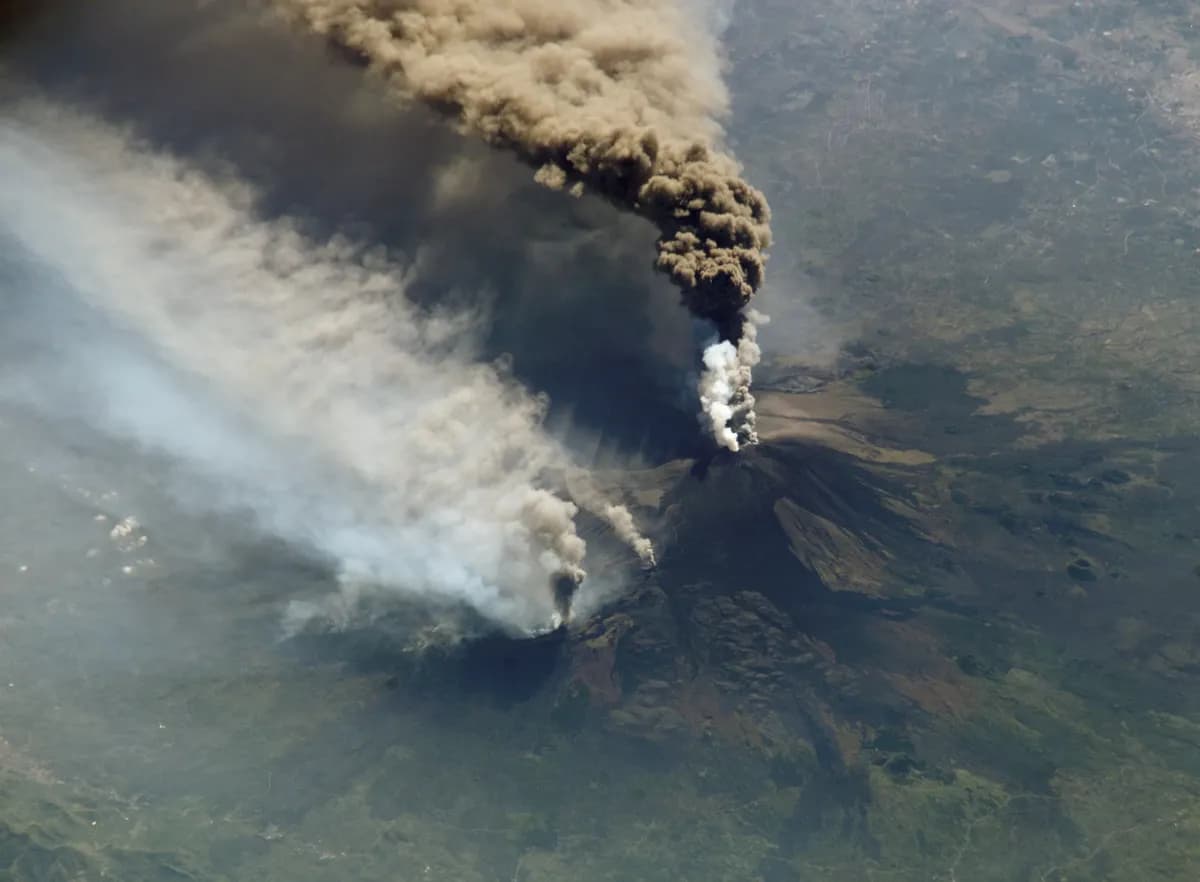
In recent years, onlookers have noticed steam being released from the crater, and the area has experienced more than a dozen small earthquakes, indicating the volcano remains active. The researchers used airgun arrays to cause artificial seismic pulses and measured how these waves moved through the Earth's crust, confirming the hidden reservoir's size and shape and that it's filling up with magma. Chemical analysis showed that the material produced by recent volcanic activity is of a different composition than what was ejected in the last giant eruption.
According to Seama Nobukazu, a geophysicist professor from Kobe University, this means the magma now present in the reservoir is likely newly injected. He added that this magma re-injection model is consistent with the existence of large shallow magma reservoirs beneath other giant calderas like Yellowstone and Toba. These powerful volcanoes are known to go through long-term cycles of being 'asleep' before reawakening and erupting dramatically, though the mechanics of this rhythm are still not fully understood.
The study's findings highlight uncertainties, including when the next giant eruption might occur and how the newly injected magma differs chemically from the old magma, which could affect eruption dynamics.