

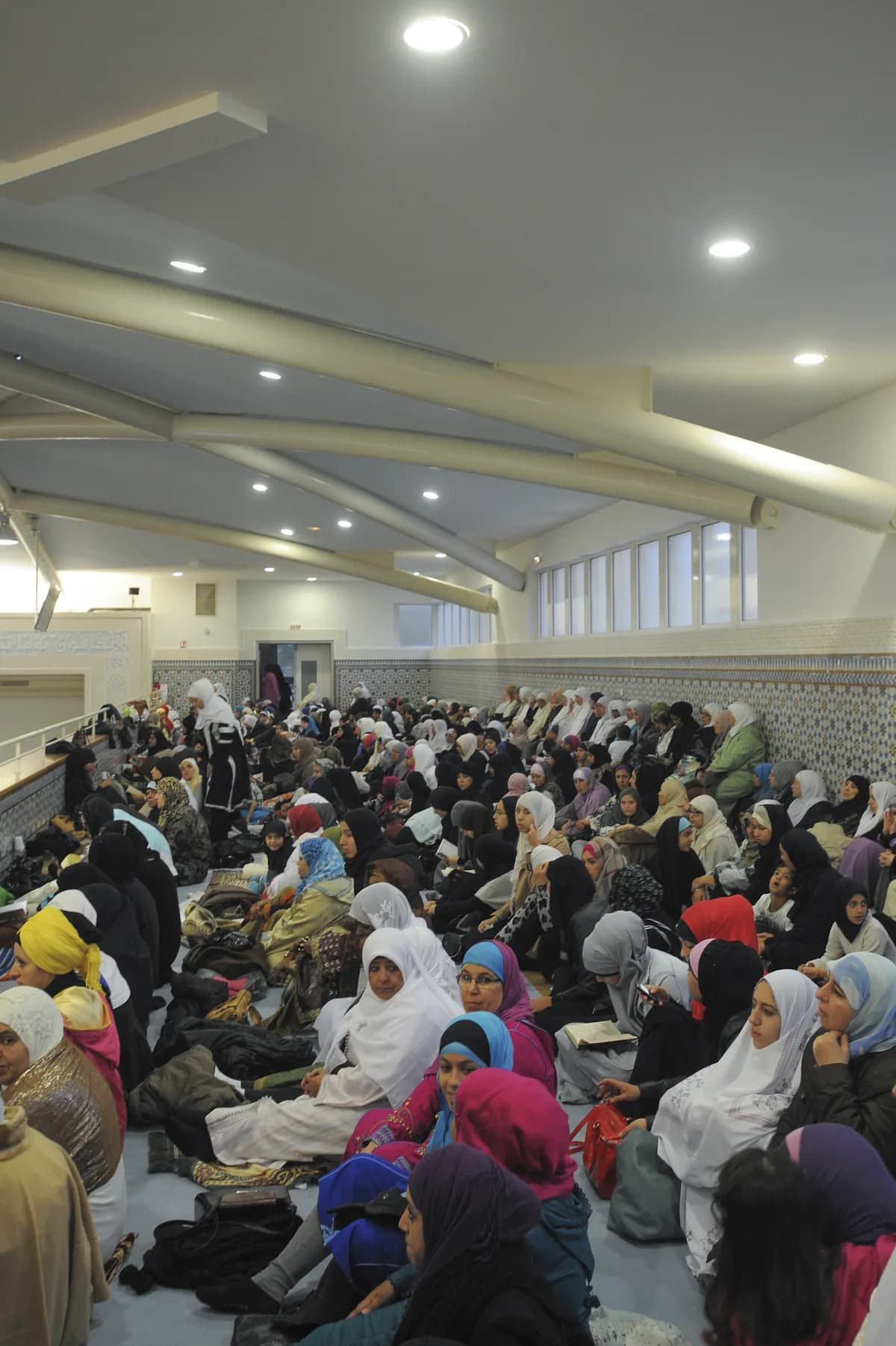
Jerusalem's police said on Wednesday that they would lift restrictions on all holy sites and deploy hundreds of officers and volunteers in the city. Access had been prohibited or restricted to a few dozen faithful at a time at Christian, Jewish, and Muslim sites during the conflict. The Al-Aqsa Mosque compound, closed for much of Ramadan and Eid al-Fitr, reopened with dawn prayer on Thursday, according to Jerusalem's Islamic Waqf, while at the Western Wall, dozens of men and women were seen bowing their heads in prayer. On Thursday, worshippers reveled as they entered Al-Aqsa for the first time in weeks.
The restrictions had subdued major religious celebrations during Lent, Passover, and Ramadan, with the lifting coming in time for Orthodox Easter and the Holy Fire ceremony. On Saturday, thousands of Christians will gather in the Church of the Holy Sepulchre for the Holy Fire ceremony, where the Greek patriarch will light candles and pass the flame from one candle to the next.
Previous restrictions on Christian sites sparked international criticism and controversy. Israeli police prevented Catholic leaders from entering the Church of the Holy Sepulchre to celebrate a private Mass on Palm Sunday for the first time in centuries. That set off a wave of criticism from the United States and others. Israeli Prime Minister Benjamin Netanyahu said there was no 'malicious intent' and that Cardinal Pierbattista Pizzaballa was prevented from accessing the church because of safety concerns, though the cardinal was later allowed to enter on Easter Sunday. An agreement was reached with Israeli authorities to allow Church representatives to celebrate Masses at the Church of the Holy Sepulchre with restrictions, and the European Union criticized the Israeli measures as a violation of freedom of worship.
The background to these events is a US-Israeli war with Iran that began on February 28, 2026. The US-Israeli attack killed Iranian Supreme Leader Ali Khamenei, along with up to 200 senior military and civilian figures and two generations of his family.
Iran's leadership is in flux with conflicting reports about succession after Khamenei's death. Iran's war is being run by the Supreme National Security Council, chaired by Ali Larijani, with a Provisional Leadership Council convened, and the Assembly of Experts is working to select a replacement for Supreme Leader Khamenei. However, Mojtaba Khamenei has been named Supreme Leader after his father's death.
Escalating violence has seen Iran retaliate with missile strikes, killing Israeli and Palestinian civilians. Iran responded with missile and drone strikes against Israel, US bases, and US-allied countries in the Middle East. Iran launched missiles with multiple warheads at Israel in retaliation for Ali Larijani's killing, killing at least two people in central Israel. At least three Palestinians were killed in the West Bank by falling shrapnel from Iranian missiles.
High-level casualties have mounted on both sides, including Iranian security officials and US service members. Iran's security chief Ali Larijani was killed in an Israeli strike, and Iran vows revenge, while Iran's Intelligence Minister Esmaeil Khatib was killed in an airstrike. Israel said it killed Iranian naval chief Alireza Tangsiri, who oversaw blocking the Strait of Hormuz. Over 3,000 people have been killed across the Middle East in the war, with more than 1,900 in Iran, 1,100 in Lebanon, 18 in Israel, and 13 US service members killed.
Trump's war aim includes destroying Iran's mobile ballistic missile program and navy, which Larijani called delusional fantasies.
The conflict has expanded regionally, with Iran attacking neighboring countries and facing diplomatic fallout. Qatar expelled Iran's military and security attaches following a missile strike on its Ras Laffan gas hub. Iran is trying to regionalize the conflict by attacking infrastructure in Turkey, Saudi Arabia, Qatar, UAE, and other countries.
The Strait of Hormuz blockade has disrupted global oil supply, with military actions on both sides. The Strait of Hormuz was effectively closed, blocking 20% of the world's oil supply. Iran has allegedly begun charging ships for safe passage through the Strait of Hormuz, while the US used bunker-buster bombs against Iranian missile sites along the Strait of Hormuz.
A nuclear dimension has emerged, with Iran's uranium enrichment and IAEA assessment of its weapons program. Iran has at least five to 10 bombs' worth of uranium enriched to 60%. However, the International Atomic Energy Agency said there was no evidence of a structured nuclear weapons program in Iran at the time of the strikes.
Conflicting reports exist on negotiations between the US and Iran amid diplomatic statements. Pakistan's top diplomat said indirect talks are taking place between the US and Iran, but Iranian Foreign Minister Abbas Araghchi said Iran does not plan on any negotiations. Ali Larijani stated there will be no negotiations with the United States.
International reactions include legal challenges to war justification and criticism of Israeli measures. The US-Israeli attacks cannot be legally justified under international law, according to legal expert Susan M. Akram.
Military developments involve Russian support for Iran and air combat incidents. Iran has received MiG-29 Su-35 fighter jets and Mil Mi-28 attack helicopters from Russia, and its air force capabilities have been bolstered by Russia since the June war. In the first two days of fighting, at least three US jets were shot down, according to Iranian and Kuwaiti reports, though the United States claims the jets were shot down by friendly fire.
Economic impacts include global oil price concerns and local business closures in Jerusalem. The war has caused economic disruptions, with German and Polish lawmakers taking steps to curb oil prices. Businesses in the Old City of Jerusalem have been forced to close due to the war, severely impacting the local economy.
Accusations and context reveal critics say Israel used the war to restrict access, while Netanyahu cites security threats. Others accused Israel of using the war as an excuse to restrict access. Israeli Prime Minister Benjamin Netanyahu justified the restrictions by citing security threats from Iran targeting religious sites.