

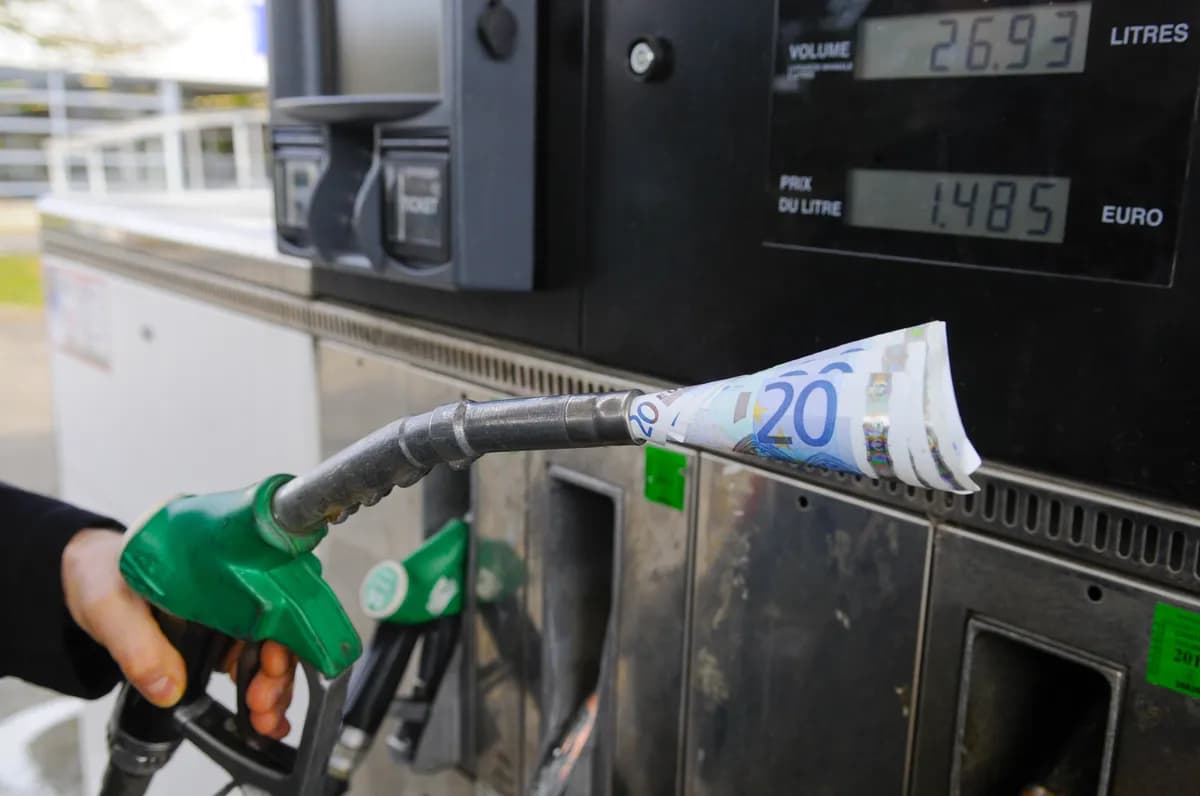
The war in Iran is causing gas prices to rise in the United States, with the national average reaching $3.48 a gallon on Monday, up from $2.90 a month ago before the war. Oil prices have skyrocketed to $100 a barrel, pushing average gas prices above $4 a gallon. Gas prices are largely due to Iran's de facto blockade of the Strait of Hormuz, a chokepoint for about one-fifth of the world's traded oil.
Public opinion reflects deep anxiety over the economic impact. Overall, three-quarters of registered voters were concerned about the war raising gas and oil prices, and the vast majority of Americans, 69 percent, are concerned about elevated gas and fuel prices as a result of the Iran war. Views on military action are sharply divided: about half of registered voters oppose U.S. military action against Iran while about 4 in 10 support it. The vast majority of Democrats were against the military action (89%), the vast majority of Republicans for it (85%), and independents against it (60%). About 59% of Americans say military action in Iran has been excessive, and about 45% are 'extremely' or 'very' concerned about being able to afford petrol in the next few months, up from 30% in a previous poll. About two-thirds of Americans say preventing Iran from obtaining a nuclear weapon should be an 'extremely' or 'very' important foreign policy goal. About three-quarters of Republicans and about two-thirds of Democrats say it's highly important to prevent US oil and gas prices from going up, but only about three in 10 Republicans said they're 'extremely' or 'very' worried about affording gas in the next few months, as opposed to about six in 10 Democrats.
We’re putting an end to all of this threat once and for all, and the result will be lower oil prices, oil and gas prices for American families.
In response, lawmakers are pushing to suspend the federal gasoline tax to control surging energy costs. The federal gas tax is currently set at 18.4 cents per gallon on gasoline and 24.4 cents per gallon on diesel fuel, providing more than $23 billion per year in revenue for federal highway and public transit programs. The president cannot suspend the federal tax on his own; Congress would have to approve the move. Meanwhile, the Trump administration has released millions of barrels of oil from the U.S. Strategic Petroleum Reserve and temporarily lifted sanctions on some Russian and Iranian oil shipments already at sea. The U.S. is negotiating with countries reliant on Middle East crude to join a coalition to police the Strait of Hormuz.
The political context remains volatile. After President Donald Trump threatened to wipe out Iran's entire 'civilization', his negotiators reached a ceasefire with Iran last Tuesday but peace talks have since stalled. There's deep concern that hostilities could resume. After talks broke down this weekend, Trump announced that the U.S. will impose its own blockade on the Strait of Hormuz.
The war is just an excursion into something that had to be done.
Domestically, the war is creating political fallout for the GOP ahead of midterm elections. Top Republicans are worried about their chances in the upcoming midterm elections and blame the Iran war, skyrocketing gas prices, and history not being on their side. The Iran war could hurt President Donald Trump's party, with Iran-related political battles ongoing in the form of rising fuel prices and war weariness from Democrats and within the MAGA ranks – eight months before the midterm elections. About four in 10 adults approve of Trump's performance as president, unchanged from last month. The GOP's upcoming legislative agenda remains centered on voting and immigration, not everyday economic concerns. After a weeks-long recess, lawmakers returned to Capitol Hill this week to face a precarious landscape at home and abroad.
State-level impacts are emerging. In Texas, Lt Gov Dan Patrick warned that the political climate resembles 2018, when Democrat Beto O'Rourke came close to unseating GOP Senator Ted Cruz. Patrick cautioned that bitter infighting in a high-profile Senate primary between Senator John Cornyn and Attorney General Ken Paxton could have ripple effects across the ballot. Democratic Texas state Rep James Talarico raised $27 million in the first quarter. Patrick warned that even a small drop-off in Republican voters, as little as 10 to 15 percent deciding to stay home, could be enough to tip key races. In Wisconsin, Republican officials are openly questioning leadership after a state supreme court race ended in a decisive loss, with a liberal candidate defeating a conservative opponent by roughly 20 percentage points. In Arizona, Republicans are expressing frustration after failing to secure control of a Phoenix-area utility board.
People have talked about a gas tax suspension. It’s something we have in our pocket if we think it’s necessary.
Broader electoral shifts are underway. Recent ratings changes have moved several key Senate races toward Democrats, including contests in Ohio, Georgia and North Carolina. House projections have shifted, and even the governor's race in Iowa is now viewed as competitive. The historical trend is also working against the GOP.
This is the nastiest race we’ve had in a primary between Republicans in 20 to 25 years and maybe ever. I want to wake people up.