

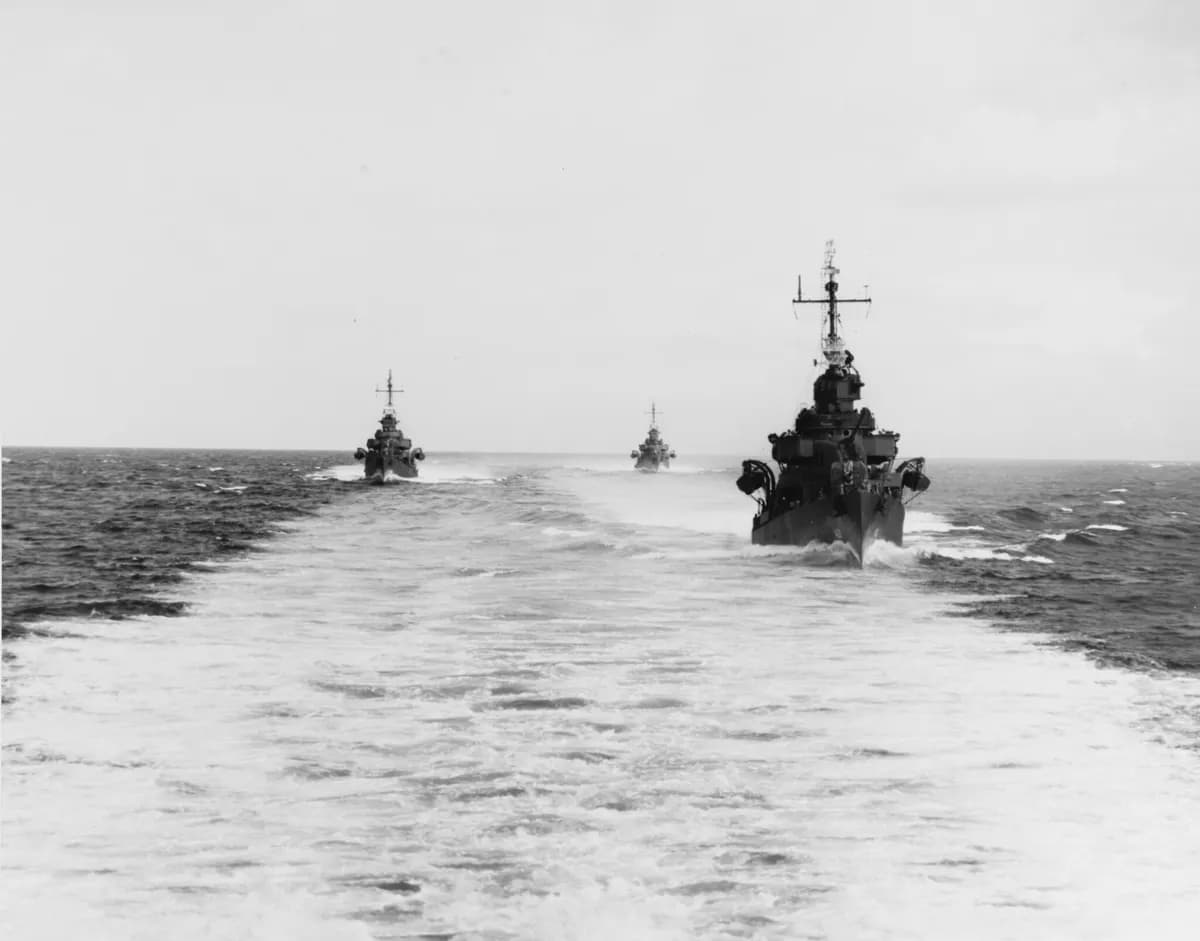
The reported attack on Diego Garcia occurred as the regional war sparked by a U.S.-Israeli operation entered its third week. The U.S. and Israel launched wide-ranging strikes targeting Iran on February 28, 2026, in Operation Epic Fury, which killed Iran's Supreme Leader Ayatollah Ali Khamenei and other senior figures such as Ali Larijani, Esmail Khatib, and Gholamreza Soleimani. Iran retaliated with missile and drone attacks on Israel, U.S.-allied Gulf states, and U.S. bases, including this attempt on the joint UK-US Diego Garcia base in the Chagos Islands with intermediate-range ballistic missiles. According to sources, Iran launched two ballistic missiles towards the Chagos Islands on Friday, with one failing mid-flight and the other intercepted by an American destroyer using an SM-3 interceptor. Reports indicate neither missile hit the Diego Garcia base, and this attack is described as the longest-range by Iran since the start of Operation Epic Fury, suggesting capabilities that contradict Iran's previous public claims about its missile limitations.
The UK government's role in the conflict has become a point of political contention. Sources report that Labour, under Sir Keir Starmer, gave the U.S. permission to use the UK-US base to target Tehran's missile sites just hours before the attack. This decision allowed the U.S. to use UK bases for strikes targeting Iranian sites near the Strait of Hormuz, which Iran had closed, causing a global energy shock. Labour was criticized for not informing the British public about the attack, with the news revealed by U.S. media. Communities Secretary Steve Reed defended the government's approach, stating, 'It would be very odd for a Government to provide running commentary on hostile state actions.' He attributed the successful interception to 'collective defense between the US and UK, not luck.' However, political commentator Camilla Tominey credited the U.S. for the interception, highlighting a contradiction in how the defensive success is being attributed.
Political tensions escalated further when Conservative MP Kemi Badenoch alleged a cover-up by the Prime Minister regarding the strikes. Steve Reed dismissed Badenoch's comments as 'rubbish,' and claimed 'the Prime Minister has a clear position of non-involvement in the war.' This exchange reflects broader political reactions that have included celebrations by some Iranian diaspora groups and criticism of the war's legality and objectives. The legal basis and international reaction to the UK's permission for the U.S. to use its bases for strikes remains uncertain.
The Diego Garcia attack represents an escalation in a conflict that has already spread across the region. The conflict spread to Lebanon after Hezbollah fired rockets into Israel, creating a multi-front confrontation. Casualty figures from the broader conflict show significant discrepancies between different sources. HRANA reported 3,220 killed in Iran as of March 20, including 1,165 military personnel, 1,398 civilians, and 210 children. Meanwhile, CFR reported over 1,800 killed total, including 8 U.S. service members. The Iranian Red Crescent reported over 200 fatalities and 750 injuries from U.S.-Israeli strikes. These varying reports highlight the difficulty in determining the precise number of casualties and injuries from the conflict.
Iran has made specific allegations about civilian targeting, accusing the U.S. and Israel of killing 168 people in a girls' school attack. The U.S. and Israel have not confirmed or denied involvement in such an attack. Israeli authorities said 15 civilians were killed by Iranian missile fire, indicating reciprocal civilian suffering. The full extent of Iran's missile capabilities and range remains uncertain given conflicting assessments in sources, though the Diego Garcia attack suggests longer-range capabilities than previously acknowledged.
Leadership transitions in Iran have added complexity to the conflict. Mojtaba Khamenei was named as successor to his father on March 8, but the U.S. claimed Mojtaba Khamenei was injured and 'likely disfigured,' while Iran denied the U.S. claim about his injury. The current status and condition of Mojtaba Khamenei remains unclear with these conflicting claims. This development follows previous reporting where Israeli President Isaac Herzog stated the war had created a historic turning point leading to a new alliance between Israel, the United States, and Gulf countries against Iran. Previously, Iran's Ambassador to the UN in Geneva, Ali Bahreini, stated that Iran could target military bases in Europe if they are used to attack Iran, a threat that now appears extended to UK territories like Diego Garcia.
The conflict has disrupted religious sites and traditions, building on earlier reports that Israeli authorities closed the Church of the Holy Sepulchre in Jerusalem during Holy Week due to safety concerns after debris from Iranian ballistic missiles fell near the site. Former MI6 chief John Scarlett had previously suggested Iran was the only country that may have been prepared for the current conflict, noting surprise at Donald Trump and Israel's attack on Iran last month despite ongoing nuclear negotiations. This assessment contrasts with reports that Iran's underground missile bases, designed to survive initial attacks and launch retaliatory strikes, have been compromised as adversaries have mapped their entrances and exits, leading to the destruction of many launch platforms.
As the war continues, diplomatic efforts face challenges. Previous coverage noted that at the Global Baku Forum in Azerbaijan, international figures expressed sharply contrasting views, with some calling for urgent diplomacy while others supported continuing the military offensive. Norwegian Foreign Minister Espen Barth Eide had warned of a humanitarian crisis, citing civilian casualties and displacement. The Diego Garcia attack represents both a military escalation and a test of international alliances, with the UK's decision to allow U.S. use of its bases potentially drawing it deeper into a conflict that has already caused significant regional destabilization and global economic disruption.