

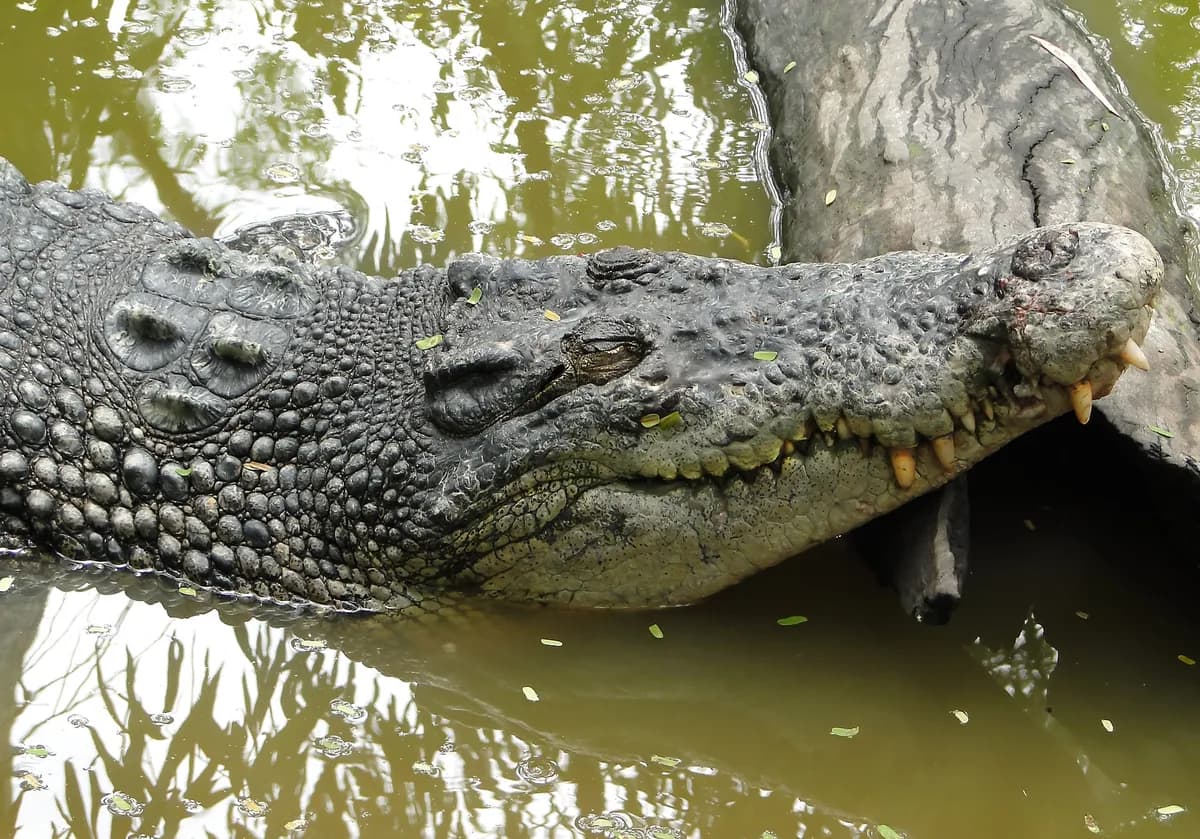
According to reports in the local press, India's Border Security Force is examining whether crocodiles and venomous snakes could serve as a natural deterrent to stop illegal border crossings from Bangladesh. An internal document circulated among field units asked commanders to assess the practicality of such a biological barrier, with multiple reports indicating it was drawn up on the instructions of Home Minister Amit Shah. The status of this document and whether the plan will be implemented remain unclear, as does where along the border such measures might be deployed if approved.
Significant challenges persist with existing border infrastructure, complicating efforts to secure the 2,500-mile India-Bangladesh frontier. Fencing began in 1986 and intensified under Bharatiya Janata Party rule from 2014, but multiple reports confirm that substantial gaps remain across several north-eastern states. Roughly 90 miles of the 530 miles that still lack any barrier are effectively unfenceable due to river channels that shift with seasons and overflow their banks, a situation exacerbated by the 54 rivers weaving across the border, including the Ganges, Brahmaputra, and Kushiyara. Where fences have been built, time and weather have taken their toll, with wire sagging, snapping, or rusting through.
Cross-border movement has deep historical roots, tracing back to the 1971 war when approximately ten million people fled from East Pakistan into India. The movement of people never fully stopped after Bangladesh's independence, and since Narendra Modi swept to power in 2014 partly on promises to tackle illegal border crossings, his party has framed such crossings as an existential threat. The BJP has consistently portrayed those crossing without authorisation as 'infiltrators' intent on changing India's character.
Recent enforcement actions have intensified, particularly after gunmen killed Hindu tourists in Kashmir in April 2023 in an attack attributed to Islamist militants. In response, the Border Security Force sharply increased removals of Bengali Muslims, formally justified on immigration grounds. However, a substantial portion of those expelled held valid Indian citizenship and had been wrongly removed, according to multiple reports. Human Rights Watch stated that upwards of 1,500 Muslims were pushed across the border. The exact number of people wrongly removed and the official government response to these reports are not confirmed.
The biological barrier proposal underscores ongoing struggles to manage the porous border, but its feasibility and ethical implications are untested. As authorities grapple with deteriorating infrastructure and enforcement missteps, the plan highlights a shift toward unconventional methods in border security, though its implementation remains uncertain amid broader political and humanitarian concerns.