

According to the International Energy Agency, the energy crisis could worsen due to the war in Iran. IEA chief Fatih Birol stated the situation in April looks darker than it was in March, noting that while deliveries in March consisted of goods loaded before the conflict broke out, nothing new has been loaded in the Persian Gulf so far in April. Birol emphasized that the longer the disruption lasts, the more serious the problem becomes. He described the global energy crisis caused by the war in Iran as equivalent to the combined force of the 1970s oil shocks and the fallout of Russia's invasion of Ukraine.
The conflict has escalated through a series of major events over recent months. On October 1, Iran launched approximately 180 ballistic missiles at Israel, with many intercepted by a US-led defensive coalition, but some struck central and southern Israel, damaging air bases. In April, Iran launched Operation True Promise, a massive aerial attack on Israel involving over 120 ballistic missiles, 30 cruise missiles, and over 170 drones. The US intercepted dozens of missiles and drones aimed at Israel from bases in Syria, Iraq, Jordan, and Yemen during that operation. Earlier, on April 1, Israel allegedly attacked the Iranian consulate building in Damascus, killing 13 people, including seven IRGC members. Later in April, the Israeli Air Force launched airstrikes targeting an S-300 air defense facility in Isfahan, Iran, causing no extensive damage.
Further hostilities continued through the summer and fall. In July, Israel assassinated Ismail Haniyeh, Hamas's political leader, in Tehran during the inauguration of Iranian President Masoud Pezeshkian. In September, Israel initiated a ground invasion into Lebanon named Operation Northern Arrows as part of the Israel-Hezbollah conflict. On September 27, Israeli aircraft attacked residential buildings in southern Beirut using bunker buster bombs in an attempt to kill Hassan Nasrallah. On October 26, Israel launched a targeted attack on an Iranian missile production site in response to a ballistic missile attack, killing one civilian and four IRGC soldiers. Following that strike, the US stationed B-52 Stratofortress bombers and F-15 fighter jets in the region.
Since US-Israeli strikes on Iran began on February 28, Tehran has launched ballistic missiles targeting Israel, US military bases, oil depots, and infrastructure across the Gulf region. On Thursday, Iran attacked fuel tankers in Iraqi waters. According to Israeli intelligence, Tehran is expected to launch a counter-attack from Iraq in early November. Israel and the US have reprimanded Iran for a severe retaliation, evoking the possibility of a direct attack on Iranian oil facilities.
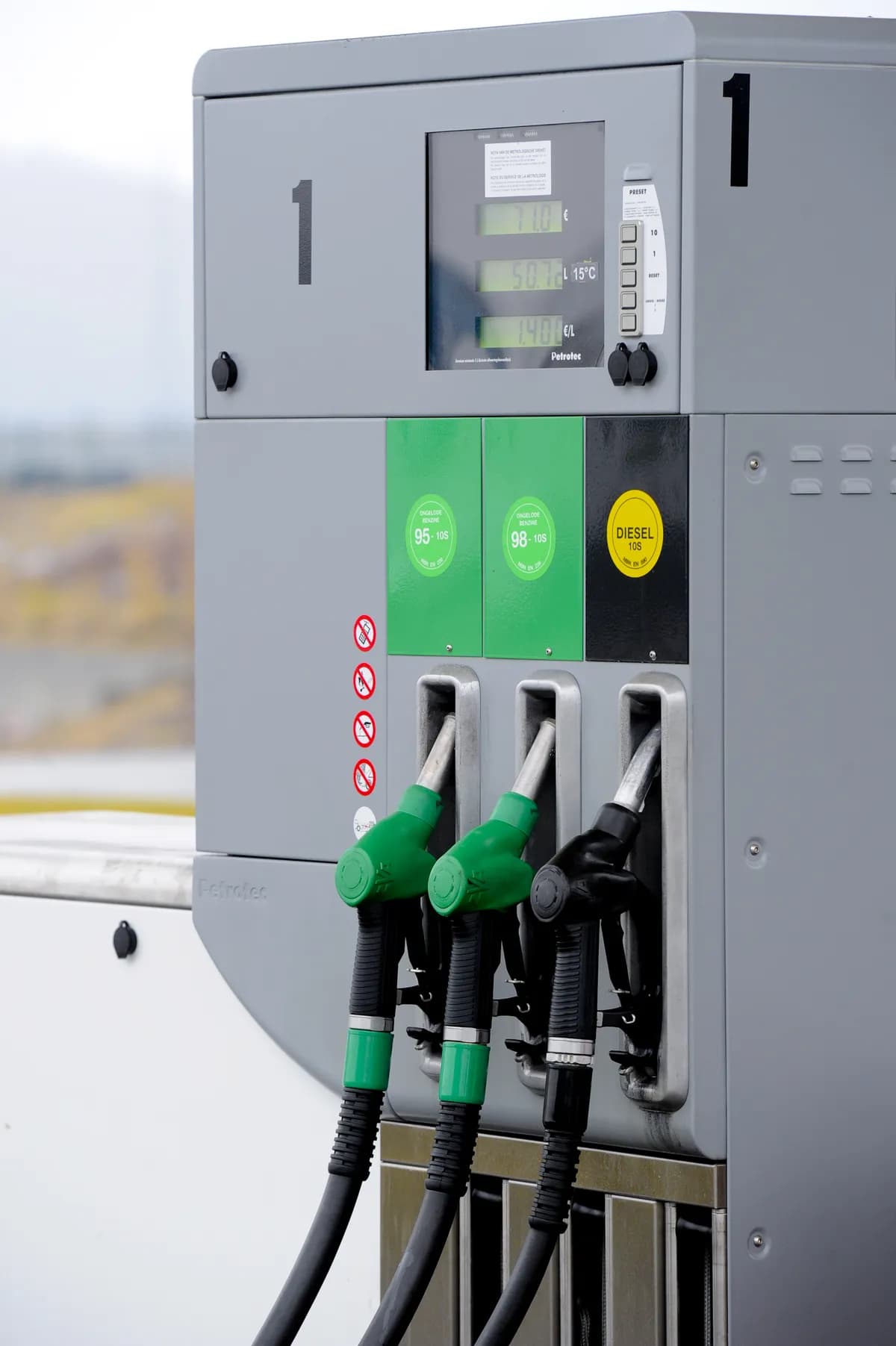
The immediate impact on energy markets has been sharp. As of Monday morning, Brent crude oil was priced at $106 per barrel, up more than 40% from $72 per barrel on February 27. According to Muyu Xu, a senior crude oil analyst at Kpler, LNG prices have risen almost 60% since the start of the war. On March 2, QatarEnergy suspended its LNG production after an Iranian drone attack, straining the global LNG market; Qatar supplies 20% of the world's LNG. Xu added that prices of refined products have seen significant increases and are expected to continue rising if energy flows through the Strait of Hormuz remain shut.
The Strait of Hormuz is a critical chokepoint for global energy flows. Strikes on ships in the Strait, through which about 20% of the world's oil supply passes, have sparked shortages and anxieties. About 84% of crude oil and 83% of LNG passing through the Strait of Hormuz in 2024 was bound for Asia, with China, India, Japan, and South Korea accounting for nearly 70% of oil shipments. Fatih Birol said the Asia Pacific region has been badly affected by the closure, and the most important solution is opening the Strait of Hormuz. The current status of the waterway—whether fully closed, partially open, or under negotiation—remains unclear, complicating efforts to assess supply restoration timelines.
IEA analysis underscores the unprecedented scale of supply losses. Birol noted that the depth of energy market problems caused by American and Israeli bombings in Iran and the closure of the Strait of Hormuz was not initially understood by world leaders. He reported that at least 40 energy assets in the Gulf region have been severely or very severely damaged, so an end to the conflict would not immediately restore supply. The current crisis represents the loss of 11 million barrels of oil per day and about 140 bcm of gas, compared to 5 million barrels per day in the 1970s crises and 75 bcm from Russia's invasion.
Broader economic fallout is raising global recession concerns. The US-Israeli war on Iran and Tehran's retaliatory strikes have upended global financial and energy markets, raising concerns of a global economic crisis or recession. Birol warned that interruptions to petrochemicals, fertilizers, sulfur, and helium could compound the fallout. The exact extent of damage to energy infrastructure in the Gulf region, and how long repairs will take, is not yet fully known, adding to economic uncertainty.
Short-term price scenarios vary depending on conflict duration. According to a March 9 report by Capital Economics, if the conflict is short-lived and Iranian attacks cease, oil and LNG prices would fall sharply, with Brent crude reaching $65 per barrel by year-end. In case of a longer war, oil prices could rise to around $130 per barrel in Q2, and shipments through the Strait of Hormuz would be further disrupted. This projection contrasts with longer-term forecasts that anticipate a price drop due to oversupply.
The long-term outlook from the World Bank projects an oil glut and price declines despite the conflict. Global commodity prices are set to tumble to a five-year low in 2025 amid an oil glut, limiting price effects even of a wider Middle East conflict. Overall commodity prices will remain 30% higher than in the five years before the COVID-19 pandemic. Next year, global oil supply is expected to exceed demand by an average of 1.2 million barrels per day, a glut exceeded only twice before in 2020 and 1998. The oversupply reflects a shift in China where oil demand has flatlined since 2023, and non-OPEC+ countries are ramping up production, while OPEC+ has significant spare capacity.
From 2024 through 2026, global commodity prices are projected to plummet by nearly 10%, with energy prices dropping 6% in 2025 and 2% in 2026. Assuming the Middle East conflict does not intensify, the annual average price of Brent crude is expected to fall to a four-year low of $73 in 2025, down from $80 in 2024. However, if the conflict escalates and reduces global oil supply by 2% (2 million barrels per day) by year-end, it could disrupt prices. This disagreement indicates uncertainty about the future economic impact, with some sources predicting continued high prices and severe crisis, while others forecast a price drop due to oversupply, affecting investment and policy decisions.
International response has included emergency measures. On March 11, the IEA oversaw the release of 400 million barrels of oil from strategic reserves, the largest emergency measure in its history. The IEA also pushed for demand-side measures such as increased remote work, lower speed limits, and reduced air travel. These steps aim to mitigate supply shortages while diplomatic efforts to de-escalate the conflict or reopen the Strait of Hormuz continue, though specific initiatives are not publicly detailed.
US-Iran diplomatic tensions have intensified. US President Donald Trump gave Iran 48 hours to reopen the Strait of Hormuz, warning of destruction of its energy infrastructure if it failed, with the deadline expiring late Monday night. In response to Trump's threat, Iran's army said it would target energy and desalination infrastructure belonging to the US and the regime in the region. This exchange highlights the risk of further escalation if the Strait remains closed.
Allied reactions have shown mixed support. Trump criticized NATO members, Australia, Japan, and South Korea for not assisting in the Strait; Japan said it could consider military deployment for minesweeping if a ceasefire was reached. The discrepancy in conflict timelines—with some reports focusing on events starting from October 1 and others from February 28—suggests different reporting focuses or potential confusion about the exact start date of major hostilities, which could affect understanding of the conflict's duration and escalation.
Key unknowns persist beyond the Strait's status. The overall casualty toll from the conflict, including military and civilian deaths, has not been confirmed. How global supply chains for non-energy commodities like petrochemicals and fertilizers are being affected by the disruptions also remains to be fully assessed. These uncertainties compound the challenges for policymakers and markets navigating the crisis.