

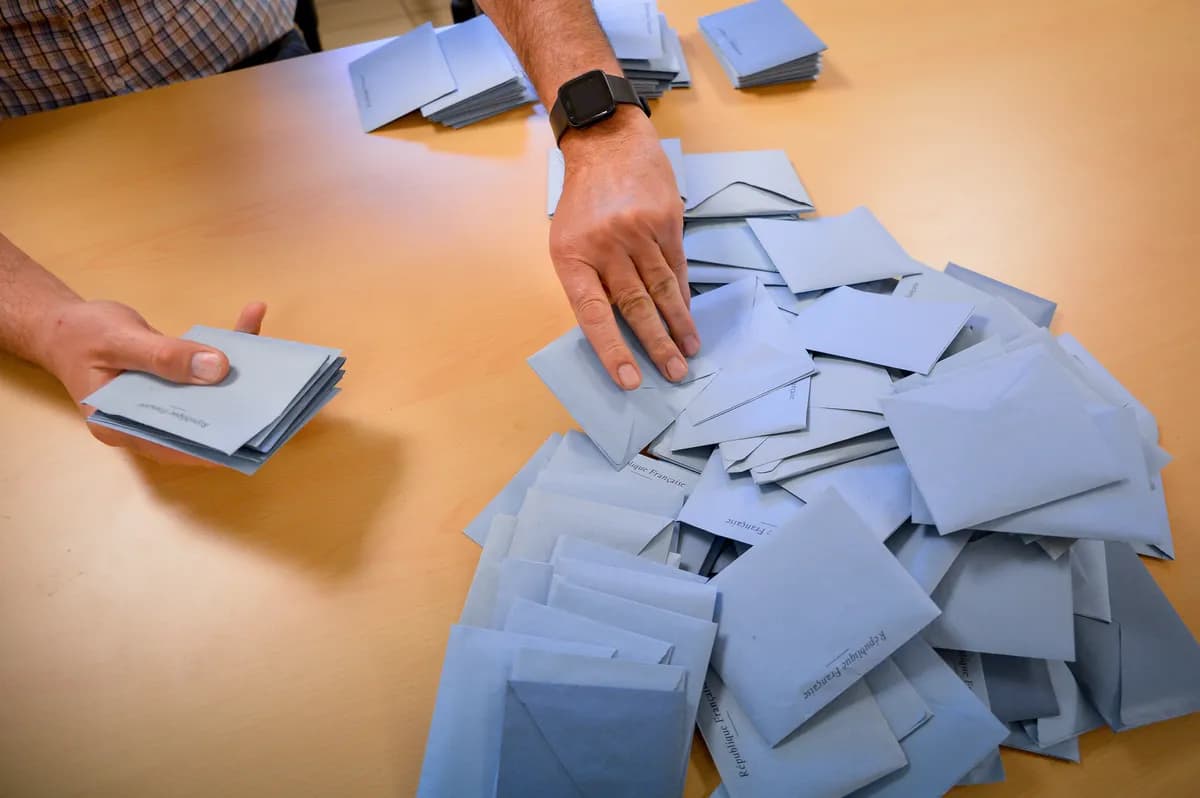
The Icelandic government proposes holding a referendum on August 29 regarding resuming EU accession negotiations. The referendum will ask voters if they favour reviving formal talks for EU membership, with a 'yes' vote triggering accession negotiations with Brussels. Prime Minister Kristrún Frostadóttir described the referendum as a 'crucial moment' for the country, clarifying it is about whether to finish dialogue, not about joining.
Iceland applied for EU membership in 2009, but its path has been complex and marked by pauses. Accession talks opened in July 2010 but covered only 11 of 35 negotiating chapters before suspension in 2013. In March 2015, Iceland requested to no longer be treated as a candidate country, effectively ending the process due to sovereignty concerns. Iceland never formally withdrew its EU application, so the bid is still considered 'legally valid, while dormant'. The country has been a member of the EU's single market through the European Free Trade Association (EFTA) since 1970, meaning it already operates in line with EU regulatory standards. Iceland is also part of the EU's Schengen free travel area, so joining the EU would theoretically be a relatively seamless process. Iceland is a founding member of the European Economic Area (EEA) since 1 January 1994, benefiting from access to the EU single market without adopting common agricultural and fisheries policies or the euro. Professor Eiríkur Bergmann stated Iceland can be considered a 'de facto member of the EU' but does not sit at the EU decision-making table.
EU membership would strengthen Iceland's economic security and provide additional cover among like-minded states.
Geopolitical shifts, particularly security concerns, are influencing the debate. Russia's 2022 invasion of Ukraine has heightened Iceland's interest in EU security structures. In January, US President Donald Trump announced a 10% trade tariff on eight European states after they announced they would join a reconnaissance mission to Greenland amid US threats. Foreign Minister Þorgerður Katrín says European solidarity in response to US tariffs caused a market reaction and led Trump to agree to cut a deal on enhanced Arctic Security within NATO. Two factors driving the EU membership debate are monetary policy, involving Icelandic króna fluctuations, and security.
The government argues that EU membership would bring significant benefits. Foreign Minister Þorgerður Katrín says EU membership would strengthen Iceland's economic security and provide additional cover among like-minded states. The Icelandic government considers itself 'very well equipped to take on a merit-based membership process' due to extensive alignment with EU policies. Commissioner for Enlargement Marta Kos welcomed Iceland's decision, calling it a 'strong and trusted partner' and emphasizing the EU offers 'an anchor in a community of values, prosperity and security'.
European solidarity in response to US tariffs caused a market reaction and led Trump to agree to cut a deal on enhanced Arctic Security within NATO.
Key concerns center on fisheries policy and national sovereignty. Full EU membership would mandate alignment with the EU's Common Fisheries Policy, potentially reallocating quotas away from Iceland's fleet. Þorgerður Katrín cites the Brexit debate as a cautionary tale about not taking EU membership for granted.
Public opinion is deeply divided and shows shifting trends. According to a new Gallup poll, 47% of Icelanders are opposed to EU membership, 40% are in favor, and 13% take no position. Opposition to EU membership is growing while support is decreasing, with support down 4 percentage points and opposition up 11 percentage points since April last year. Recent polls as of late 2024 show about 45% in favor of EU membership versus 35% opposed. A Gallup poll in early 2026 shows 42% in favor, 42% opposed, and 16% undecided.
The Brexit debate as a cautionary tale about not taking EU membership for granted.
Political parties hold starkly different positions on the issue. Over 80% of Independence Party and Progressive Party supporters are opposed to EU membership, and 90% of Centre Party supporters are opposed. About 80% of Social Democratic Alliance and Reform Party supporters are in favor of EU membership, and 49% of People's Party voters are in favor.
Referendum mechanics are being finalized, with next steps outlined. The National Electoral Commission believes the referendum question should be worded in a more open manner that does not imply a stance on Iceland's negotiation status with the EU. A draft resolution will be presented to parliament at the beginning of the week. If the referendum outcome supports resuming negotiations and they conclude, there will be a second referendum on actual EU membership.
EU membership could be a way to shelter Iceland in a rapidly changing world.
Negotiation status and unresolved issues from previous talks will shape any renewed process. EU accession negotiations were suspended in 2015. When negotiations were frozen in 2013, 28 out of 33 chapters had been opened, with 11 provisionally closed.
Economic context, including past crises, informs the debate. Iceland was severely affected by the global financial crisis in 2008. Monetary policy, involving Icelandic króna fluctuations, is a factor driving the EU membership debate.
The referendum as a 'crucial moment' for the country, clarifying it is about whether to finish dialogue, not about joining.
The EU's background and Iceland's potential integration involve a bloc of 27 member states engaged in close economic and political cooperation, emerging from trade cooperation to prevent conflict between France and Germany after WWII.
Implications for Iceland's future are profound, touching on sovereignty, economy, and global positioning. This decision will determine whether Iceland moves toward full membership or maintains its current associate status, with long-term consequences for its role in Europe and beyond.
A 'strong and trusted partner' and emphasizing the EU offers 'an anchor in a community of values, prosperity and security'.
Iceland can be considered a 'de facto member of the EU' but does not sit at the EU decision-making table.