

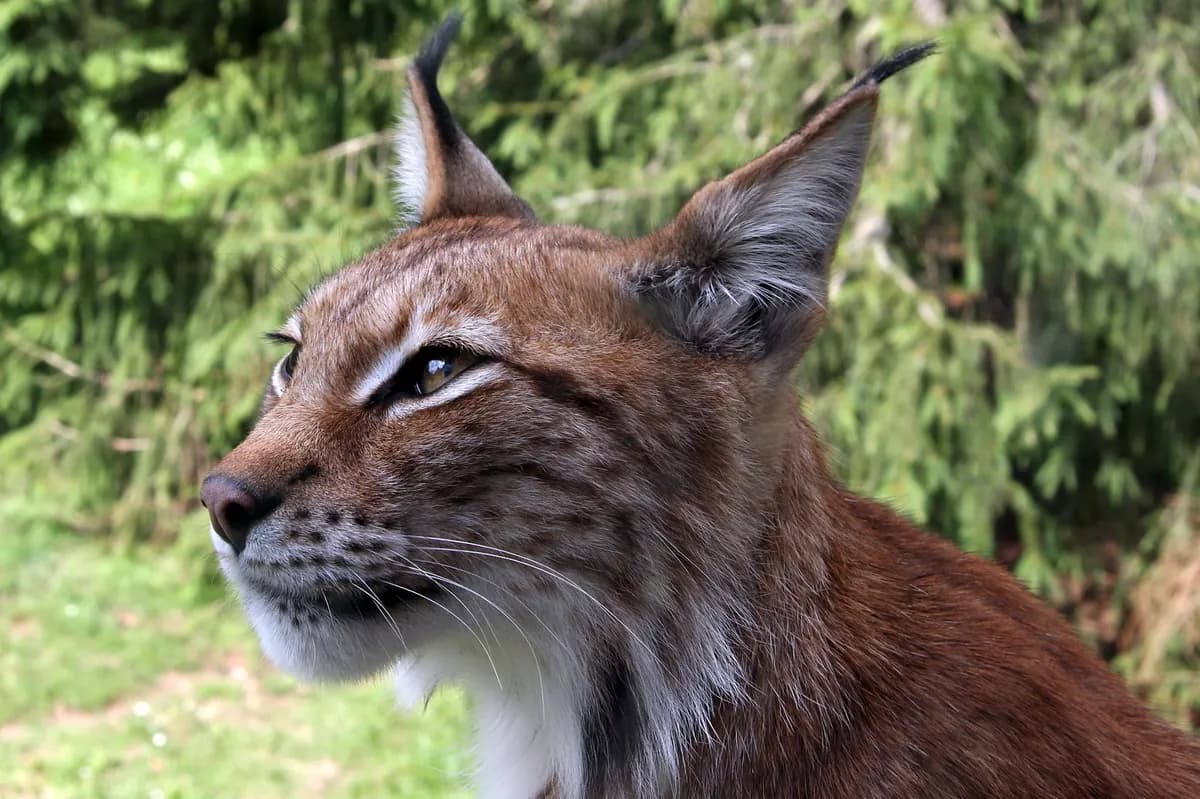
The winning image captures a young Iberian lynx in a moment of play. Josef Stefan spent several days in a hide when the lynx suddenly appeared with its prey and began repeatedly throwing it into the air and catching it again. For nearly 20 minutes, the lynx remained absorbed in the behavior, at times standing on its hind legs with its gaze fixed on the rodent. The moment ended when the animal lost interest, carrying its prey behind a bush to eat it.
The Iberian lynx is one of the world's rarest wildcats and was on the brink of extinction in the early 2000s, with fewer than 100 individuals remaining. Thanks to long-term conservation and reintroduction efforts, the Iberian lynx population has recovered to more than 2,000. The Iberian lynx still remains at risk as a vulnerable species under International Union for Conservation of Nature classification.
Voting for this year's Wildlife Photographer of the Year People's Choice Award saw a record-breaking 85,917 votes from wildlife photography and nature fans worldwide. In addition to the winning image, four other finalists were highly commended. All five images will be displayed online and at London's Natural History Museum until the exhibition closes on Sunday 12 July 2026.
One finalist image, 'Family Rest' by Christopher Paetkau, shows a mother polar bear and her three cubs pausing after a long journey along the Hudson Bay coast. Shrinking sea ice is making it harder for polar bears to hunt. In Svalbard, scientists have begun to notice some polar bears showing signs of adapting.
To me, it looked as if the rodent could fly.
Another finalist, 'Beauty Against the Beast' by Alexandre Brisson, depicts a group of lesser flamingos gathering beneath a stretch of power lines at sunset at a sanctuary in Walvis Bay, Namibia. When two birds finally lifted off, their movement cut across the industrial scene.
'Dancing in the Headlights' by Will Nicholls is a finalist image showing two bear cubs play-fighting in the middle of a road in Jasper National Park in Canada. Cubs are not often seen, as mothers usually keep them out of sight.
'Never-ending Struggle' by Kohei Nagira features a sika deer carrying the head of a rival after a fight on Japan's Notsuke Peninsula. A fisherman reported the sika deer had dragged the body for days before the head came free. The sika deer continued to survive alone through the winter months.
Another image, 'Hold Me Tightly' by Dvir Barkay, shows a mother sloth sheltering her baby from a downpour at La Selva Biological Station, Costa Rica. A 2025 study found that sloths' slow behavior has implications.