

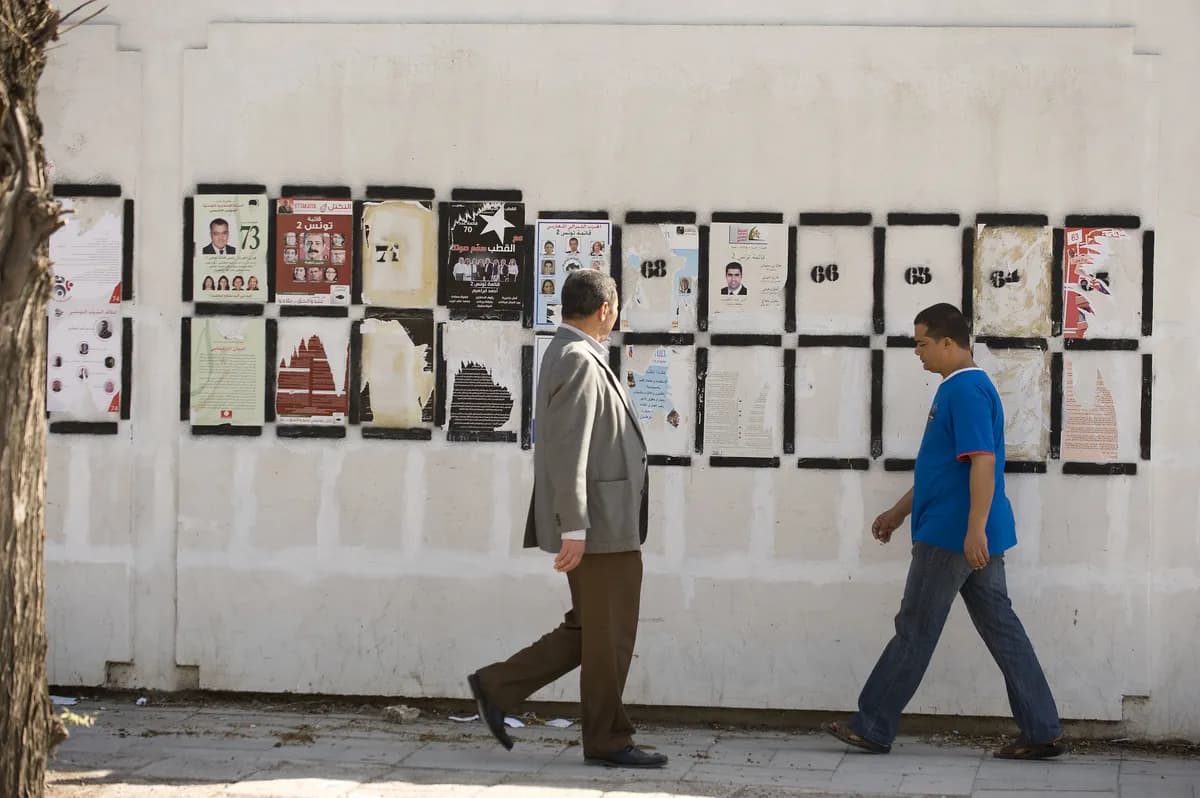
Polling data shows Tisza's lead over Fidesz has widened in recent weeks. According to a poll conducted by 21 Research Centre between March 23 and 28, Tisza had the support of 56 percent of decided voters, up from 53 percent in early March, while 37 percent backed Fidesz, down from 39 percent three weeks ago. The same poll showed Tisza leading Fidesz by 19 percentage points, up from a 14-point lead earlier, with some 26 percent of respondents undecided. Another poll published by Zavecz Research, conducted between March 24 and 28, showed 51 percent of voters supported Tisza, up from 50 percent in February, while 38 percent backed Fidesz, unchanged from a month earlier, giving Tisza a 13-point lead among decided voters. Zavecz Research said that 20 percent of respondents were undecided in its survey. However, a separate analysis by Politico suggested Tisza currently has a 6-point lead over Fidesz, down from 10 points at the start of this year, indicating some volatility in the race.
This election represents a pivotal moment for Orbán's consolidation of power over Hungary, which he has ruled for 16 years with his party Fidesz. During his tenure, the government rewrote election laws to its own benefit, put loyalists in control of an estimated 80 percent of the country's media, and retooled the judiciary. According to research sources, Hungarian elections are decidedly unfair, structured to give the incumbent government so many advantages that the opposition should be almost incapable of winning. The government's advantage begins with the nature of the elections, making Hungary a paradigmatic example of what political scientists call 'competitive authoritarianism,' a system where voters are free to cast ballots but the playing field is heavily tilted.
I am convinced that Orbán is considering a plan B in case of electoral loss and I would not be surprised if there is some backlash for democracy after the election.
Hungary has become a geopolitical hotspot where the great powers' interests converge in Europe. Orbán has close ties to Vladimir Putin, has blocked the EU's support package to Ukraine, and hindered sanctions against Russia, making him the EU's most Moscow-friendly leader. Recent allegations of Russian interference in the ballot, along with revelations that Orbán's ministers shared confidential EU information with Moscow, have prompted outrage across the bloc. Orbán has also been a thorn in the side of the EU and a favorite of Donald Trump, with a podcast discussing his close relationship with Russia and hostility to Ukraine highlighting these tensions.
Orbán has cultivated foreign backing through alliances with the Trump administration and European right-wing nationalist leaders. He attracted the backing of Donald Trump with his tough talk on immigration and emphasis on restoring the 'Christian family.' Washington sent Vice President JD Vance to campaign on Orbán's behalf this week, according to major media reports. Orbán has spent the last few months attempting to discredit his opponents while laying on the strength of relations with Trump and Vladimir Putin under his leadership.
Just because something is not liberal, it still can be a democracy.
The opposition challenger, Péter Magyar, is a former insider of Orbán's Fidesz party who emerged as a rival only in 2024. Magyar earned support by successfully tapping into growing public discontent with years of economic stagnation and corruption. Both candidates held rallies on Friday, with Magyar supporters in Hatvan saying they hoped above all for change from an Orbán era marked by soaring levels of cronyism and corruption and a stagnating economy. According to The Independent - Main, Peter Magyar described the election as 'now or never' to reverse the damage wrought by Fidesz.
Despite opinion polls putting Magyar ahead, observers warn that the electoral system is complex and districts have been redrawn to favor Fidesz. Some calculate Tisza needs a six-point lead in the national vote just to secure a majority in parliament. While most polls have shown a Tisza lead, Fidesz points to other surveys that still show it on course to victory, though its opponents say these have mainly been conducted by institutes with financial or personal ties to the ruling party. This creates uncertainty, as the outcome remains unclear due to many undecided voters and accusations that Orbán might turn the polls in his favor.
It is 'now or never' to reverse the damage wrought by Fidesz.
Post-election scenarios include potential power retention strategies by Orbán if Fidesz loses. After the election, Hungary's parliament, which currently has a two-thirds majority for Fidesz, can remain seated for up to a month, according to official sources. This could give Orbán a window to retain power even in case of a loss, as described by Anders Blomqvist. According to SVT Nyheter, Anders Blomqvist described Orbán as likely considering a plan B, with one scenario being that the current president resigns, parliament is convened, the constitution is changed, and Orbán is appointed president. If Fidesz loses, they could modify the president's role and give the president greater influence, Blomqvist added.
Campaign dynamics have been marked by mutual accusations of foreign interference. Viktor Orbán and Péter Magyar have traded accusations of enlisting foreign interference in the election, with the leaders of the two political parties competing for voter favor accusing each other of subterfuge ahead of the parliamentary elections on Sunday. Government spokespeople have tried to portray leaks revealing Budapest's close ties with Moscow – including the transcript of a conversation between Orbán and Vladimir Putin – as evidence of foreign interference. Orbán claimed on social media that Magyar would 'stop at nothing to seize power' and that Magyar and his Tisza party were 'colluding' with foreign intelligence and threatening the ruling party's supporters with violence.
Magyar would 'stop at nothing to seize power' and that Magyar and his Tisza party were 'colluding' with foreign intelligence and threatening the ruling party's supporters with violence.
The economic context is shaped by an EU funding freeze and public discontent. The EU has withheld roughly €19 billion in funding due to concerns over the rule of law and corruption, with the economy suffering. This has fueled the public discontent that Magyar has tapped into, as both candidates addressed economic issues in their rallies. The exact impact of the funding freeze on voter sentiment remains a key unknown in the election.
Orbán's social policies have centered on a cultural identity platform that clashes with EU values. He has cast himself as a defender of Hungary's cultural identity, imposing some of Europe's toughest asylum rules and limiting gay rights while offering families generous handouts to reverse falling birth rates. Orbán has become Europe's clearest internal threat to its values of free speech, the rule of law and tolerance, according to major media reports. In a public speech, Orbán stated, 'Just because something is not liberal, it still can be a democracy,' reflecting his ideological stance.
This is an organised attempt to use chaos, pressure, and international vilification to call into question the decision of the Hungarian people, adding that Hungary needed 'unity and security' and change would 'threaten all we have built together.'
Reactions to foreign involvement have influenced the campaign, with Vance's visit appearing to backfire. Polls carried out after Vance's high-profile visit this week showed the incumbent leader's performance drop, according to major media reports. Ahead of the election, all focus is directed at about half a million undecided voters, as official sources note, making them a critical factor in the outcome. According to The Guardian - Main UK, Xenia, a Magyar supporter, described hoping for change in Hungary because 'we really need it.'
The implications of this election extend beyond Hungary, serving as a case study in competitive authoritarianism. Under Orbán, Hungary has become a paradigmatic example of a very modern kind of autocracy, where voters are free to cast ballots for the candidates, making the European nation different from Russia under President Vladimir Putin, according to research sources. This system tests the resilience of democratic institutions within the EU framework.
Orbán would be 'removed by the same people ... he has abandoned and betrayed: millions of Hungarians.'
Several unknowns cloud the election's outcome. The specific measurements indicating Orbán must fight for political survival have not been detailed, and the true extent of Russian interference in the election, beyond allegations, remains unclear. Additionally, the exact allegations of foreign interference by Orbán and Magyar, and whether evidence supports them, are not fully disclosed, leaving room for speculation.
Further unknowns include what specific actions Orbán might take to retain power if Fidesz loses the election, beyond the scenarios outlined by analysts. The number of undecided voters who will ultimately sway the election outcome is also uncertain, adding to the unpredictability of the results.
The ongoing election fraud carried out for months by Fidesz, along with criminal acts, intelligence operations, disinformation and fake news cannot change the fact that Tisza is going to win this election.
Methodologically, polling sources vary in their reliability and approach. Both the 21 Research Centre and Zavecz Research are independent of political parties and gathered responses by phone calls and online questionnaires, according to research sources. Poll of Polls aggregates voting intention data from external polling firms, but may exclude polls that don't meet criteria on sample size, methodology, and/or transparency on funding and commissions. Polls are added as they become available, but displayed by fieldwork date, meaning that the projections can change as more polls are added, highlighting the fluid nature of pre-election forecasts.
Urged voters 'not to fall for provocation' and said Orbán must 'accept the Hungarian people's judgment with dignity.'
I really hope there will be some change in Hungary, because we really need it.