

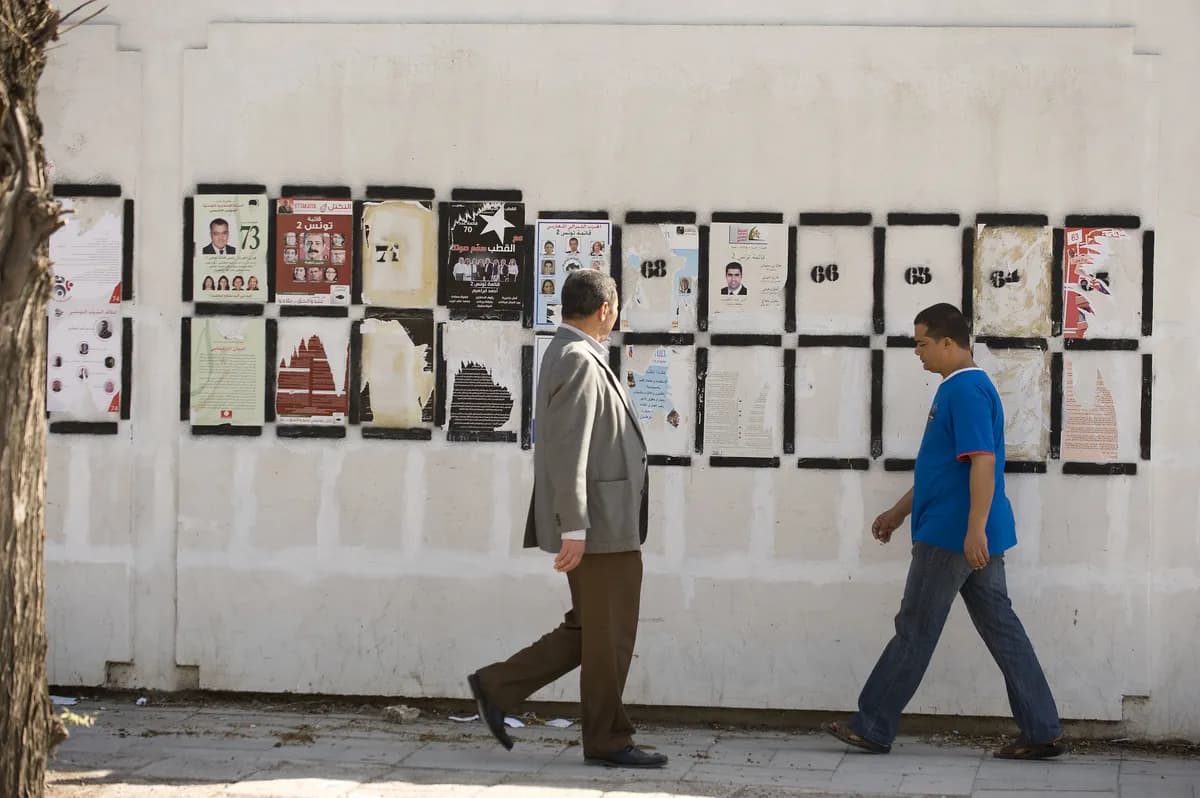
Hungarians voted on Sunday, 12 April 2026, in an election seen as the most consequential since the country's transition to democracy in 1990. With almost 99% of votes counted, the opposition Tisza party is on course for a two-thirds majority of 138 seats in the 199-seat parliament, while Orbán's Fidesz could retain 55 seats and the far-right Our Homeland Movement may enter with 6 seats. Péter Magyar claimed victory, stating Orbán congratulated him by phone, with Tisza projected to win 135 mandates. Orbán conceded defeat, calling the result 'painful' and vowing to serve from opposition. Magyar defeated Orbán by carrying a Hungarian flag, proclaiming an inclusive national message, and addressing public exhaustion with conflict and inequality.
Viktor Orbán's rule since 2010 reshaped Hungary into what political scientists call a 'competitive authoritarianism.' In such a system, voters are free to cast ballots, making Hungary different from Russia under President Vladimir Putin, but elections are decidedly unfair, structured to give the incumbent government advantages that should make opposition victory nearly impossible. Orbán wrote a new constitution after winning a two-thirds majority in 2010, reshaping Hungary's courts, electoral system, and economy. He gave a speech in 2014 arguing for an 'illiberal democracy' and a strong state less bound by personal freedoms, and his government has imposed tough asylum rules, limited gay rights, and offered family handouts to reverse falling birth rates.
The government's advantage began with the nature of the elections. Orbán's government rewrote election laws to its benefit, put loyalists in control of an estimated 80% of Hungary's media, and retooled the judiciary. Hungary fell to place 68 in Reporters Without Borders' press freedom index in 2025, with Orbán described as 'press freedom's enemy.' Opinion polls put Magyar ahead, but the electoral system is complex and districts were redrawn to favor Fidesz; analysis suggests Tisza may need a six-point lead for a parliamentary majority.
Polling trends in the weeks before the election showed the centre-right Tisza party widening its lead over Prime Minister Viktor Orbán's ruling Fidesz. Most polls suggested Orbán and his Fidesz party could lose power, representing the biggest challenge to his rule in 16 years. According to a poll conducted by 21 Research Centre, Tisza, led by former government insider Peter Magyar, had the support of 56 per cent of decided voters, up from 53 per cent in early March, while 37 per cent backed Fidesz, down from 39 per cent three weeks ago. Some 26 per cent of respondents did not know who to back. Published by the news site 24.hu, the survey by 21 Research Centre showed 40 per cent support for Tisza among all voters, with Fidesz backed by 28 per cent. Another poll, conducted by Zavecz Research, showed that Tisza widened its lead to 13 points among decided voters from 12 points in a February poll, with 51% of voters supporting Tisza, up from 50 per cent in February, and 38 per cent backing Fidesz, unchanged from a month earlier. According to a poll analysed by Politico, Tisza currently has a 6-point lead over Fidesz, down from 10 points at the start of this year, and the analysis suggested that Tisza started to gain popularity in November 2024.
Voter turnout was high, with 74% voting by 17:00, surpassing the 2022 record of 73.5%. Early turnout figures pointed to participation near 75%, a potential record. While most polls have shown a Tisza lead, Fidesz points to other surveys that still show it on course to victory, though its opponents say these have mainly been conducted by institutes with financial or personal ties to the ruling party. The outcome of the polls remained uncertain due to many undecided voters and accusations that Orbán might turn the polls in his favour. Ahead of the election, all focus was on a decisive group—about half a million voters who had not yet decided.
The rise of Péter Magyar and his opposition movement tapped into public discontent with economic stagnation and corruption. Magyar, born in Budapest 45 years ago, is a trained lawyer who was involved early in Fidesz when it was still an opposition party. Both Magyar and his ex-wife, Judit Varga, were active and engaged in Fidesz at a high level, with her as justice minister and him as a diplomat and head of state-owned companies. Magyar broke with the party after it was revealed that Hungary's president and his wife, who was justice minister, participated in pardoning a deputy director of an orphanage convicted for helping cover up a pedophilia scandal.
Corruption allegations became a central symbol of the campaign. Drone footage showed a sprawling residence in northern Hungary belonging to the father of Prime Minister Viktor Orbán, with zebras from a neighboring property owned by Orbán's best friend Lőrinc Mészáros. Zebras became a symbol of corruption in Hungary, with plush toys sold at protests and photos plastered on government billboards.
Orbán is clear that his party Fidesz is heading toward victory and another term in power.
The election's outcome carries significant foreign policy implications, as Hungary has become a geopolitical hotspot where the interests of great powers converge in Europe. A defeat for Orbán could deprive Russia of its closest ally in the EU and unblock a €90 billion EU loan for Ukraine that Orbán has blocked. Orbán is the EU's most Moscow-friendly leader, with allegations of Russian interference and leaks of confidential EU information to Moscow. He has close ties to Vladimir Putin, known for blocking EU aid packages to Ukraine and hindering sanctions against Russia. Orbán also attracted Donald Trump's backing, with MAGA and Fidesz becoming kindred spirits, and Vice President JD Vance campaigned for Orbán, though polls after Vance's visit showed Orbán's performance drop. He has good relations with several European right-wing nationalist leaders and the Trump administration.
Domestically, the EU has withheld roughly €19 billion in funding due to concerns over the rule of law and corruption. Magyar said Hungary will be a strong European and NATO ally, with first foreign trips to Warsaw, Vienna, and Brussels to unlock frozen EU funds. He promised to join the European Public Prosecutor's Office and restore checks and balances.
During the campaign, Orbán and Magyar traded accusations of foreign interference in the election. Orbán alleged on social media that Magyar and Tisza were 'colluding' with foreign intelligence and threatening Fidesz supporters with violence. Magyar accused Fidesz of election fraud, criminal acts, intelligence operations, disinformation, and fake news.
Despite the projected victory, opposition supporters fear polls underestimated support for Fidesz or that Orbán will find a way to retain power even if he loses. After the election, Hungary's parliament, which currently has a two-thirds majority for Fidesz, can remain seated for up to a month. According to Anders Blomqvist, a Hungary expert and university lecturer in history at Dalarna University, this could give Orbán a window to retain power even in the event of a loss. One scenario Blomqvist outlined is that the current president resigns, parliament is convened, the constitution is amended, and Orbán is appointed president. If Fidesz loses, they could modify the president's role and give the president greater influence, and Orbán is likely considering a plan B in case of election loss, with potential setbacks for democracy after the election.
In his victory statement, Magyar called on Hungarian President Tamás Sulyok and other state leaders appointed by Orbán to resign immediately. Hungarian President Tamás Sulyok currently has a speaker-like function, with a background as a judge but no political experience.
The specific foreign intelligence agencies alleged to be involved in the election interference accusations between Orbán and Magyar have not been publicly identified. How many undecided voters ultimately cast their ballots and for which party remains unclear, despite their decisive role in the election.
What concrete steps the new government will take to unlock the €19 billion in frozen EU funds and restore rule of law is yet to be detailed. It is also unknown whether Hungarian President Tamás Sulyok and other state leaders appointed by Orbán will resign as demanded by Magyar.
The specific electoral fraud or criminal acts Magyar is accusing Fidesz of have not been fully specified, and it is uncertain whether there will be investigations into these allegations.