

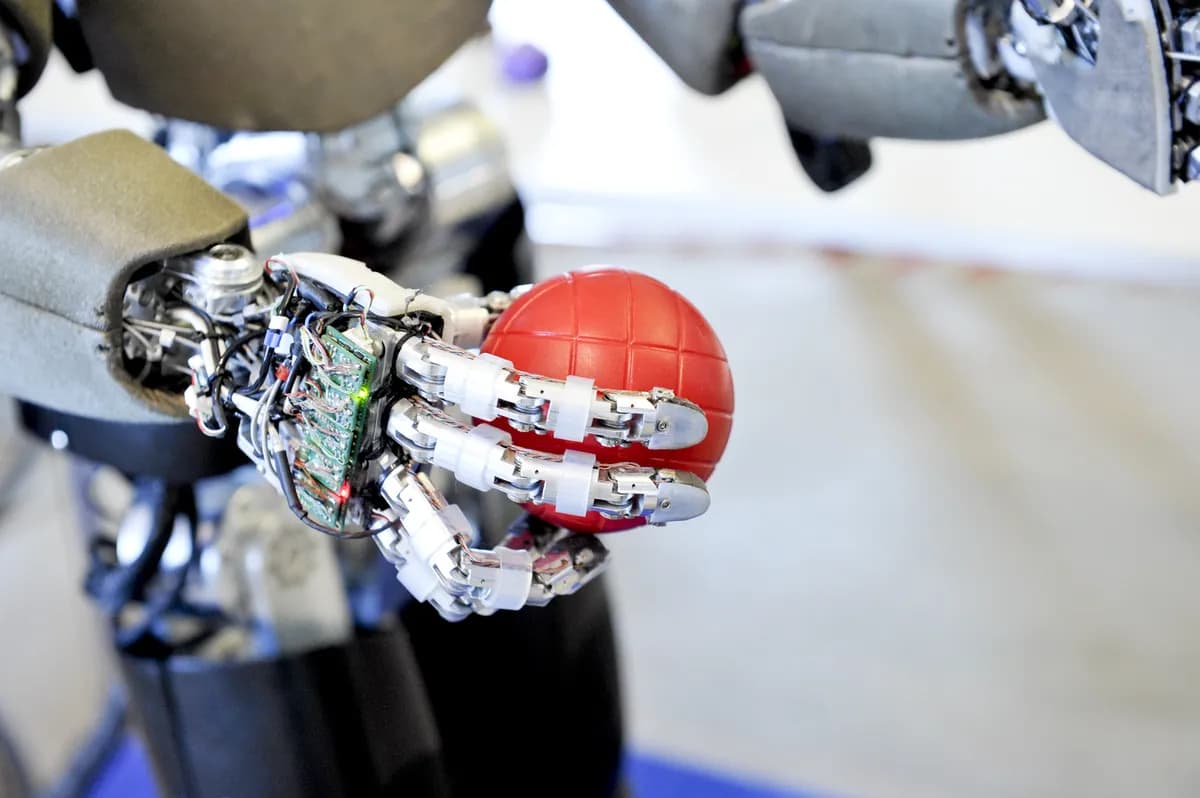
The event involved humanoid robots competing against or alongside human runners, with the purpose being to showcase rapid technological advancements in robotics. A robot won the race, completing the half-marathon in approximately 50 minutes. The event demonstrated significant progress compared to a similar event last year, where many robots broke down or failed to finish the race.
Participation in the robot half-marathon increased dramatically this year compared to last year, indicating growing interest in the field. The competition includes both remote-controlled and fully autonomous robots, showcasing different approaches to robotic mobility. Robots faced technical challenges such as overheating, falls, and battery drainage during the event, highlighting ongoing engineering hurdles.
We assembled this robot just at 1PM today and immediately entered it into the competition.
Human runners and robots used separate tracks or lanes to avoid collisions, ensuring safety for all participants. Organizers conducted a full-process test run for the event, simulating key scenarios to prepare for potential issues. According to major media reports, new awards were introduced this year, including for endurance and finishing, recognizing different aspects of robotic performance.
The event generated public interest, with spectators and human runners engaging with the robots, creating a unique interactive experience. According to research sources, the event highlighted both advancements and limitations in China's humanoid robot industry, showing progress while acknowledging areas needing improvement. Confusion exists over the timing of the robot half-marathon event, with some reports indicating it occurred recently while others suggest it is upcoming.
The AI technology used in humanoids hasn't progressed very much since 2021, when my team sent a bipedal robot to run a 5K race.
Similarly, there is a contradiction regarding the number of robots or teams participating, with varying figures reported. Further contradictions involve the performance of robots at last year's event, with some sources describing more failures than others. The exact date and year of the reported robot half-marathon event remain unspecified, leaving uncertainty about when it took place.
Precise figures on how many robots actually participated have not been confirmed by organizers, making the scale unclear. Specific technical specifications or models of the winning and participating robots are not detailed, limiting technical analysis. It is unknown whether there were any human injuries or safety incidents during the event, as safety reports are not public.
The race demonstrates how robust humanoid hardware has become, noting that until five years ago or so, we didn't really know how to get robots to walk reliably, and now we do.
Official rules and criteria for judging the robot competition have not been publicly disclosed, raising questions about fairness. According to Euronews, Yang Kechang described assembling a robot just before the competition, suggesting last-minute preparations. com, Alan Fern described the AI technology in humanoids as not having progressed much since 2021, indicating stagnation in some areas.
com, Alan Fern also described the race as demonstrating how robust humanoid hardware has become, praising mechanical advancements. He further commented that scaling from a 5K to a half-marathon is a hardware robustness problem, emphasizing engineering challenges.
Going from a 5K to a half-marathon is a hardware robustness problem and I would be surprised if one of these companies makes it through without replacing the robot.