

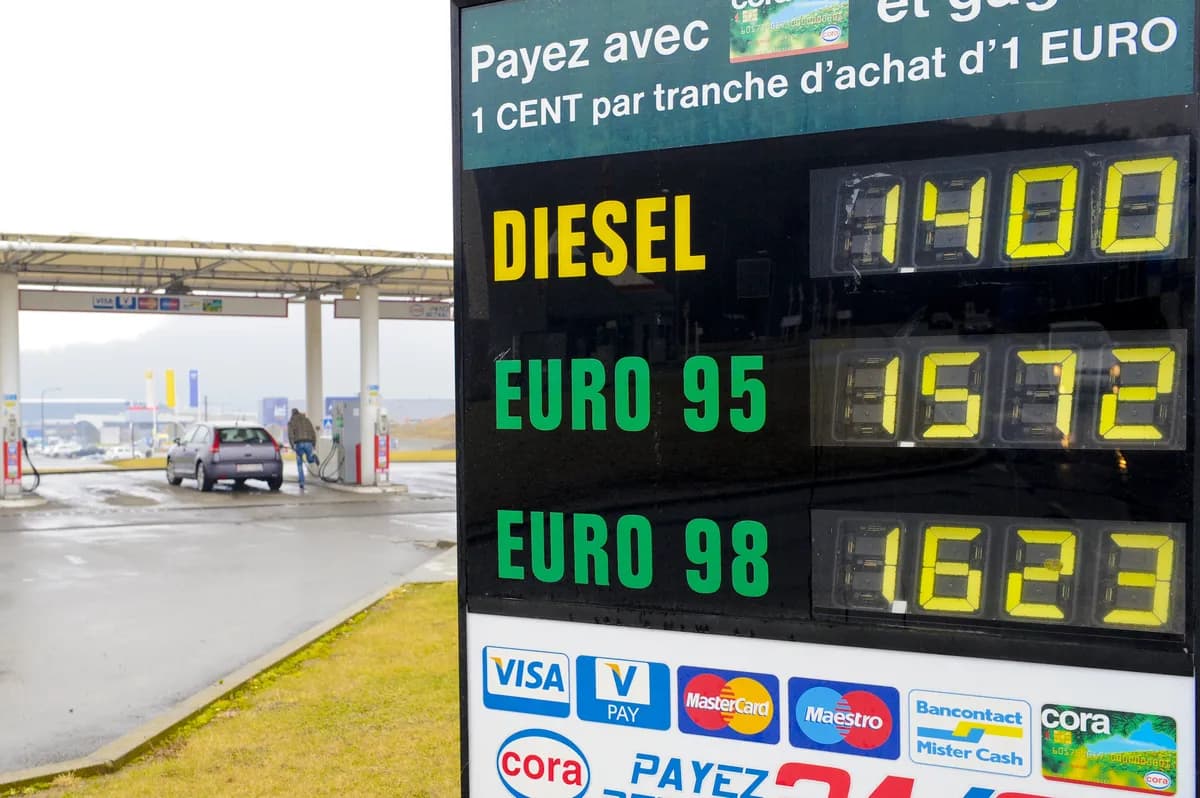
Approximately one-fifth of global oil production from countries like Saudi Arabia, UAE, Iraq, and Kuwait is transported through the Iran-controlled Strait of Hormuz, and numerous shipping companies stopped traffic through the waterway over the weekend. The Brent crude oil price, the most important crude oil grade for Europe, has increased by about 16 percent since then, according to multiple reports. In Austria, more than half of the gasoline and diesel used is refined by OMV.
The Austrian Ministry of Economy wants to extend the ongoing special investigation of fuel prices by the Institute for Advanced Studies to current developments, with a report due by the end of March. The focus is on the passing on of price changes to customers. The Austrian Trade Union Federation also called for the examination of a margin regulation.
According to ÖAMTC, the current oil price is about at the level of January 2025, but fuel prices were noticeably lower at that time. The price for diesel increased by 17 cents per liter within a week, and for super by 12 cents per liter. Since the beginning of the Ukraine war in February 2022, diesel has been the more expensive product at Austrian gas stations in 37 out of 48 months, ÖAMTC data shows.
Diesel has been worse hit than other fuels, and was already under pressure before the war. Experts say its cost will rise further, with a knock-on effect on inflation, as long as trade through the Strait of Hormuz remains blocked. The per-barrel price of diesel rose above $200 in Europe on Thursday, the highest since March 2022 when Russia's invasion of Ukraine shook markets.
I believe that the storage here would certainly still allow for cheaper prices.
Diesel is ubiquitous in Europe, accounting for 86 percent of transport fuel sales in Latvia in 2024, 73 percent in France and 66 percent in Germany, according to FuelsEurope. The international supply-and-demand balance for diesel was much tighter than the gasoline balance going into the war and the subsequent market response has been one of strong diesel price escalation while gasoline’s price response has been somewhat muted. In Britain, France and other countries, the price of diesel has risen more than 30 percent since the first US-Israeli air strikes on Iran and resulting choking of the Strait of Hormuz.
In France, the price of regular petrol has gone up by just 17 percent, according to government statistics consulted by AFP. The European Union is now a net exporter of petrol, mainly to the United States and Africa, but an importer of diesel. Russia was Europe's main source of diesel until Moscow's all-out invasion of Ukraine in 2022 set off international sanctions.
Now EU nations look to India, Turkey, the United States and Saudi Arabia for supplies. Middle East states provided more than half of Europe's diesel in 2025, with about one third of this passing through the Strait of Hormuz, according to Rystad Energy. In response to the crisis, Slovakia last month ordered a 30-day restriction on diesel sales while foreigners have to pay more for the fuel there.
Ireland and Spain have temporarily cut the taxes they charge on the fuel. The Austrian Chamber of Labour criticizes that price increases are passed on quickly, but reductions are delayed and only partially passed on. According to ORF News, Daniel Witzani-Haim, an AK expert, could not understand the argumentation of gas station operators with risk surcharges.
The prices, which we see on the markets due to the crisis in the Middle East, especially at the Rotterdam exchange, have simply risen sharply.
In the past, refineries have sometimes been able to increase their margins during price increases. Dominik Graf, an ÖAMTC expert, said the significant reaction in prices at the pump is not understandable, describing the price increases as too high and too fast. The diesel price reacted more strongly than super to the recent geopolitical developments.
Gas station operators argue that they orient themselves to the markets. According to ORF News, Jürgen Stichenwirth, Turmöl-Chef, said his company does not have storage with previously cheaply purchased reserves. According to ÖAMTC, other providers have more room for maneuver and own refinery capacities.
The German economic association Fuels und Energie justified the high fuel prices with significantly higher purchasing costs for gas stations. The Easter holiday weekend across Europe is expected to see a surge in demand with queues at petrol stations. 80 a litre, according to research by the RAC, which is about 20 percent more than Italy, the cheapest country surveyed by the RAC.
Refineries are working at full capacity.