

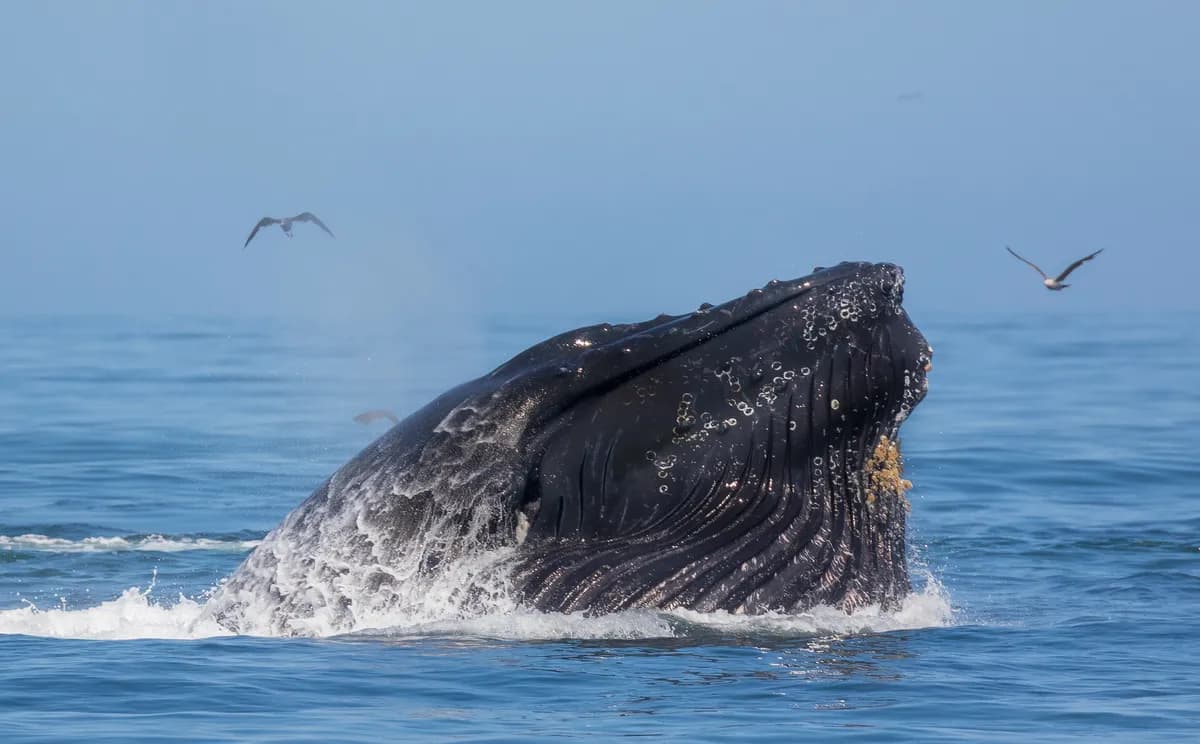
At least six gray whales have died in San Francisco Bay from mid-March to early April 2026. The deaths follow a pattern over the past few years, raising concerns that 2026 is becoming another dangerous year for the gray whale population. Ship strikes and vessel-related injuries are a significant threat to gray whales in the area.
Of 70 dead whales studied, 30 had evidence of trauma from ship strikes, but many other dead whales could not be examined. Several living whales with injuries caused by vessels have been documented, which could affect their ability to thrive. San Francisco Bay is a busy urban waterway with high-speed ferries, cargo ships, commercial fishing vessels, and recreational watercraft, making it dangerous for slow-moving whales.
Historically, gray whales have not consistently stopped over in San Francisco Bay; when they have, it coincided with low food supply in the Arctic. The majority of eastern North Pacific gray whales migrate along the California coastline from Baja California, Mexico, to the Arctic. From 2018 to 2025, 114 individual gray whales visited San Francisco Bay for varying lengths of time, with very few repeat visitors from year to year.
At least 18% of whales documented alive in San Francisco Bay from 2018 to 2025 later died in the area, with evidence suggesting the mortality rate is actually higher. Why gray whales are increasingly visiting San Francisco Bay in recent years despite the historical pattern remains unknown. Broader population decline and environmental factors compound these risks.
Since 2016, the overall eastern North Pacific gray whale population has fallen by more than half, likely due to declining food supply. Rising ocean temperatures and diminishing sea ice are affecting the quality and availability of gray whales' prey, such as crustaceans. , 1990s and early 2020s), the gray whale population rebounded, but extremely low calf numbers in recent years suggest a slower recovery this time.
The current estimated total population and how it compares to pre-2016 levels are not specified.