

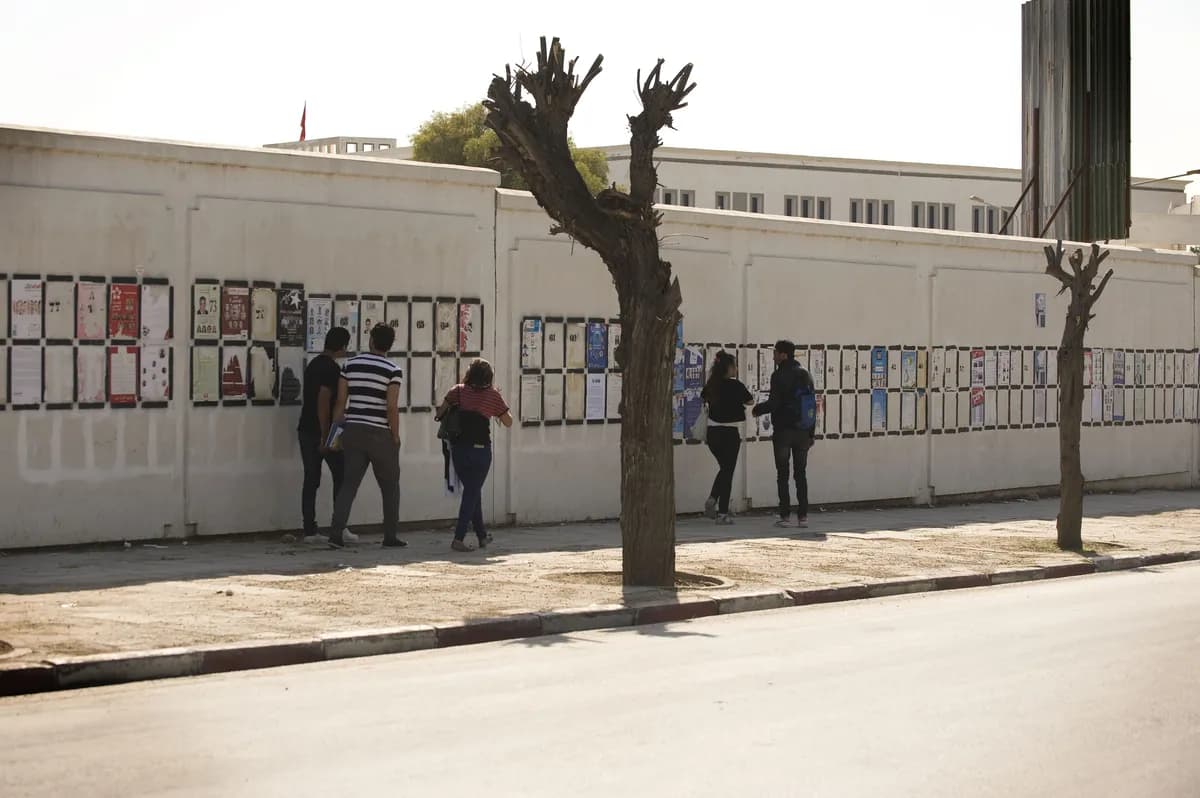
The 2026 French municipal elections were held on March 15 and 22, 2026, with dates set by a decree published on August 28, 2025. A key change this year involved electoral rules for municipalities with less than 1,000 inhabitants, which now use a proportional and equal list ballot with two rounds, replacing the previous majority and multi-member ballot system. Furthermore, lists in these smaller municipalities must be parity with alternating male-female order, and single applications are no longer possible.
In Sweden, the Dorotea kommunlista is making a comeback in politics after four years of absence, presenting a list of 19 candidates for the autumn election. The group, which has been a significant force in Dorotea politics since its start in 1994, aims to take a seat in the kommunfullmäktige and challenges the current coalition for power. In 2022, Dorotea kommunlista chose not to run, which according to several assessors contributed to Sverigedemokraterna strengthening their positions.
Arne Näslund is not a candidate this time. In the French region of Lorraine, there are 3,128 lists competing this year, with 1,033 lists in Moselle, 801 in Meurthe-et-Moselle, 667 in Vosges, and 627 in Meuse. 7% of Lorraine communes have only one list, and to be elected in the first round, a single list must obtain a majority of votes cast and at least 25% of registered voters' votes.
Larger cities like Thionville have 7 lists and Metz has 9 lists, while some small communes with less than 500 inhabitants, such as Lubey in Meurthe-et-Moselle, Ribeaucourt in Meuse, Laneuveville-lès-Lorquin in Moselle, and Seraumont in Vosges, have 3 lists. Other small communes with multiple lists despite low populations include Rembercourt-sur-Mad with 164 inhabitants, Raville with 300, Jezainville with 1,096, and Renauvoid in Vosges with 171 inhabitants. An exceptional case is a commune of 2,400 inhabitants with four lists, and Amnéville, with 10,000 inhabitants, also has four lists.
The 2026 elections introduce new rules requiring candidates to declare by list with gender parity and alternating male-female order, even in communes with less than 1,000 inhabitants. Despite this mandatory parity, the number of men on lists in Lorraine remains slightly higher at 52%. 3%.
Regarding incumbent mayors in Lorraine, 64% are running again as list heads, while 9% are running again but not as list heads. Most outgoing elected officials choose the second position on lists, often given to the first deputy, though some candidates appear much lower, such as Rémy Bour in 13th position on the only list in Hou. Political formations across France are showing creativity in list names for the 2026 elections, using wordplay and cultural references.
Isère is particularly fertile for creative list names, such as 'Nouvel’Hères' in Saint-Martin-d’Hères, 'L’envol de Colombe' in Colombe, and 'Hières et demain' in Hières-sur-Amby. Drôme also has creative list names like 'Naturellement Saoû' in Saoû and 'Les portes du vivre ensemble' in Portes-en-Valdaine. In the Grand Est region, lists use catchy formulas like 'Ça vaut le coup d’Essegney' in Vosges and 'Épense à vous' in Marne, while in Savoie and Haute-Savoie, names include 'Aillon de l’avant' and 'Un cœur qui Balme'.
Some list names reference popular culture, such as 'Astérix avec les Romains' in Doubs and 'En avant Gailhan' in Gard. In key Lorraine cities, voters in Sarreguemines were called to the polls on Sunday, March 15, 2026, for the first round of municipal elections, with candidacies made public by prefectoral decree after verification of list conformity, including parity. Lists in Sarreguemines include extreme-left, Rassemblement National, and right-wing sovereignist lists.
In Forbach, lists include Les Républicains and a union list with the extreme right, while Thionville lists include extreme-left and La France insoumise lists. Three communes in Lorraine have no candidates for the March 15 and 22 elections: Franconville in Meurthe-et-Moselle, Verneuil-Petit in Meuse, and Hestroff in Moselle. In communes with no candidates, a special delegation is established by prefectoral decree to temporarily replace the municipal council and elect a president with limited powers.
Partial elections must be organized within a maximum of 3 months if no candidates are initially present, and if elections fail due to lack of candidates, a new special delegation is set up before organizing another vote. One week before the first round, the campaign took an edifying turn, with communication battles turning pugilistic, illustrated by the exploitation of two fake polls published three days apart. The first fake poll comes from the online media Tout-Metz.
Nationally, the far-right National Rally made gains in mid-sized and smaller towns in the French heartland. The conservative Les Républicains held on to most of the cities it already controlled and picked up a few new ones. Macron’s Renaissance party now controls Bordeaux and Annecy, its first two big local wins, while the center-left Socialist Party kept control of Paris and other large metropolises, and the hard-left France Unbowed picked up several working-class suburbs.
The two-round voting system blocked the National Rally from victory in key targets like Nîmes and Toulon. In key mayoral races, Emmanuel Grégoire was elected mayor of Paris, extending the Socialist Party’s 25-year rule of the capital. Edouard Philippe won reelection as mayor of Le Havre, fulfilling a condition for his presidential bid, and Eric Ciotti was elected far-right mayor of Nice, France’s fifth-largest city.
In Paris, Lyon, and Marseille, voters now participate in two ballots: one for borough or sector councilors and one for municipal councilors (or Paris Council members), with the latter electing the mayor. Socialist Party and Green candidates won in Paris, Lyon, and Marseille, backed by a wider left-wing alliance. In Bordeaux, centrist candidate Thomas Cazenave defeated incumbent Pierre Hurmic.
The elections covered all of France’s 34,000 plus communes, with many rural communes having mayors elected in the first round or by default if only one candidate ran. The vast majority of mayors in rural areas ran as independents ('sans étiquette'). In Sweden, ahead of the next election, Sverigedemokraterna is focusing on recruiting more candidates, as in the 2022 election, the party got more mandates in Västerbotten's kommunfullmäktige than they had people to fill them.
In Åsele, Gerhard Sannsell is proposed to become the new kommunalråd after the previous kommunalråd Andreas From resigned when it was revealed he bought a house from a woman with dementia. fr, which provides documents such as lists of candidates and administrative orders.