

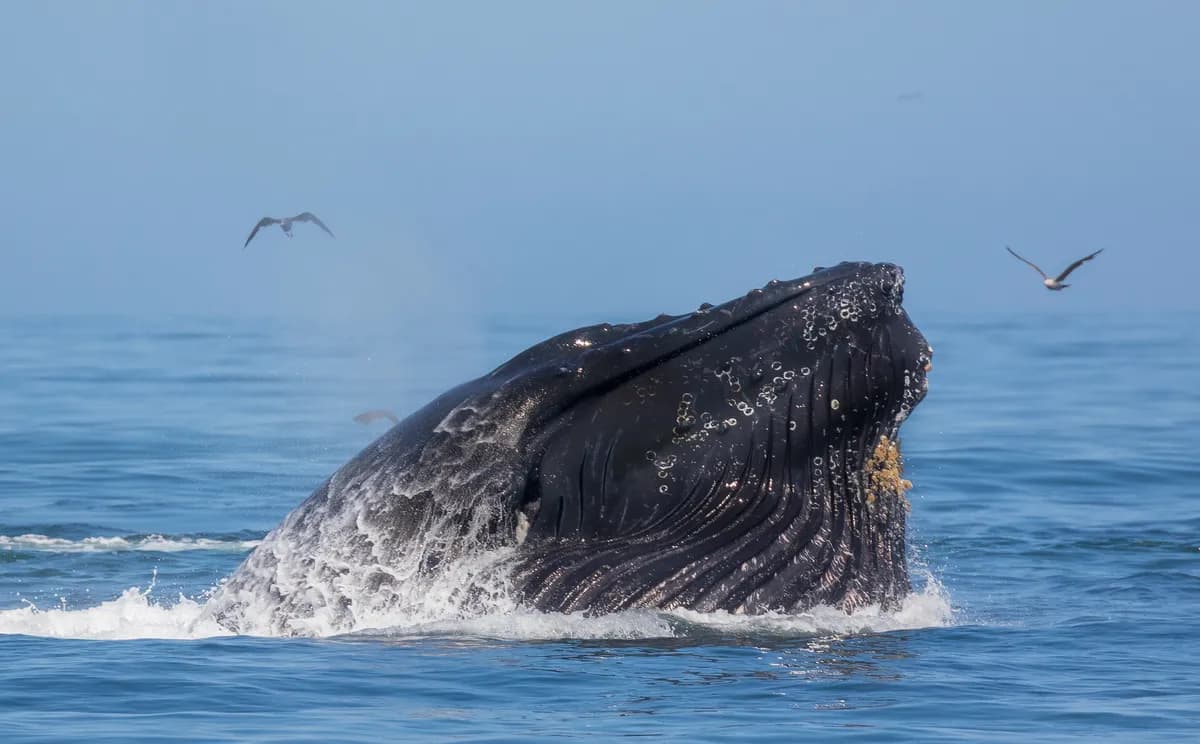
Mecklenburg-Western Pomerania's Environment Minister Till Backhaus stated that playing whale recordings underwater is a minimally invasive attempt to mobilise the whale, but the scientific team is still investigating whether this approach makes sense. The whale, nicknamed 'Timmy' by researchers, recently made unusual noises, with marine biologist Lisa Klemens describing it as growling. According to Euronews, Klemens described almost feeling scolded when the animal growled at the end of March because experts had travelled close to it in a boat.
Rescue challenges are compounded by the whale's weakness; according to Euronews, Lisa Klemens described that there is no point in carrying an animal too weak to swim into deeper water. According to Euronews, Anja Gallus described that it may be necessary to wait until the whale starves to death, a process that could take time as whales can go months without eating, though this one is not completely emaciated. The researchers admit this may seem cruel, and nobody can say how long it will take for the whale to die.
There is no point in carrying an animal that is too weak to swim out into deeper water. It's like throwing a bird that has hit the windscreen into the air and hoping it will fly again. Then the bird dies somewhere else, just not on my doorstep. That's torture for this animal.
Over the past weeks, Timmy has repeatedly returned to shallow waters near the coast instead of swimming out to sea, behaving differently than a humpback whale normally would. The marine biologists from Stralsund assume the apparently injured animal got caught in a gillnet, similar to harbour porpoises in the Baltic Sea, but the specific injuries and exact cause remain unclear. According to Euronews, Anja Gallus described the whale as a wild animal, not a pet, though researchers have developed a personal connection; Klemens, who is preparing for an autopsy, finds herself calling it 'Timmy' despite facing online insults and threats.
The Ministry of the Environment in Schwerin has published a report on the assessment online, but its exact content is not detailed. According to Euronews, researchers from the German Oceanographic Museum described how unfounded accusations often are when people protest, highlighting the ethical dilemmas in the rescue.
The whale is a wild animal, not a pet with which you can build up a loving relationship. That doesn't mean we don't have feelings for this animal. We try to help him as best we can. That's why we went into science.
minimally invasive attempt to mobilise the whale
almost felt scolded
holding a megaphone in one hand and a fish sandwich in the other
It sounds harsh, but we may have to wait until the whale has starved to death, and that can take time. Whales don't eat for six months. Although it has just come from a region where it has eaten little, it is not completely emaciated.