

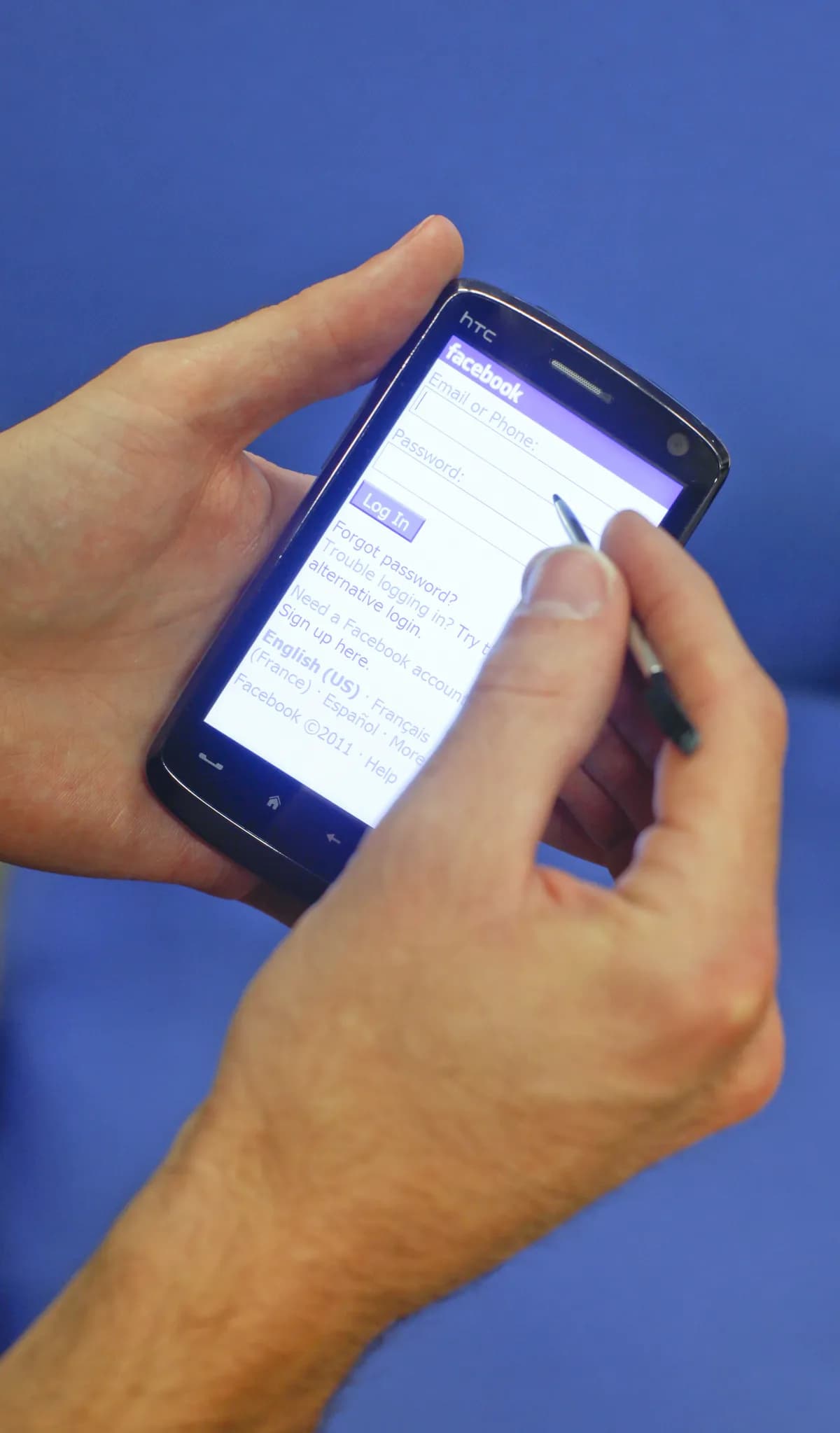
The European Commission has unveiled a new age verification app aimed at protecting children online, responding to widespread public concern over the impact of social media on young people's mental health. According to the State of the Digital Decade Eurobarometer 2025, 93% of EU citizens are concerned about children's mental health, and 92% identify cyberbullying as the primary online threat. Commission President Ursula von der Leyen announced that the app is technically ready and will soon be available for citizens, comparing it to the EU's COVID-19 contact-tracing app. The app requires users to verify their age without sharing personal data, using national eID schemes, physical ID cards, banking apps, or third parties like banks or notaries, according to the original tender and specifications.
High social media usage among teenagers has been linked to mental health issues, according to multiple studies. A 2025 Joint Research Centre study found that in 2022, 96% of 15-year-olds were active on social media, with 37% spending more than three hours a day. Female teens tend to use social media more, at 42% compared to 32% of their male counterparts. The European Parliament's non-legislative report of November 2025 noted that among 9 to 15-year-olds, daily usage frequently hits the three-hour mark; 78% of teens aged 13 to 17 check their devices at least once an hour; and a quarter admit to struggling with dysfunctional internet habits. The Joint Research Centre stated that uncontrolled social media usage harms children's mental health, raising depression and anxiety levels. The same study found that 60% of young females show depression symptoms compared to 35% of males, and 65% experience anxiety as opposed to 41% of males.
MEP Christel Schaldemose senses hesitation in the Commission’s actions and thinks they are too slow.
However, the app has faced criticism over security flaws and privacy concerns. Security consultant Paul Moore released a video showing how the app's prototype could be bypassed in under two minutes. The European Commission released a patch and called the flaws 'prototype-stage' issues. Moore also claimed that the source image of the passport, ID or selfie was not encrypted and could not be properly deleted. Telegram CEO Pavel Durov called the app a 'surveillance tool' and 'hackable by design'. In response, von der Leyen stated that the app meets the highest privacy standards in the world, and the EU Commission said it is anonymous and tracking-free. However, the specifications for the app consider principles like data minimization, unlinkability, storage limitations, transparency, and security measures, but many privacy mechanisms are optional, according to the specifications.
The app's technical details and pilot testing have been outlined by the Commission. A spokesperson for the European Commission, Paula Pinho, said the app is technically ready but still a demo version. The app has been tested by five EU countries, with Denmark in the lead, according to multiple reports. The European Commission began testing age verification software in late June 2025 with Denmark, France, Greece, Italy, and Spain. The pilot test is a major step in implementing measures from the EU's 2022 Digital Services Act. The app will be a component of the future digital wallet, according to Audun Aagre, seniorrådgiver i Medietilsynet. The development is carried out by the T-Scy consortium under a two-year contract awarded in early 2025. The verification solution can be extended to other age limits or use-cases like purchasing alcohol, but privacy-preserving features cannot be modified, according to the Commission. The age verification blueprint and software is due to be rolled out across the EU in 2026, and the temporary solution will be superseded by the EU's Digital Wallet sometime next year. The EU Age Verification Blueprint is an open-source reference specification developed by the European Commission, using Zero-Knowledge Proof cryptography to achieve unlinkability by design. The solution supports compliance with Article 28 of the Digital Services Act. The proof provider will not be informed about the services where the proof is used, and each proof is used only once to prevent cross-service tracking.
MEP Christel Schaldemose says the app is a welcome but insufficient step, and one that has taken far too long.
Meanwhile, several member states have enacted or are preparing national bans, creating a fragmented regulatory landscape. France has enacted a ban targeting users under 15, according to multiple reports. Spain, Austria, Greece, Ireland, Denmark, and the Netherlands are gearing up to introduce similar rules soon. This patchwork of national laws has prompted calls for a coordinated EU-wide approach.
Political reactions have been mixed, with some calling for stronger action. According to Euronews, MEP Christel Schaldemose described the Commission's actions as hesitant and too slow, and said the app is a welcome but insufficient step that has taken far too long. Von der Leyen announced an expert panel on children's digital safety in September 2024, but by April 2026 the panel had barely started work, according to multiple reports.
Child rights advocate Francesca Pisanu says the app should not be seen as a silver bullet but as one tool within a broader child-rights-based approach.
Child rights advocates have urged a comprehensive approach. According to Euronews, Francesca Pisanu of Eurochild described the app as not a silver bullet but one tool within a broader child-rights-based approach.
Several uncertainties remain about the app's rollout and enforcement. The exact launch date has not been announced, and it is unclear how the security flaws identified in the prototype will be fully addressed before public release. Additionally, which specific privacy mechanisms are optional in the specifications and whether they will be mandatory in the final version is unknown. Enforcement across EU member states with varying national laws also poses challenges. In Norway, which is not an EU member but is part of the European Economic Area, half of all nine- and ten-year-olds use social media, according to a Medietilsynet survey, highlighting the scale of the issue.
Telegram CEO Pavel Durov said the app is a 'surveillance tool' and 'hackable by design'.
Von der Leyen compared the app to the EU's COVID-19 app.