

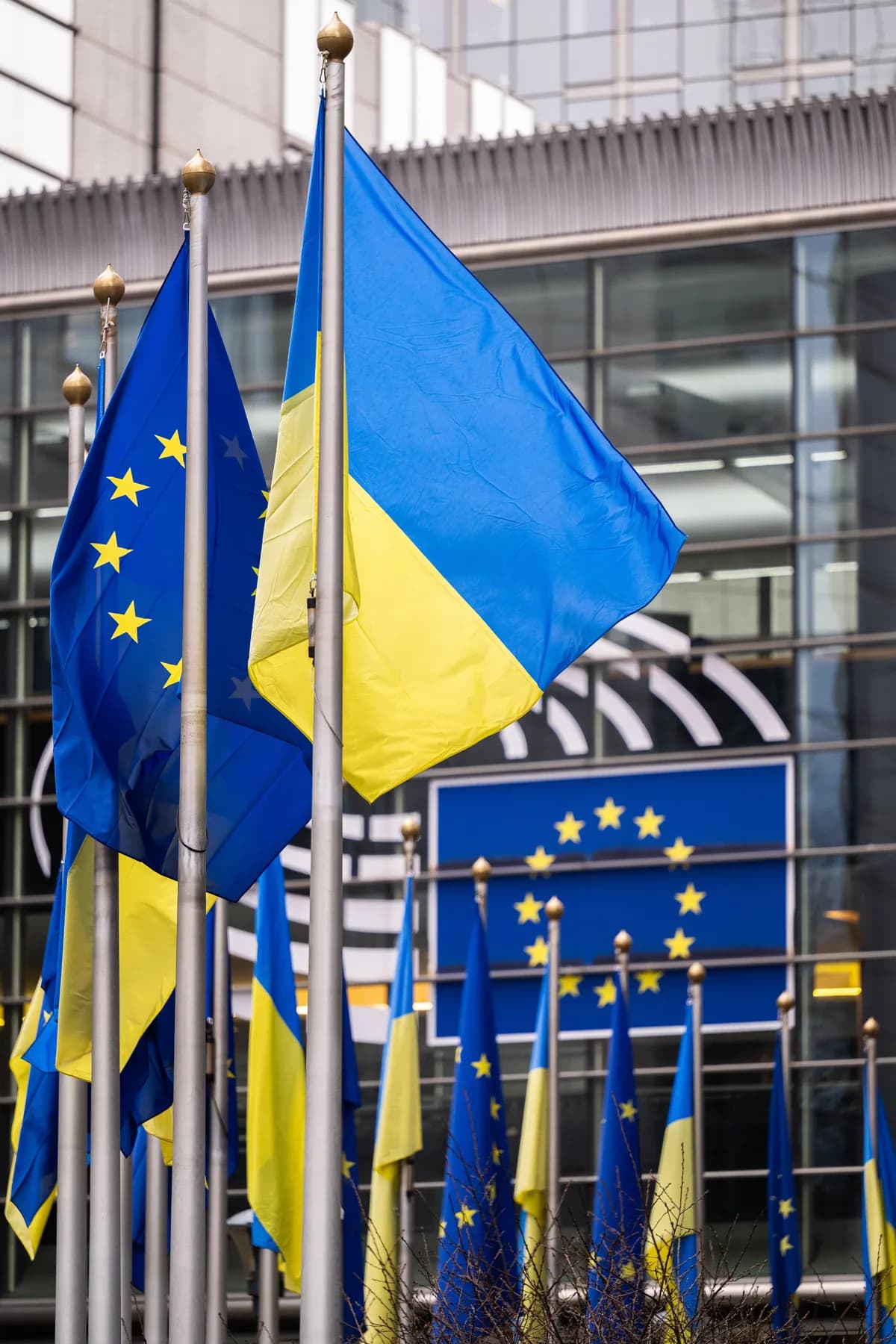
The European Union published its 20th sanctions package against Russia on Thursday, according to multiple reports. The package tightens restrictions on Russian oil and gas transport, including banning Russian gas tankers from EU ports and allowing a full maritime services ban on Russian crude and oil product transport. It also bans providing LNG terminal services to Russian entities and certain services to Russian icebreakers. Additional measures target the shadow fleet and its backers. The package aims to weaken Russia's ability to wage its war of aggression against Ukraine, the EU said.
The EU added 117 entities to its individual sanctions list, including those supporting or benefiting from the Russian government in business, or involved in supporting Russia's armed forces and arms industry. It also added 46 vessels to the shadow fleet list. The EU expanded the export ban list to include entities that are military end-users, part of Russia's military-industrial complex, or have commercial or other ties to Russia's defense and security sector. Products added to the export ban include glass laboratory items, certain high-quality lubricants and their additives, and energetic materials. The list of products that enhance Russia's industrial capacity is expanded, especially for raw materials, including chemicals, rubber, steel products, metal production tools, and industrial tractors. Restrictions and import bans are added for metals, chemicals, and critical minerals.
The EU also addresses sanctions circumvention in the financial sector by expanding the business ban on Russian and third-country credit or financial institutions. It expands the list of crypto assets whose use in transactions is prohibited. Contact with all Russian crypto service providers is prohibited, as is the use of platforms enabling transfer and exchange of crypto assets established in Russia. The EU also bans exports of metalworking centers and switching/routing equipment for sound, image, or other data to Kyrgyzstan due to insufficient action to prevent circumvention.
Separately, Norway introduced a new sanctions package against Russia that corresponds to the EU's 19th sanctions package, which Norway has joined politically. The Norwegian package includes further measures against Russian energy, banks, and crypto exchanges. Norway also follows up on the EU decision to regulate the movements of Russian diplomats in Europe.