

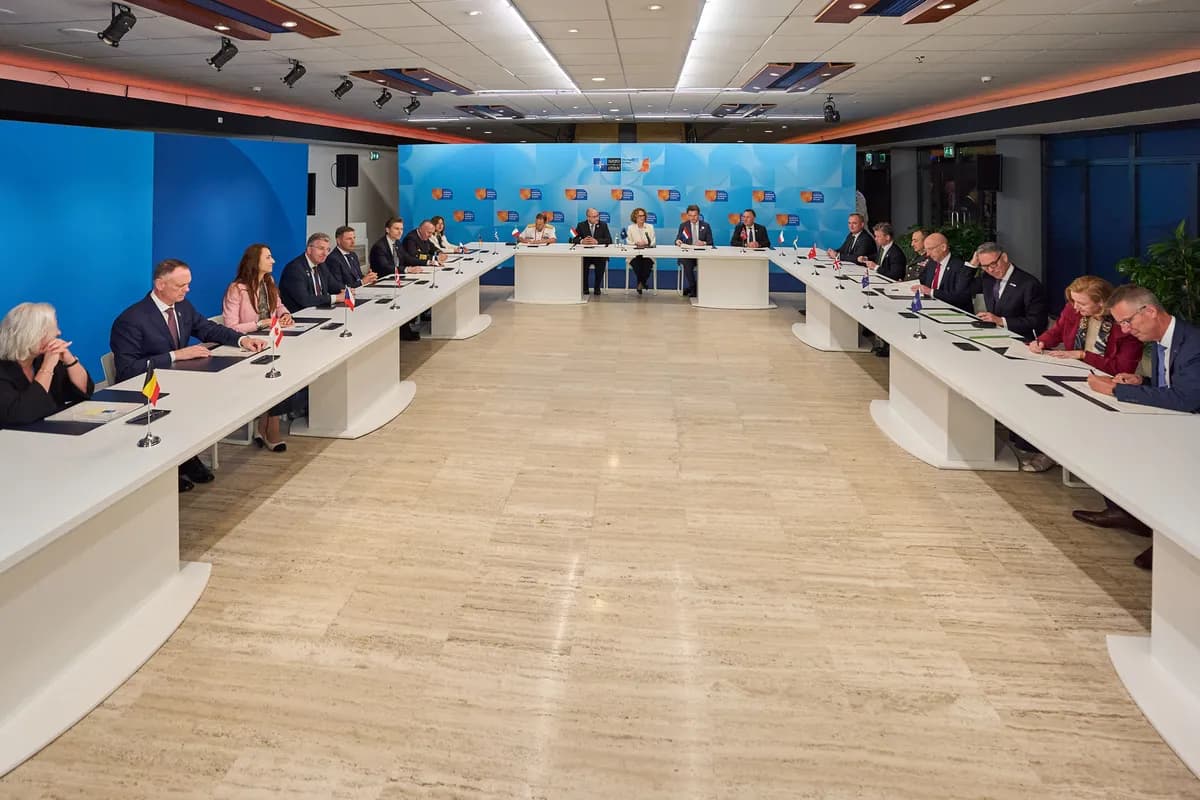
French President Emmanuel Macron expressed hope that the summit could influence the crisis around Iran. 'Europe must do even more. It is in everyone's interest that stability returns as soon as possible,' he said.
The gathering primarily includes countries affected by the conflict, not directly involved parties like Iran, Israel, or the USA. Arabian Peninsula states are represented only by the GCC Secretary General. EU foreign chief Kaja Kallas sees value in assembling the EU with nations such as Egypt, Lebanon, Jordan, and Syria.
There is no unity on this issue and the result is that the EU's position is weakened.
Kallas and EU Council President António Costa have recently traveled extensively in the region. Kallas noted that issues like missile programs, support for regional proxies, and cyber and hybrid attacks in Europe are not being addressed in US-Iran talks. 'We risk ending up with an even more dangerous Iran,' she warned.
The EU is an economically important player, providing significant humanitarian aid, including to Palestinians. However, politically, its influence is limited due to differing views on Israel among member states. Spanish Prime Minister Pedro Sánchez, the most critical of Israel and the USA, expressed dissatisfaction that there is no agreement to pause the EU's association agreement with Israel.
'There is no unity on this issue and the result is that the EU's position is weakened,' he said.