

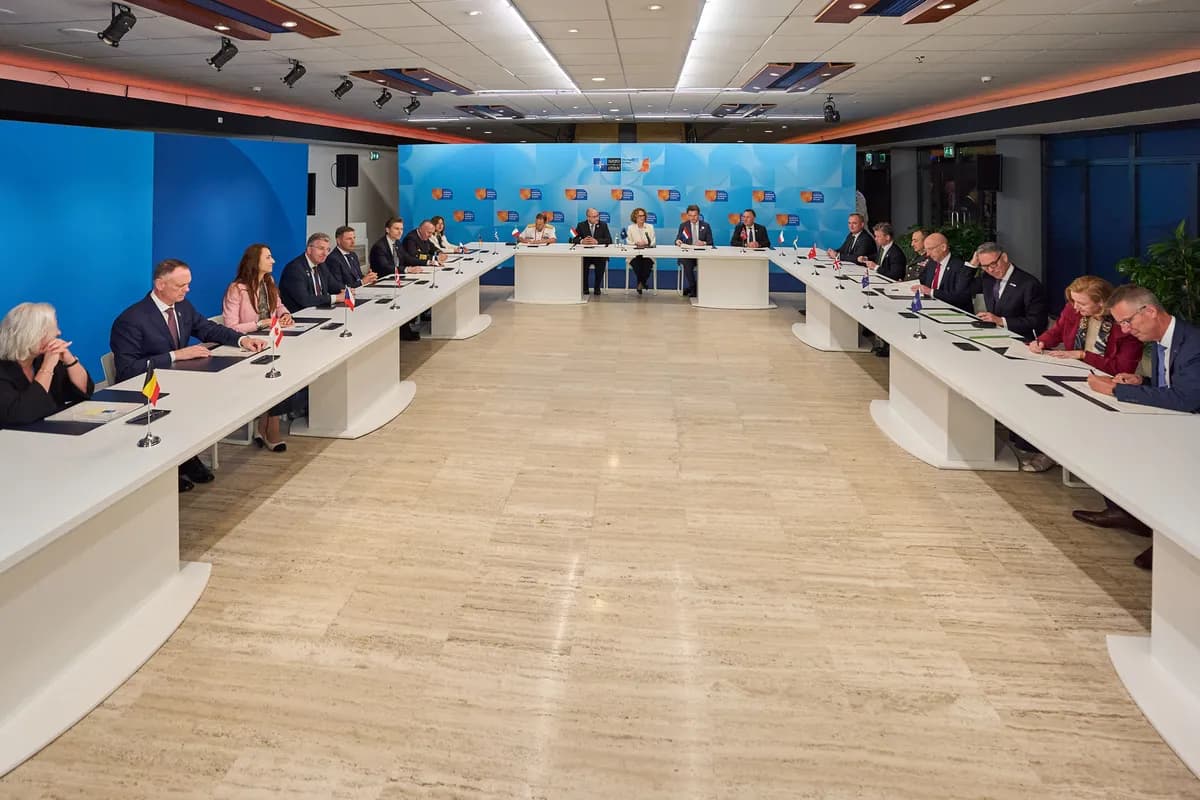
The summit, which brings together EU heads of state and government with leaders from several Middle Eastern countries, aims to contribute to reducing hostilities in a region beset by conflict. However, according to multiple reports, not all relevant parties are taking part. The gathering primarily includes countries affected by the violence rather than the main protagonists: Iran, Israel, and the US are absent. Countries from the Arabian Peninsula are represented only via the Secretary General of the Gulf Cooperation Council, limiting the scope of direct dialogue.
EU leaders have expressed hope that the summit can have a positive impact, while acknowledging the bloc's limited political and military influence in the region. French President Emmanuel Macron said at a press conference: "Europe must do even more. It is in everyone's interest that stability returns as soon as possible." Macron expressed hope about influencing the crisis and the war situation around Iran, according to major media reports. Despite these aspirations, analysts note that the EU's ability to shape events is constrained by its lack of hard power and internal divisions.
Europe must do even more. It is in everyone's interest that stability returns as soon as possible.
EU foreign policy chief Kaja Kallas defended the initiative, saying she sees value in gathering the EU together with countries such as Egypt, Lebanon, Jordan, and Syria. However, Kallas pointed out a significant gap in current US-Iran talks. "The missile program, support for proxies in the region, cyber and hybrid attacks in Europe are not being addressed," she said at a press conference. "We risk ending up with an even more dangerous Iran. We must be clear, together with regional actors, that these issues must be handled and that we can help in the negotiations." Kallas and EU Council President António Costa have traveled extensively in the region recently, underscoring the bloc's diplomatic efforts.
The EU remains an economically important player in the Middle East, providing significant humanitarian aid, including to Palestinians. Yet politically, its influence is hampered by differing views among member states on Israel. Spanish Prime Minister Pedro Sánchez, who has been the most critical of both Israel and the US, expressed frustration. "There is no unity on this issue and the result is that the EU's position is weakened," he said at a press conference. Sánchez is dissatisfied that the EU cannot agree to suspend its association agreement with Israel, highlighting the internal discord that limits the bloc's collective action.
It remains unclear what specific outcomes the summit will produce or whether the US or Iran might become involved in any capacity. The EU's ability to translate its economic weight into political leverage is uncertain, and disagreements among member states on Israel policy continue to hamper a unified approach. The timeline for potential US-Iran negotiations also remains vague, leaving the EU's role in the process undefined.