

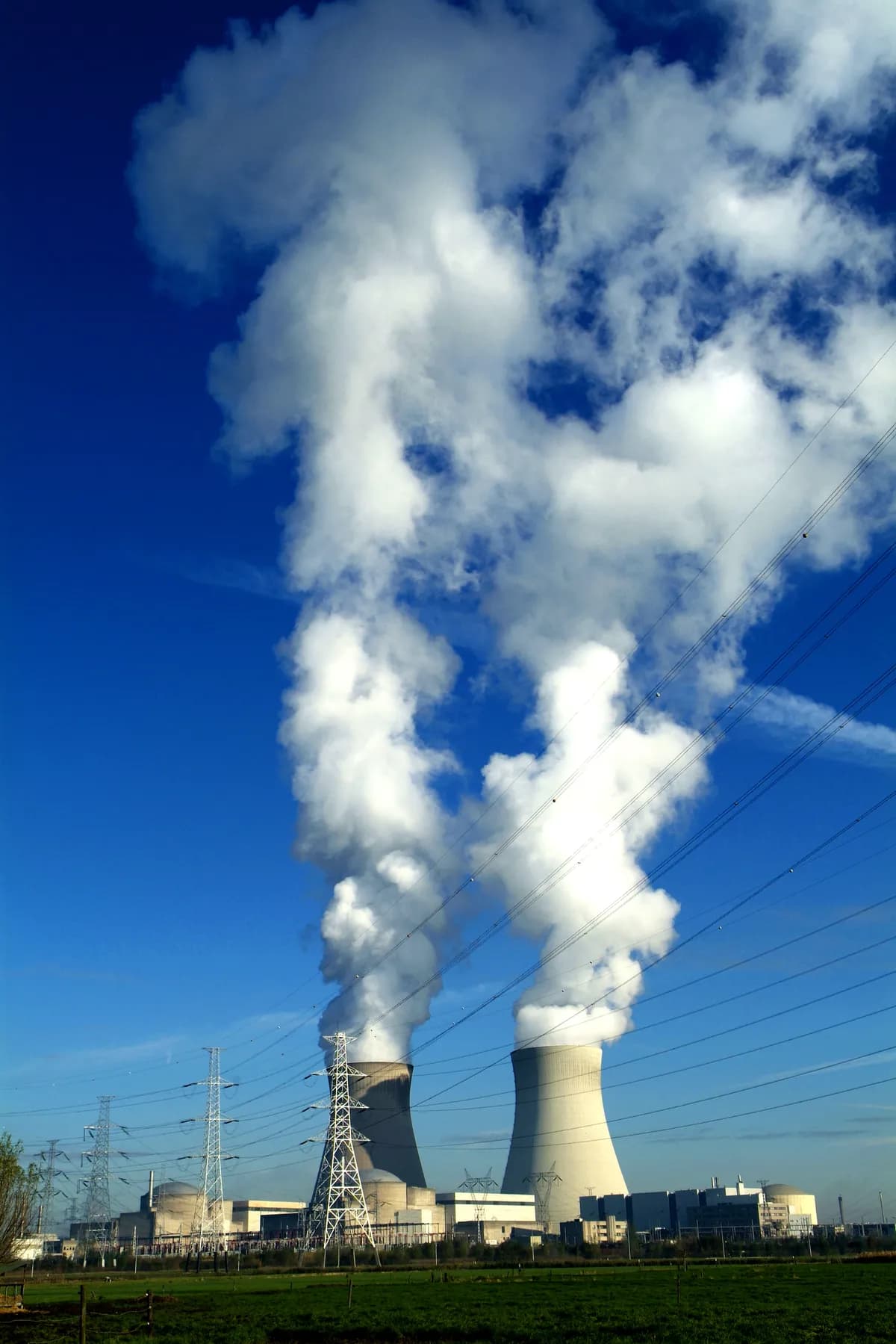
On March 10, President of the European Commission Ursula von der Leyen spoke at the nuclear summit organized by France and the IAEA in Paris. The European Union has touted nuclear energy as a sustainable alternative for achieving climate neutrality. Ursula von der Leyen said that Europe made a strategic mistake by moving away from a reliable and affordable source of energy with low emissions.
She announced that she would mobilize €200 million for nuclear energy. The war in the Middle East shows that EU countries are vulnerable because they are dependent on imports of fossil energy from other countries. Europe's concerns about its dependence on oil and gas imports are growing, following the US and Israeli attacks on Iran.
High electricity prices are still heavily influenced by fossil fuel costs and have been exacerbated after the United States and Israel launched an attack. In the 1990s, the EU relied on nuclear energy for a third of its electricity production. Now, nuclear energy's share in EU electricity production is close to 15%.
Not all EU member states are keen on nuclear energy. Portugal has no nuclear production or reactors. Portugal's Minister for the Environment and Energy, Maria da Graça Carvalho, spoke out against nuclear in November last year.
There is no single solution. Renewables exist and are there. We can discuss the current dependence on China, which produces more than 80 per cent of solar panels, but apart from that, they [renewables] are part of the portfolio. They can't be the only sour
Maria da Graça Carvalho said that nuclear energy is not suitable for a country like Portugal. She argued that without in-house production technology, producing nuclear energy is very expensive. Maria da Graça Carvalho said that renewable electricity remains simpler and cheaper.
Bruno Soares Gonçalves, president of the Institute of Plasmas and Nuclear Fusion, pointed out that before making any decision on nuclear energy, it is necessary to assess solutions for cheap energy and consumption prospects. He highlighted the importance of nuclear energy for energy sovereignty and decarbonization. Bruno Soares Gonçalves regretted that it's necessary to reach the current point for Europe to start recognizing the strategic error of repeatedly disinvesting in nuclear energy.
He pointed out that lack of investment in nuclear energy has contributed to loss of knowledge and skills. Bruno Soares Gonçalves said that countries like China are clearly ahead in the race towards new generation nuclear power. He suggested that the solution may involve combining various forms of energy production, such as renewables, batteries, gas, or renewables plus nuclear offset by dams.
Bruno Soares Gonçalves said there is no single solution and renewables are part of the portfolio but cannot be the only source. Separately, European Commission President Ursula von der Leyen is brushing off calls to overhaul the EU's carbon pricing system. She is urging member states to cut taxes on energy bills.
The ETS provides long-term certainty and rewards innovation.
The document rejects calls for fundamental changes to the ETS despite pressure from energy-intensive sectors and countries like Italy, Hungary, Romania, and the Czech Republic. These countries have been lobbying to scrap the ETS, arguing that carbon costs and high electricity prices are shutting down industries. In a letter to EU leaders, von der Leyen stressed that the ETS won't be dismantled to ease short-term pressure.
Von der Leyen said the ETS remains a proven tool for driving decarbonization and investment, in line with demands from Denmark, Finland, Luxembourg, Portugal, Slovenia, Spain, Sweden, and the Netherlands. The letter states that the ETS provides long-term certainty and rewards innovation. The ETS is the bloc's mechanism for making companies pay for their pollution, with the aim of reducing emissions and encouraging sustainable alternatives.
Despite backing the ETS, Brussels will revise its major climate policy by July, aligning it with the Paris Agreement and the EU's 2040 climate target law. Veteran lawmaker Peter Liese said the ETS needs to be revised or the system will have no more allowances in 2039, threatening energy prices and climate targets. The EU executive wants to preserve the integrity of the carbon market while shifting part of the burden of lowering electricity prices to EU countries.
Member states retain primary control over electricity tax rates and structures. EU leaders are considering network charges as a quick fix for struggling industries. Sweden threatened to cut off electricity to neighbouring countries over the network charges idea.
The Commission signalled that national governments must do more to address the immediate impact of high electricity prices.