

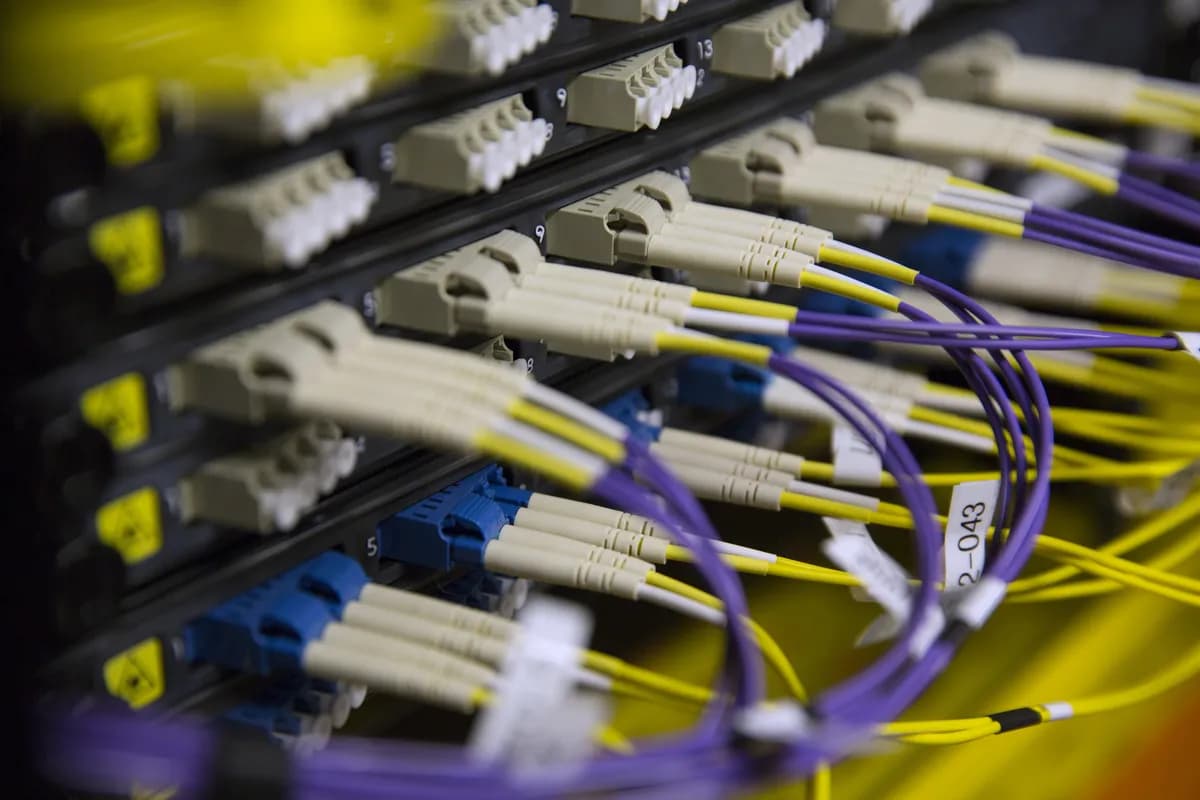
According to the EU Commission, 99% of intercontinental internet traffic travels via undersea cables. The commission has proposed prioritizing investment in new cables across the North Pole, estimated to cost over 21 billion kronor. Polar Connect is a Nordic collaboration to build underwater optical fiber cables from Sweden via the North Pole to Asia and North America.
It will take the shortest route of 10,500 kilometers across the North Pole instead of the congested route via the Suez Canal. Katarina Bjelke, Director-General of the Swedish Research Council, stated, 'It's about it being a safer route. ' The cable system will start in Kiruna, go to the Norwegian coast, then underwater via Svalbard and the Arctic Ocean to Asia and North America.
It's about it being a safer route. It's not so easy to go on or sabotage a cable that lies so deep under the Arctic ice.
Special sensors in the cables will measure temperature and salinity. ' The project has received 118 million kronor from the Swedish government and is driven by Swedish authorities and Nordunet, with Global Connect also involved. It has support from European countries and is forming collaborations in East Asia and North America.
Polar Connect will later be operated as a consortium including private companies. Work includes plans for a new icebreaker to build and maintain the system. Lotta Edholm, Minister for Research, said, 'The issue is being prepared right now, but we're not quite there yet.
Swedish researchers are already leading in several areas in the Arctic and will now be able to measure changes in real time instead of once a year. This can answer important questions about the climate and wildlife in the Arctic.
' The hope is for the system to be in place around 2030.