

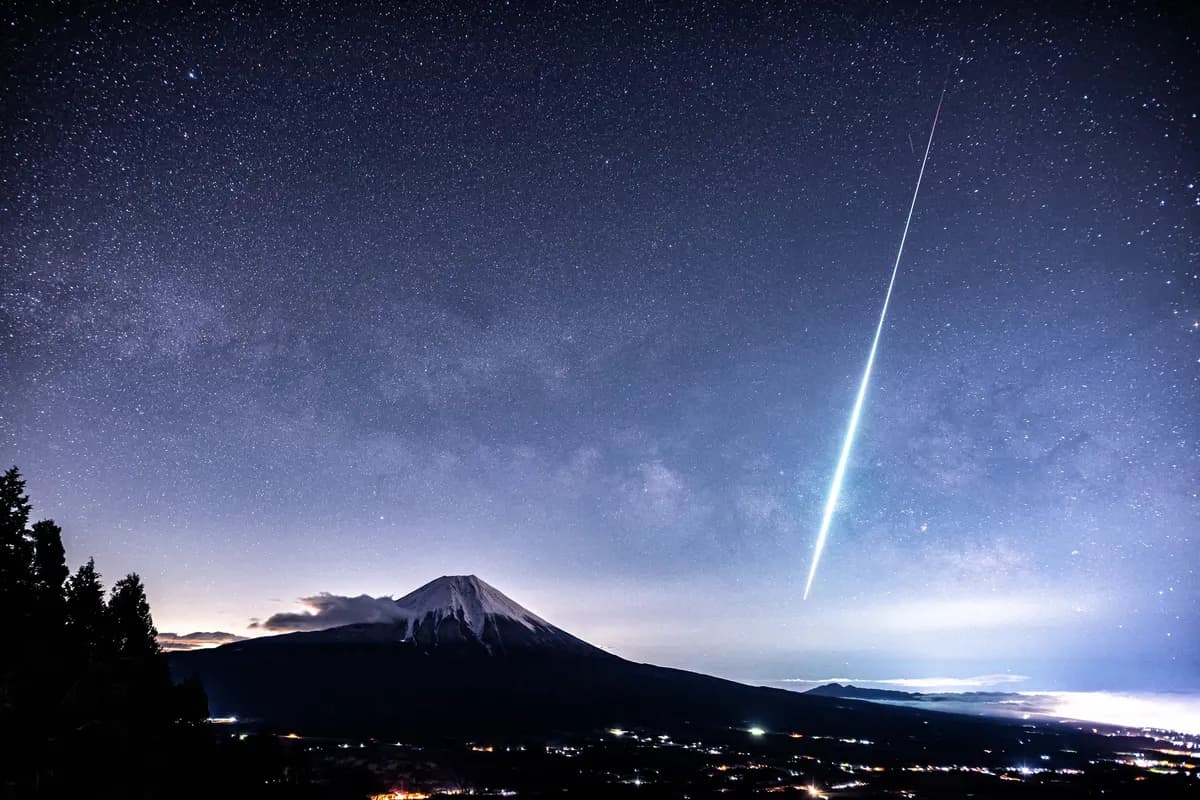
According to major media reports, the Eta Aquariid meteor shower will reach its peak in the next few days, delivering up to 40 shooting stars per hour under ideal conditions. The display is predicted to be at its absolute best on Wednesday night into the early hours of Thursday morning. However, a waning gibbous moon, which is over 80% illuminated, will shine brightly during those critical hours, obscuring many of the fainter meteors and leaving only the brightest ones visible.
For those in search of the best views, the optimal viewing window stretches from midnight to the early pre-dawn hours, when the sky is darkest. While the shower becomes visible from around midnight onwards, experts suggest waiting until just before dawn, when the radiant point in the constellation Aquarius rises higher in the sky. At that time, the atmosphere is thinner and the meteors appear higher above the horizon, making them easier to spot.
This positioning is crucial this year, as the bright moonlight will obscure many fainter meteors. The Eta Aquariid meteor shower remains active until May 28, according to reports, so there will be opportunities to see meteors beyond the peak night. The shower originates from debris left behind by Halley's Comet, a famous periodic comet that visits the inner solar system approximately every 76 years.
As Earth passes through this debris trail each year, the particles burn up in the atmosphere, creating shooting stars. The shower strongly favors the Southern Hemisphere, where the radiant can climb almost directly overhead during the pre-dawn hours. In contrast, observers in northern latitudes will see the meteors appearing low on the eastern horizon, so a clear and unobstructed view toward that direction is essential for spotting any meteors.
Exact peak times and optimal viewing locations for the Northern Hemisphere have not been detailed in reports, and the bright moonlight adds further uncertainty, as it obscures fainter meteors and reduces the effective hourly rate. To maximize your chances, seek a dark location away from city lights and allow your eyes to adjust to the darkness.