

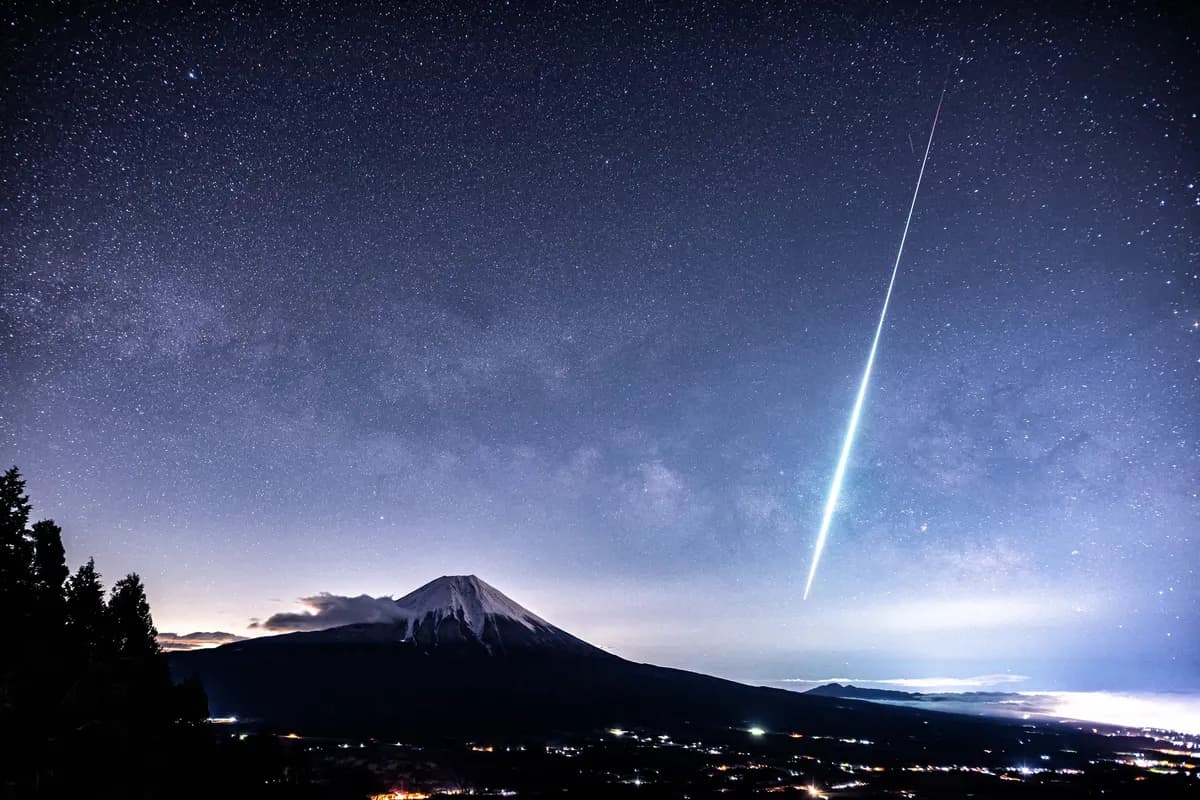
A bright waning gibbous moon, which will be 84% full at the peak, may obscure fainter meteors. "For us in the Northern Hemisphere, it's not going to be as impressive," said Teri Gee, manager of the Barlow Planetarium in Wisconsin. Observers in the Northern Hemisphere will see fewer than 10 meteors per hour, major media report, though some sources suggest about a dozen bright meteors. In contrast, the Southern Hemisphere can expect up to 50 meteors per hour without moon interference, but moonlight could halve that count. The Southern Hemisphere typically sees more due to a higher radiant.
For optimal viewing, experts recommend looking to the east in the vicinity of the constellation Aquarius and bright star Eta Aquarii. Do not look directly at the radiant but at the sky around it. "You're looking for bright streaks that appear in the corner of your eye for a fraction of a second," said Nico Adams, an astrophysicist with SSP International. Meteors travel at about 65 km/s. Halley's Comet, which leaves the debris, will next be visible in 2061.
For us in the Northern Hemisphere, it's not going to be as impressive.
It almost feels like you're discovering it yourself.
You're looking for bright streaks that appear in the corner of your eye for a fraction of a second.