

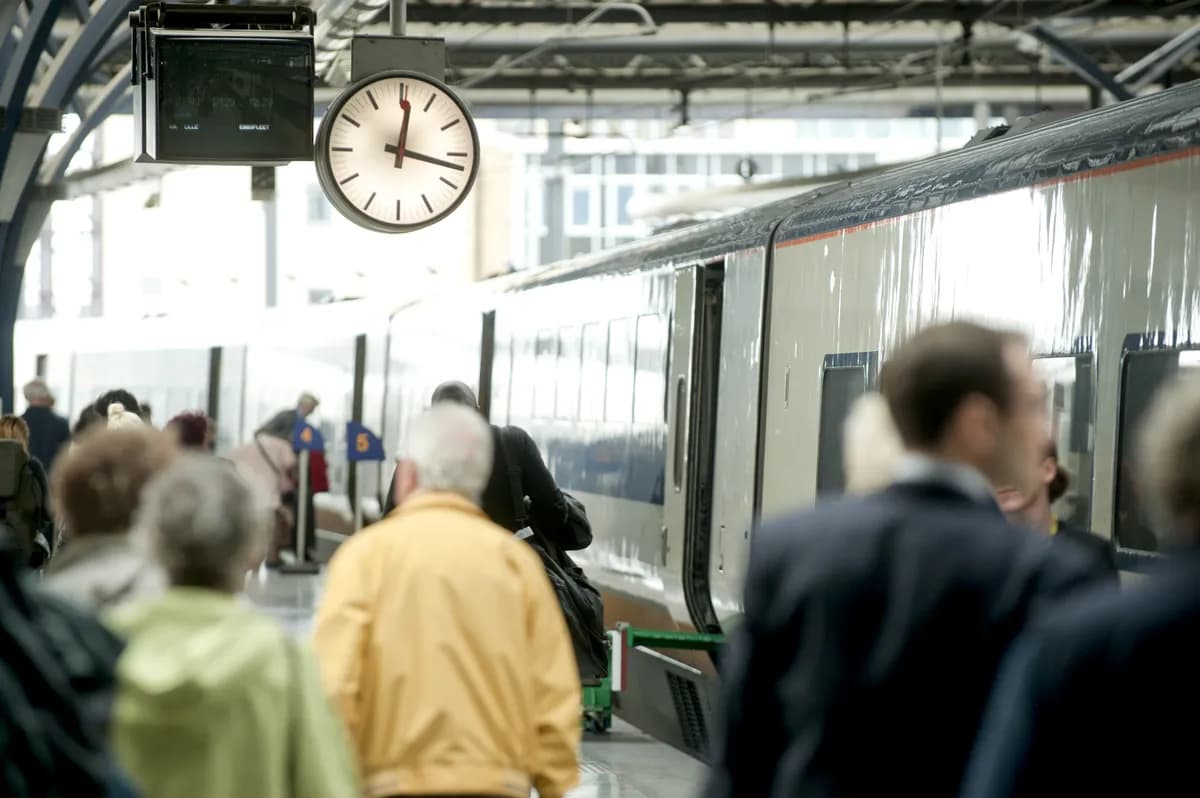
The direct train will stop in Trollhättan, Göteborg, Halmstad, Helsingborg, Lund, Malmö, Copenhagen, and Odense, according to official sources. The train will have 17 carriages, as confirmed by the operators. The service will be operated jointly by Vy, DSB, and Deutsche Bahn.
Major media reports indicate the travel time from Oslo to Berlin will be approximately 14-15 hours, while the journey from Copenhagen to Oslo will take around 7 hours. This will be the first announced direct train between Gothenburg and Berlin, according to multiple reports. Vy has experienced increasing demand for train travel abroad, the company said.
It's just so fantastic!
According to NRK Stor-Oslo, Ludvig Hambro, head of commercial trains at Vy, described high fuel prices on flights and a favorable exchange rate as factors making it more attractive for Germans, Danes, and other Europeans to travel to Norway. Gro Bakstad, CEO of Vy, said in a press release that the collaboration with DSB and DB brings Scandinavia closer to Europe and could eventually lead to direct trains to more European cities. According to NRK Stor-Oslo, train enthusiast Sigrid Elsrud described the new service as fantastic and noted that it puts Norway on the map for European travelers.
She also acknowledged that delays and border crossings are part of train travel but expressed hope for the future. The new route is expected to boost tourism and business travel between Scandinavia and Germany, offering a comfortable alternative to flying. Passengers will be able to enjoy scenic views of the Swedish and Danish countryside, with the train crossing the Øresund Bridge between Malmö and Copenhagen.
For people, it will be something completely different when the cities are on the board in Oslo. Then everyone understands that it's possible to travel there by train.
The service aims to capitalize on growing environmental awareness, as train travel produces significantly lower carbon emissions compared to air travel. Vy has indicated that the trains will feature modern amenities, including Wi-Fi, power outlets, and dining cars, to enhance the passenger experience. The launch in summer 2028 is timed to coincide with the peak tourist season, allowing travelers to explore multiple destinations along the route.
Exact ticket prices and potential additional stops have not been announced, and specific infrastructure approvals are still pending.
Board a really good train where you can sit really well, and you have a good restaurant car, and you get far in one stretch. It's just a completely different way of traveling, plain and simple.
For customers, this will be a revolution and something completely new.
Now it will finally be possible to get on the train in Oslo and sit all the way to Berlin.
Now fuel prices are high on flights, and we have an exchange rate that makes it more attractive for Germans, Danes, and other Europeans to come to Norway.
It's part of train life that situations with delays and such often arise. But that's part of it.
Think what it means for Norway as a destination. This puts Norway on the map for Germans, Dutch, and people in Europe who buy tickets with Deutsche Bahn.
And we can even hope that it becomes even more important in the future.