

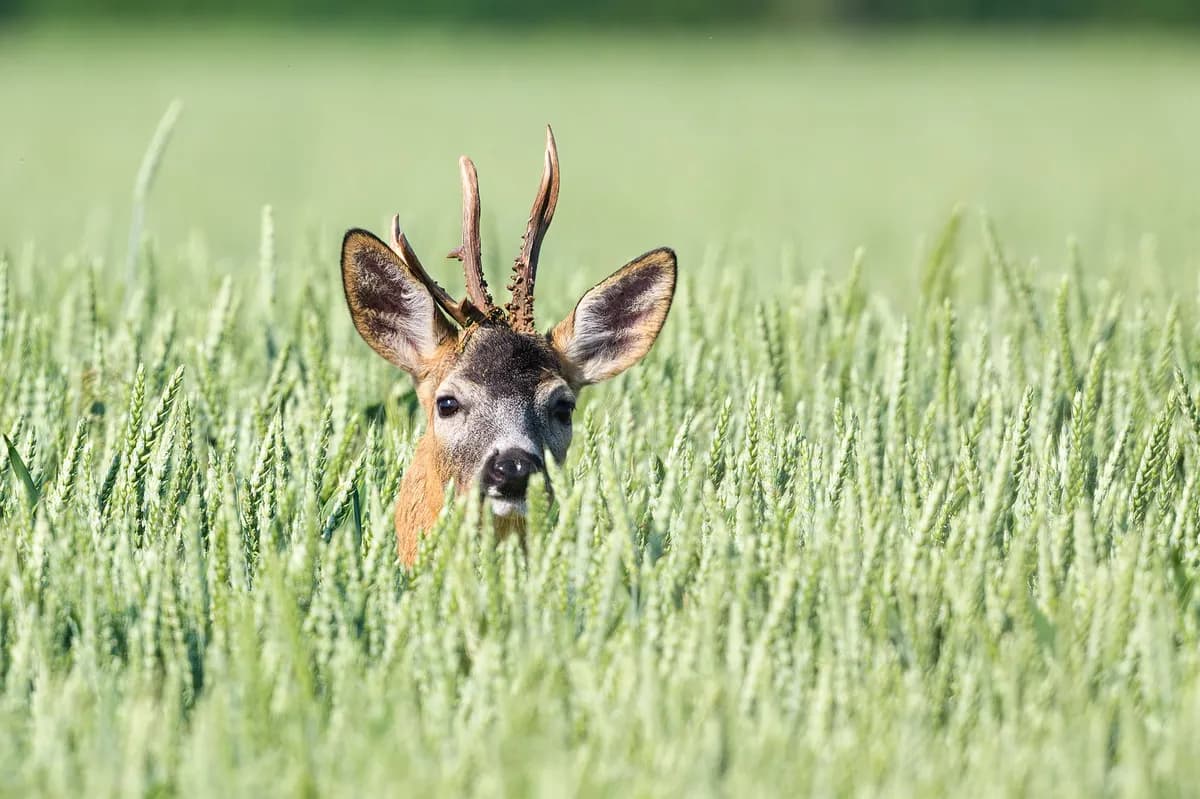
A deer is moving on or near the roadway on the E18 between the Görla and Hammarby interchanges in the direction of Kapellskär, causing minor traffic disruptions. The Swedish Transport Administration (Trafikverket) issued a warning at 06:36 on Tuesday, and traffic was flowing normally again by 07:26. The deer is on the wrong side of the wildlife fence, according to Trafikverket, which reported that the incident has a minor impact on traffic. The warning was issued at 06:36 on Tuesday, with traffic expected to be affected until around 07:30. However, as of 07:26, multiple reports indicate that traffic is flowing normally again. The specific type of deer involved has not been confirmed, and it remains unclear whether the animal has been safely removed or if it caused an accident.
In a separate incident, traffic on the E45 between Sillegården and V Ämtervik in both directions is affected by a moose calf on the road, according to the Swedish Transport Administration. Additionally, research from four sources indicates that there is a problem in traffic in both directions on the E18 between Ekolskrog and Åsen. The exact location of the deer incident on the E18 is uncertain, as reports mention both the Görla-Hammarby stretch and the Ekolskrog-Åsen stretch.
The holes are serious and that people can get injured by animals running wild in traffic.
Most collisions with wildlife occur in the evening and early morning hours, according to research from four sources. Transition zones between woodland and open fields pose a particular risk for wildlife collisions, the same sources note. During the mating season for roe deer in summer and for stags and wild boars in autumn and winter, their behaviour becomes unpredictable and more dangerous for drivers. According to an analysis by the German Insurance Association (GDV), the risk of a collision with wildlife is particularly high in April and May and from October to December. However, there is a contradiction in the data: while the GDV identifies April-May as a spring peak, other research suggests that most wildlife accidents occur during October-December and May-June. This discrepancy could affect driver awareness campaigns. Roe deer have their mating season from mid-July to early August, red deer rutting season lasts from September to the end of October, and wild boar mating season usually runs from November to January, according to research from four sources. The risk of wild animals crossing the road exists throughout Sweden at all times, all year round, the same sources emphasize.
High-risk locations for wildlife collisions include forest edges, near forest areas with watercourses, where wildlife fences begin and end, in clear-felled areas, and after a plough marker with a black plastic bag, according to research from four sources. Holes have been cut in the fences along the E18 motorway north of Stockholm, the same sources report. Swedish Radio reports speculation that anti-wolf activists may be behind the sabotage. The fences are designed to stop wild animals from running onto the road, and holes were cut in 50 different places in spring and autumn, according to research from four sources. According to www.sverigesradio.se, Roland Storm, a representative of Svevia, described the holes as serious and noted that people can get injured by animals running wild in traffic. Svevia is now checking the fences twice a week, Storm confirmed. It is not known whether the fence sabotage incidents on the E18 are connected to the current deer on the road, or who is responsible for the sabotage and what their motive is.