

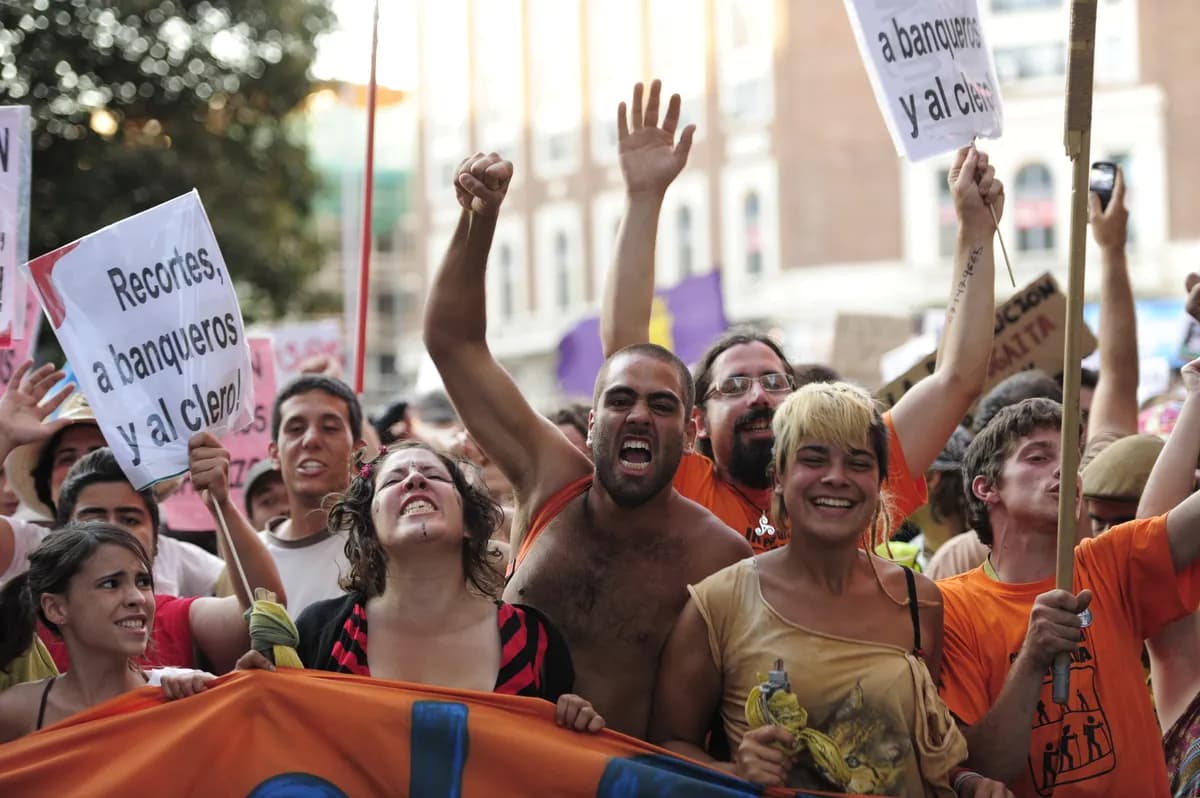
The protesters from across the Czech Republic attended the peaceful demonstration at Letná park, organized by the Million Moments for Democracy group. They expressed concerns that Prime Minister Andrej Babiš and his coalition Cabinet are a threat to democracy, steering the country away from supporting Ukraine and toward an autocratic path.
The new Czech government is preparing a bill that critics say is inspired by a Russian law on foreign agents and would require NGOs and individuals involved in vaguely defined political activity receiving foreign aid to register or face big fines. The government also plans to change the funding of public radio and television, a move many say would give the government control of the broadcasters. The draft plan would significantly reduce public media's current budgets and still needs approval from the government and Parliament.
The protest was held after the lower house of parliament rejected a motion to lift the immunity from prosecution of Babiš in a $2 million fraud case involving EU subsidies. The rejection of the motion means Babiš can stand trial only after his term in the house expires in 2029. Lawmakers also refused to agree to allow for the prosecution of lower house Speaker Tomio Okamura on charges of inciting hatred.
In Slovakia, thousands of protesters in the capital and elsewhere rallied on Tuesday against a plan by Prime Minister Robert Fico to scrap mail voting for Slovaks living abroad. Opposition parties say Fico's plan to scrap mail voting targets pro-Western voters, while Fico claims the move is to prevent fraud and manipulations. With the proposed legislation, the only option remaining for Slovaks to vote abroad will be to cast their ballots at Slovakia's embassies. In the 2023 parliamentary election, almost 59,000 Slovaks living abroad voted by mail, with Fico's party receiving only 6.1% of that vote while opposition groups got over 80%.
The rally in Bratislava opened with applause for neighboring Hungary's weekend election that ousted populist leader Viktor Orbán. Fico has been a divisive figure at home and abroad since returning to power in 2023, with his pro-Russian and other policies prompting numerous protests. The protests in Slovakia were organized by the Progressive Slovakia party together with Freedom and Solidarity, the Christian Democrats, and the Democrats. Slovaks also rallied on Tuesday in Košice, Banská Bystrica, Brussels, and Prague.
In the Czech Republic, thousands of high school and university students marched through the capital on Wednesday to protest against the government plan to overhaul and reduce funding for public radio and television. The new Czech government drafted a plan to scrap the fees that individuals, households, and businesses pay to access public media, making them fully dependent on the state budget. Critics say the plan would compromise the independence of public media.
Babiš returned to power after his ANO movement won big in the October election and formed a coalition with the Freedom and Direct Democracy party and the Motorists for Themselves party. He has opposed some key European Union policies on environment and migration and rejected any financial aid for Ukraine and guarantees for EU loans to Ukraine. The Czech government has rejected accusations of meddling in media coverage, arguing that state funding media is a common practice throughout Europe. Critics have said the plans mirror those that have led to political control in Slovakia and Hungary under Viktor Orbán.
Specific evidence or details supporting Fico's allegations of fraud and manipulation in mail voting remain unclear, as do the precise financial figures and projected impacts of the Czech media funding plan. The exact definition of 'vaguely defined political activity' in the foreign agents bill and the legal steps required for its implementation are also not yet specified. The media's labour unions said they were ready to go on strike if the government goes ahead with the legislation, which could take effect next year.