

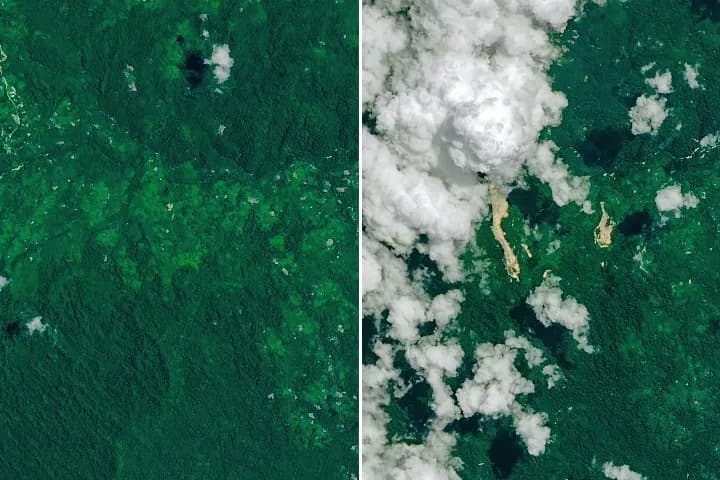
The slow-moving storm allowed rainbands to repeatedly strike East New Britain, saturating steep terrain in the Gazelle district. Satellite-based precipitation estimates from NASA's GPM mission indicate that hundreds of millimeters of rain likely fell across the region in less than a week. NASA's LHASA model had highlighted parts of East New Britain, including the Baining Mountains, as having an elevated risk of slope failure during the storm.
Landsat 9 captured an image of fresh landslide scars in the Baining Mountains on April 20, 2026. The exact number of deaths has not been confirmed, and it remains unclear whether any evacuations or warnings were issued before the landslides.